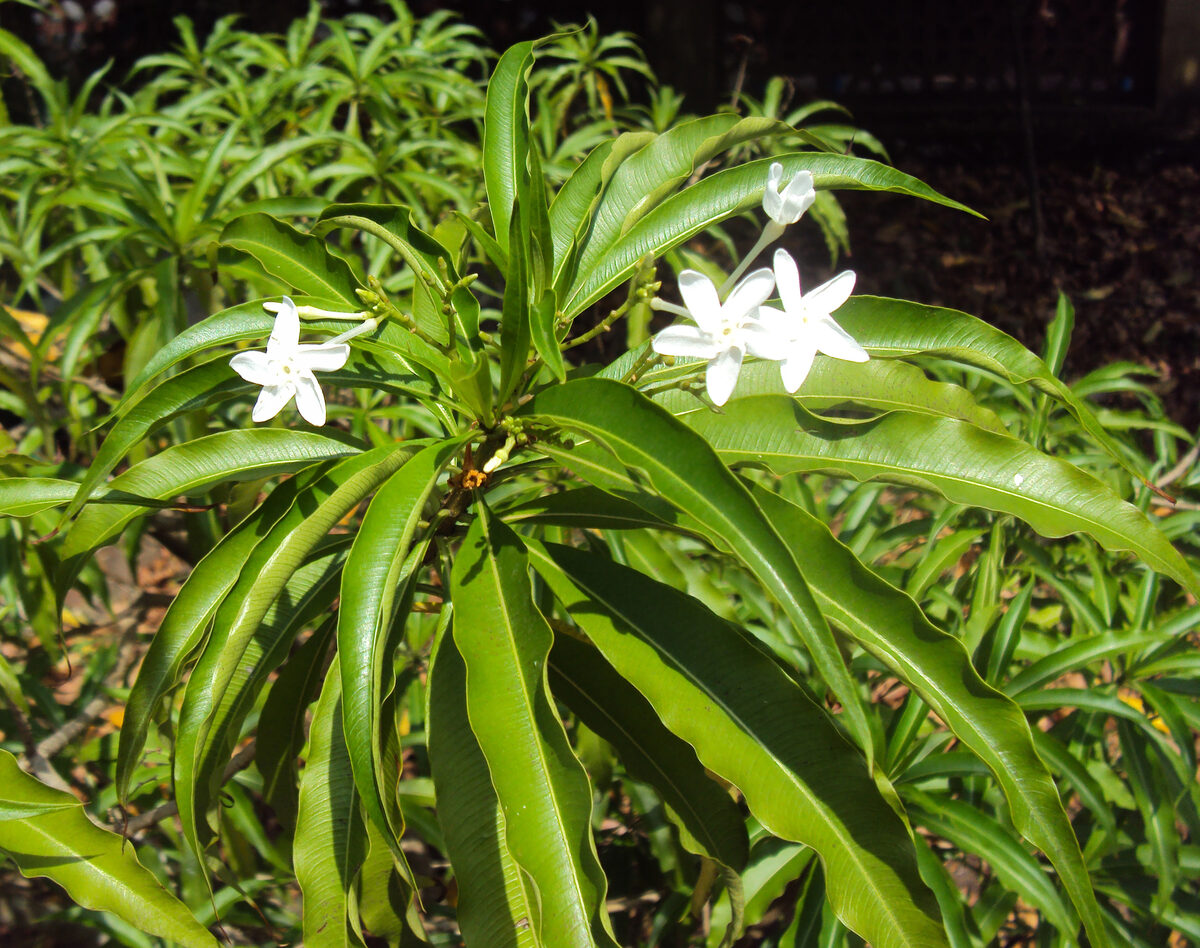
Marsdenia sylvestris
(Retz.) P. I. Forst.
iNaturalist· cc-by-nc
(c) Tony Benn, some rights reserved (CC BY-NC)
iNaturalist· cc-by-nc
(c) Tony Benn, some rights reserved (CC BY-NC)
iNaturalist· cc-by-nc
(c) Tony Benn, some rights reserved (CC BY-NC)
Description
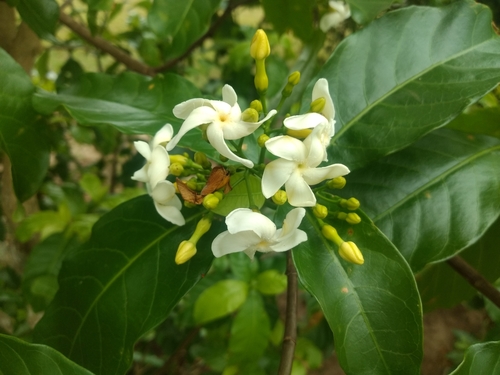
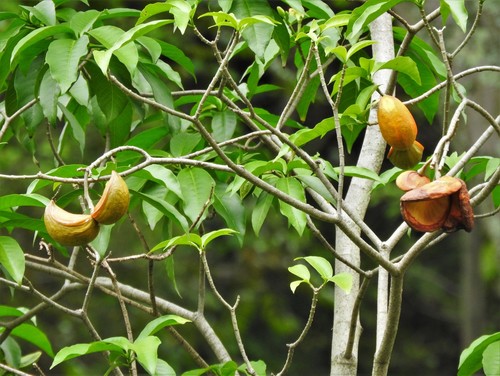
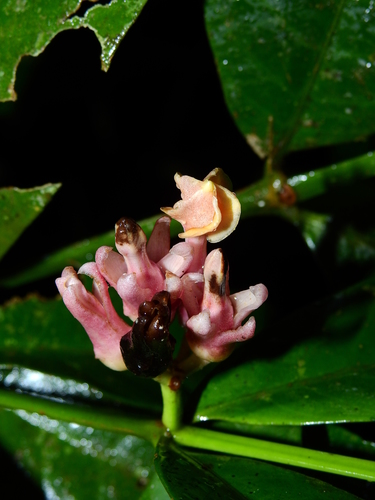
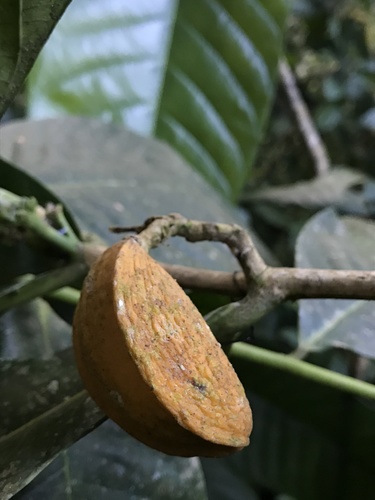
A straggling climber. It has a taproot and keeps growing from year to year. It can grow up to 10 m high. It has milky juice. The leaves are opposite and sword shaped. They are 5 cm long by 2 cm wide. The flowers are white to pale yellow. The fruit are round in cross section and have 3-4 curved sides. They are 12 cm long and 2 cm across. There are many flowers in groups on short stalks.
Edible Uses
The fruits are cooked in vegetable dishes or roasted in hot ashes for a few minutes, then peeled and eaten.
Traditional Uses
The fruit are cooked and used in vegetable dishes. They are roasted in hot ashes for a few minutes then peeled and eaten. Caution: The fruit contain some alkaloids.
Known Hazards
The fruit contains some alkaloids.
Distribution
It is a subtropical plant. It grows in hot and arid areas. It is usually in places with a marked dry season. The dry season can be 6-11 months. It can grow on well-drained or seasonally flooded sandy or clay soils. In southern Africa it grows between 500-1,200 m above sea level. It can grow in arid places.
Where It Grows
Africa, Australia, Botswana, East Africa, Mozambique, Namibia, South Africa, Southern Africa, Zambia, Zimbabwe,
Synonyms
Also Known As
Merara, Omudhingila, Ruku
References (1)
- Royal Botanic Gardens, Kew (1999). Survey of Economic Plants for Arid and Semi-Arid Lands (SEPASAL) database. Published on the Internet; http://www.rbgkew.org.uk/ceb/sepasal/internet [Accessed 30th March 2011]