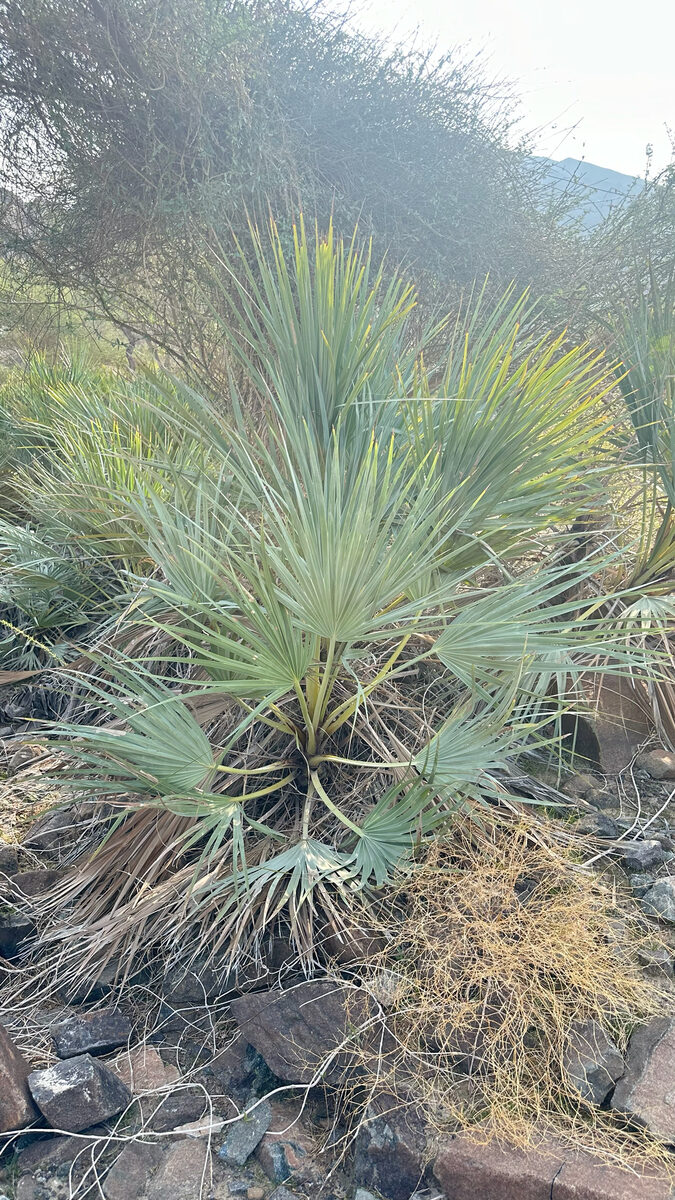
Caryota mitis
Lour.
Lesser fishtail palm, Clustered fishtail palm
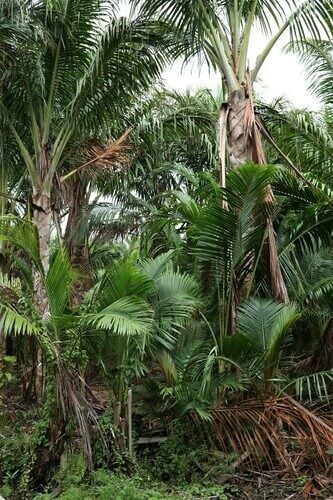
iNaturalist· cc-by-nc
(c) Klaus Bohn, some rights reserved (CC BY-NC), uploaded by Klaus Bohn
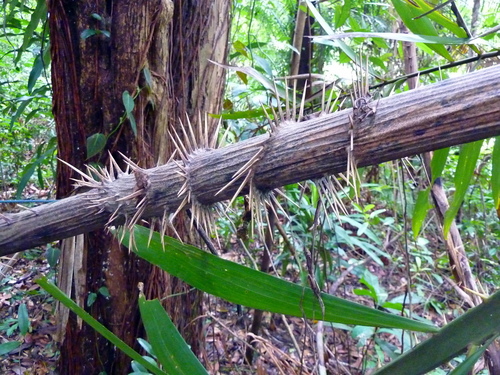
iNaturalist· cc-by-nc
(c) Suzu Sato, some rights reserved (CC BY-NC), uploaded by Suzu Sato
iNaturalist· cc-by-nc
(c) Berta, some rights reserved (CC BY-NC), uploaded by Berta
Summary
Source: WikipediaCaryota mitis, known as the clustering fishtail palm or fishtail palm, is a species of palm native to Tropical Asia from India to Java to southern China, now sparingly naturalized in southern Florida and in parts of Africa and Latin America. The species was originally described from Vietnam in 1790. In Florida, it grows in hummocks and in disturbed wooded areas.
Description
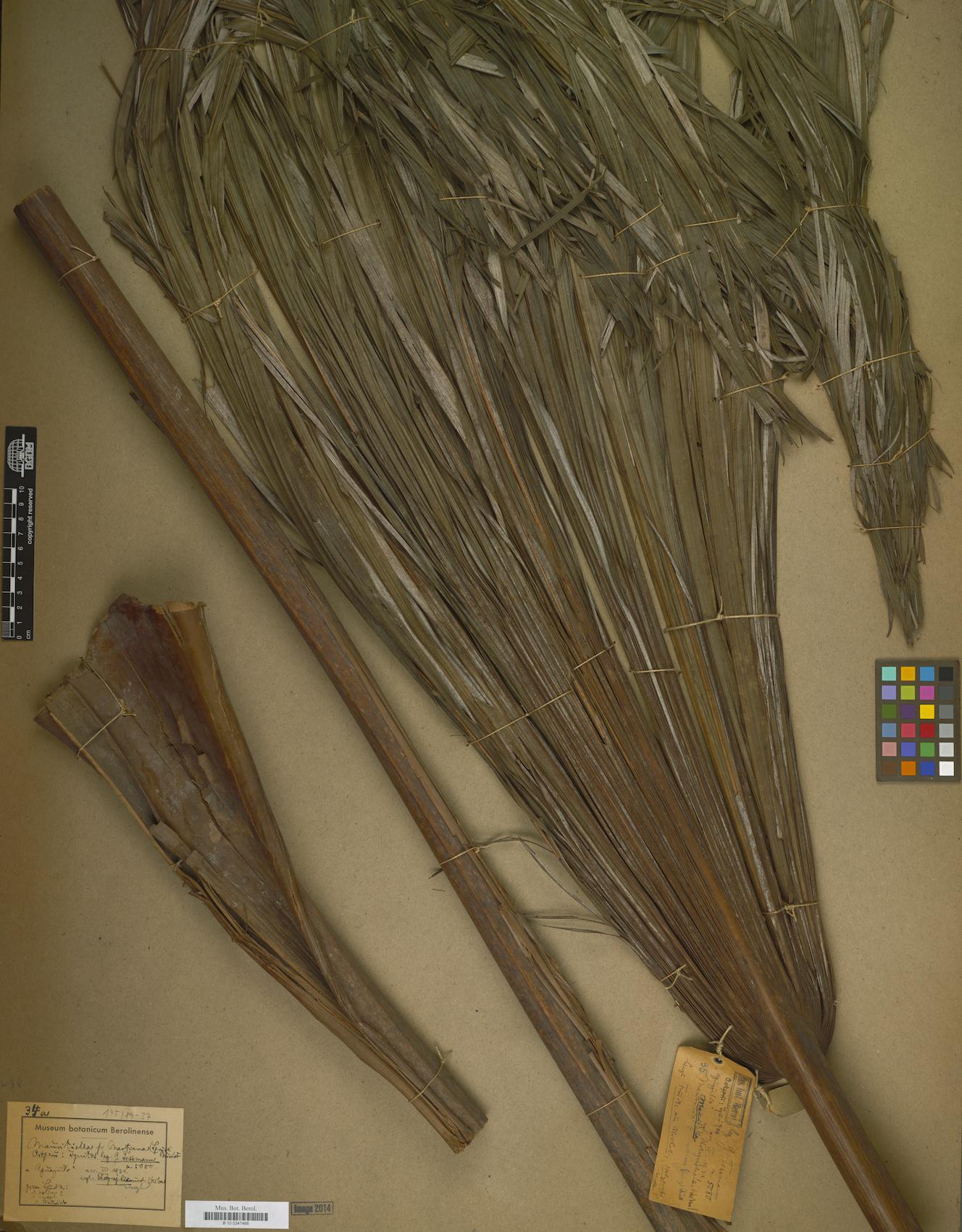
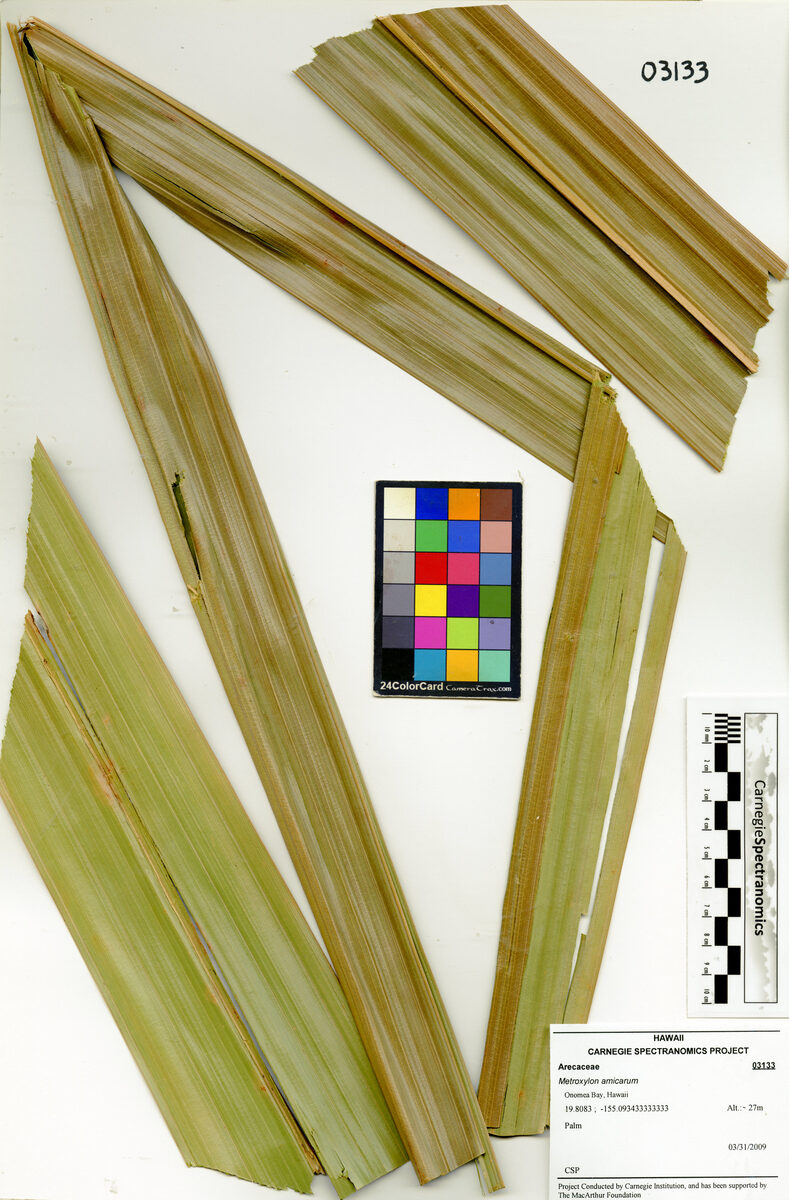
A small slender palm and the only representative of this genus in the Philippines which sends up shoots from the base of the trunk, forming clumps. It forms a cluster of closely spaced stems. It can be 5 m high. The trunks are 5-15 cm across. They have well spaced rings. The leaves point upwards. The leaves are twice divided and have fishtail leaflets. The leaves are 2-4 m long. The stems have black coarsely woven fibres left behind when the leaf stalk bases split. The flowering stalk is 25-45 cm long with pale cream flowers. The fruit are 15 to 16 mm across and frequently broader than high. The flower envelope is 8.5 to 9 mm across. The stems die when the fruit matures but other stems keep growing. The fruit contain stinging crystals so need to be handled with care. Each fruit contains one seed.
Edible Uses
The unopened bud is cooked and eaten, with a slightly bitter flavor. Edible starch can be extracted from the stem. Sap is extracted from the flowering stem and used for sugar or wine. The seeds are edible and can be eaten.
Traditional Uses
The bud is cooked and eaten. It is slightly bitter. The fruit is poisonous but the seeds are edible. Edible starch can be extracted from the stem. Sap is extracted from the flowering stem and used for sugar or wine.
Medicinal Uses
Cultivated mainly as an ornament plant in Cambodia, where it is named tunsaé töch, traditional healers burn the heaps of felted hairs from the leaves' axils to treat ill limbs of patients. Its trunk pith can be extracted to make a kind of flour that has similar properties like sago.
Known Hazards
The fruit of C. mitis is saturated with raphides, sharp, needle-shaped crystals of calcium oxalate. The raphides are strong irritants that cause damage and later itching upon contact with skin, and if ingested, the mouth. This is a result of the physical structure of the raphides, and not any chemical reaction.
Distribution
It grows in tropical and subtropical places. It can grow in warm temperate regions. It requires a rich well-drained soil. It needs regular moisture and humidity. It can grow in full or part sun. They are found wild in forests near streams at low altitudes in the Province of Palawan in the Philippines. It can grow in arid places. In Indonesia it grows up to 1,500 m above sea level. It suits hardiness zones 10-12. Adelaide Botanical Gardens. Mt Cootha Botanical Gardens.
Where It Grows
Africa, Asia, Andamans, Australia, Brunei, Burkina Faso, Cambodia, Caribbean, Central America, China, East Africa, Egypt, Fiji, Guatemala, Guianas, Haiti, Hawaii, India, Indochina, Indonesia, Kenya, Laos, Madagascar, Malaysia*, Mayotte, Myanmar, North Africa, North America, Northeastern India, Pacific, Philippines, Puerto Rico, SE Asia, Singapore, Slovenia, Sri Lanka, Suriname, Tanzania, Thailand, USA, Vietnam, West Africa, West Indies,
Cultivation
Plants can be grown from seed or by division of the suckers. Seed usually take 4-6 months to germinate. Plants respond to nitrogen fertiliser. Plants tolerate full sun when small.
Propagation
Seed - usually takes 3 - 4 months to germinate.
Other Uses
A fibre is obtained from the leaf petioles. The leaf sheath fibre ('kittul') from plants in this genus is durable and is often harvested as a source of thatch, cordage, and to make brushes and brooms. The fibre becomes very pliable after being steeped in linseed oil. The woolly hairs on the leaf sheaths, petioles and rachis can be used as tinder or as wadding. They may also be used to caulk wooden boats. The finer fibre can also be spun into fishing lines or coarse threads for sewing.
Production
Plants are fast growing.
Notes
There are 12 Caryota species. They are tropical.
Synonyms
Also Known As
Ansae, Beredin, Burmese Fishtail palm, Chongsae, Cluster fishtail palm, Dudok, Dung dinh, Fishtail Palm, Genduru, Khen ang mu, Khidir, Mari patti, Mari supari, Mei-hle, Meredin, Minbaw, Mudor, Palem sarai, Pugahang-suwi, Rabok, Sarai, Tamibaw, Tao rang, Tukas, Tukus, Tunsae, Wijnpalm
References (58)
- Ambasta S.P. (Ed.), 2000, The Useful Plants of India. CSIR India. p 108
- Anderson, E. F., 1993, Plants and people of the Golden Triangle. Dioscorides Press. p 205
- Arora, K., Indigenous Forest Management in the Andaman and Nicobar Islands, India.
- Awasthi, A.K., 1991, Ethnobotanical studies of the Negrito Islanders of Andaman Islands, India - The Great Andamanese. Economic Botany 45(2) pp 274-280.
- Balick, M.J. and Beck, H.T., (Ed.), 1990, Useful palms of the World. A Synoptic Bibliography. Colombia p 216, 426, 597, 659,
Show all 58 references Hide references
- Bhargava, N., 1983, Ethnobotanical Studies of the Tribes of Andaman and Nicobar Islands, India. 1. Onge. Economic Botany 37(1): 110-119
- Blomberry, A. & Rodd, T., 1982, Palms. An informative practical guide. Angus & Robertson. p 72
- Blomberry, A. & Rodd, T., 1982, Palms. An informative practical guide. Angus & Robertson. p 72
- Bodkin, F., 1991, Encyclopedia Botanica. Cornstalk publishing, p 219
- Brickell, C. (Ed.), 1999, The Royal Horticultural Society A-Z Encyclopedia of Garden Plants. Convent Garden Books. p 233
- Burkill, I.H., 1966, A Dictionary of the Economic Products of the Malay Peninsula. Ministry of Agriculture and Cooperatives, Kuala Lumpur, Malaysia. Vol 1 (A-H) p 476
- Chai, P. P. K. (Ed), et al, 2000, A checklist of Flora, Fauna, Food and Medicinal Plants. Lanjak Entimau Wildlife Sanctuary, Sarawak. Forestry Malaysia & ITTO. p 163
- Checklist of NT Vascular Plant Species. January 2003.
- Cundall, P., (ed.), 2004, Gardening Australia: flora: the gardener's bible. ABC Books. p 336
- Dharani, N., 2002, Field Guide to common Trees & Shrubs of East Africa. Struik. p 285
- Dobriyal, M. J. R. & Dobriyal, R., 2014, Non Wood Forest Produce an Option for Ethnic Food and Nutritional Security in India. Int. J. of Usuf. Mngt. 15(1):17-37
- Eiadthong, W., et al, 2010, Management of the Emerald Triangle Protected Forests Complex. Botanical Consultant Technical Report. p 23
- Engel, D.H., & Phummai, S., 2000, A Field Guide to Tropical Plants of Asia. Timber Press. p 74
- Etherington, K., & Imwold, D., (Eds), 2001, Botanica's Trees & Shrubs. The illustrated A-Z of over 8500 trees and shrubs. Random House, Australia. p 186
- Facciola, S., 1998, Cornucopia 2: a Source Book of Edible Plants. Kampong Publications, p 27
- Fl. cochinch. 2:569. 1790
- Gibbons, M., 1993, Palms. Compact study Guide and Identifier. Sandstone. p 24
- Gibbons, M., 2003, A pocket guide to Palms. Chartwell Books. p 66
- Haynes, J., & McLaughlin, J., 2000, Edible palms and Their Uses. University of Florida Fact sheet MCDE-00-50-1 p 4
- Heywood, V.H., Brummitt, R.K., Culham, A., and Seberg, O., 2007, Flowering Plant Families of the World. Royal Botanical Gardens, Kew. p 348
- Hibbert, M., 2002, The Aussie Plant Finder 2002, Florilegium. p 61
- Hoare, A., 2003, Food use of the Lundayeh SW Sabah. Borneo Research Council.
- Hu, Shiu-ying, 2005, Food Plants of China. The Chinese University Press. p 301
- Jacquat, C., 1990, Plants from the Markets of Thailand. D.K. Book House p 108
- Japanese International Research Centre for Agricultural Science www.jircas.affrc.go.jp/project/value_addition/Vegetables
- Johnson, D.V., 1998, Tropical palms. Non-wood Forest products 10. FAO Rome. p 42, 46
- Jones, D.L., 1994, Palms throughout the World. Smithtonian Institution, Washington. p 163
- Jones, D.L., 2000, Palms of Australia 3rd edition. Reed/New Holland. p 131
- Kar, A., et al, 2013, Wild Edible Plant Resources used by the Mizos of Mizoram, India. Kathmandu University Journal of Science, Engineering and Technology. Vol. 9, No. 1, July, 2013, 106-126
- Llamas, K.A., 2003, Tropical Flowering Plants. Timber Press. p 97
- Lord, E.E., & Willis, J.H., 1999, Shrubs and Trees for Australian gardens. Lothian. p 94
- Martin, F.W. & Ruberte, R.M., 1979, Edible Leaves of the Tropics. Antillian College Press, Mayaguez, Puerto Rico. p 210
- Menninger, E.A., 1977, Edible Nuts of the World. Horticultural Books. Florida p 131
- Monsalud, M.R., Tongacan, A.L., Lopez, F.R., & Lagrimas, M.Q., 1966, Edible Wild Plants in Philippine Forests. Philippine Journal of Science. p 524
- Ochse, J. J. et al, 1931, Vegetables of the Dutch East Indies. Asher reprint. p 559
- Ogle, B. M., et al, 2003, Food, Feed or Medicine: The Multiple Functions of Edible Wild Plants in Vietnam. Economic Botany 57(1): 103-117
- Plants of Haiti Smithsonian Institute http://botany.si.edu
- PROSEA (Plant Resources of South East Asia) handbook, Volume 9, 1996, Non seed carbohydrates
- Recher, P, 2001, Fruit Spirit Botanical Gardens Plant Index. www.nrg.com.au/~recher/ seedlist.html p 7
- Riffle, R.L. & Craft, P., 2003, An Encyclopedia of Cultivated Palms. Timber Press. p 290
- Royal Botanic Gardens, Kew (1999). Survey of Economic Plants for Arid and Semi-Arid Lands (SEPASAL) database. Published on the Internet; http://www.rbgkew.org.uk/ceb/sepasal/internet [Accessed 5th May 2011]
- Sang, D. T., & Mizoue, K. O. N., 2012, Use of Edible Forest Plants among Indigenous Ethnic Minorities in Cat Tien Biosphere Reserve, Vietnam. Asian Journal of Biodiversity Vol. 3 (1), p 23-49 (As Canarium tramdenum)
- Singh, H.B., Arora R.K.,1978, Wild edible Plants of India. Indian Council of Agricultural Research, New Delhi. p 81
- Slik, F., www.asianplant.net
- Smith, A.C., 1979, Flora Vitiensis Nova: A New flora of Fiji, Hawai Botanical Gardens, USA Vol 1 p 408
- Staples, G.W. and Herbst, D.R., 2005, A tropical Garden Flora. Bishop Museum Press, Honolulu, Hawaii. p 618
- Soepadmo, E., 1998, Plants. The Encyclopedia of Malaysia. Archipelago press. p 54
- Sukarya, D. G., (Ed.) 2013, 3,500 Plant Species of the Botanic Gardens of Indonesia. LIPI p 767
- Tanaka, Y. & Van Ke, N., 2007, Edible Wild Plants of Vietnam: The bountiful garden. Orchid books. p 35
- Turreira Garcia, N., et al, 2017, Ethnobotanical knowledgeof the Kuy and Khmer people in Prey Lang, Cambodia. Cambodian Journal of Natural History 2017 (1): 76-101
- Van Sam, H. et al, 2008, Uses and Conservation of Plant Species in a National Park. A case study of Ben En, Vietnam. Economic Botany 62:574-593
- Wickens, G.E., 1995, Edible Nuts. FAO Non-wood forest products. FAO, Rome. p164
- World Checklist of Useful Plant Species 2020. Royal Botanic Gardens, Kew