Erioglossum rubiginosum
(Roxb.) Blume
Rusty sapindus
wikimedia· cc-by-sa
Wikimedia Commons - Anup Sadi
wikimedia· cc-by-sa
Wikimedia Commons - Anup Sadi
Description
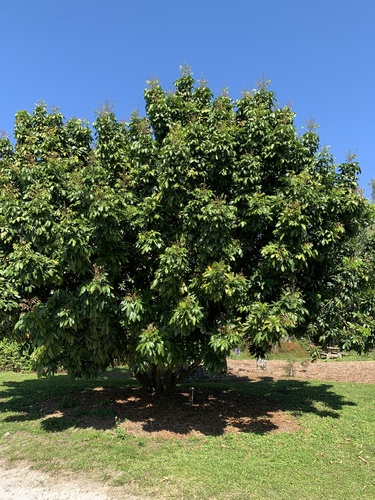
A shrub or small tree. The crown is compact and bushy. The trunk is crooked and it branches near the base. It grows 3-15 m tall. It is covered with hairs. The leaves are are 15-50 cm long and have leaflets along the stalk. There are 4 to 6 pairs of leaflets. The leaflets are narrowly oval and 8-18 cm long by 3-7 cm wide. They are blunt at both ends. The flowers are white and have a scent. They are in small groups along 12-30 cm long flowering shoots. The fruit are in large clusters. The fruit is 1 cm long and covered with fine hairs. It turns yellow, orange, purple then black as it ripens. It has a thin sweet juicy pulp.
Edible Uses
The ripe fruit are sweet with thin sweet juicy pulp and are eaten raw; young leaves are cooked and eaten, and are sold in local markets.
Traditional Uses
The ripe fruit are eaten and are sweet. The young leaves are cooked and eaten.
This uses section is brief — help expand it
Distribution
It is a tropical plant. It grows in the tropical lowlands and at medium altitudes. In Indonesia it grows from sea level to 1,200 m above sea level.
Where It Grows
Andamans, Asia, Australia, Bangladesh, Cambodia, China, Himalayas, India, Indochina, Indonesia, Malaysia, Nepal, North America, Northeastern India, Philippines, SE Asia*, Sikkim, USA,
Cultivation
Plants can be grown from seed.
Production
In northeastern India plants flower and fruit April to June. Fruit matures in about 100 days.
Other Information
The leaves are sold in local markets. It is a cultivated plant.
Notes
Probably now a synonym but an unresolved name in The Plant List. Some Erioglossum are now in Lepisanthes.
Synonyms
Also Known As
Abigran, Anga-banga, Baraharina, Bhasusu, Kalayo, Katiaju, Kilaju, Klaju, Mertajam, Muli, Pancovier, Pitha, Ritha, Telayu
References (11)
- Avinash, B. K., Kumar, R., et al, 2013, Ethnoboptany of Tharus of Dudhwa National Park, India. Mintage journal of Pharmaceutical & Medical Science 6-11
- Cengel, D. J. & Dany, C., (Eds), 2016, Integrating Forest Biodiversity Resource Management and Sustainable Community Livelihood Development in the Preah Vihear Protected Forest. International Tropical Timber Organization p 121 (As synonyms)
- Majumdar, K and Datta, N., 2009, Traditional wild edible fruits for the forest dwellers of Tripura, India. Pleione 3(2) 167-178
- Martin, F. W., et al, 1987, Perennial Edible Fruits of the Tropics. USDA Handbook 642 p 56
- Ochse, J. J. et al, 1931, Vegetables of the Dutch East Indies. Asher reprint. p 650
Show all 11 references Hide references
- Pasha, M. K. & Uddin, S. B., 2019, Minor Edible Fruits of Bangladesh. Bangladesh J. Plant Taxon. 26(2): 299–313
- Reis, S. V. and Lipp, F. L., 1982, New Plant Sources for Drugs and Foods from the New York Botanical Garden herbarium. Harvard. p 169
- Sawian, J. T., et al, 2007, Wild edible plants of Meghalaya, North-east India. Natural Product Radiance Vol. 6(5): p 416
- Singh, V. B., et al, (Ed.) Horticulture for Sustainable Income and Environmental Protection. Vol. 1 p 216
- Wild edible plants of Himachal Pradesh
- Zeven, A. C. & de West, J. M. J., 1982, Dictionary of cultivated plants and their regions of diversity. Wageningen. p 63
More from Sapindaceae
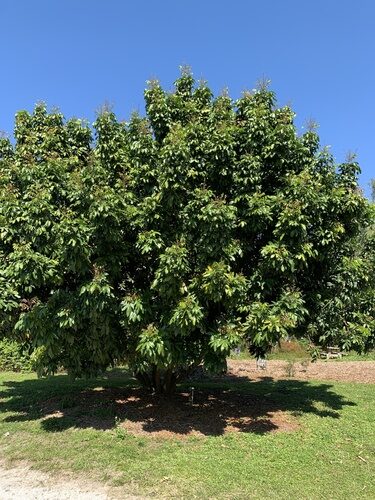
Dimocarpus longan
Longan
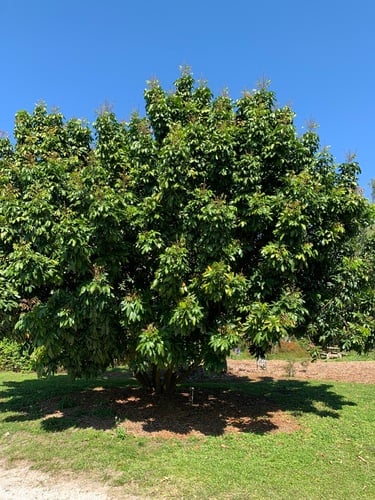
Dimocarpus longan subsp. malesianus
Mata kuching, Cat's eyes
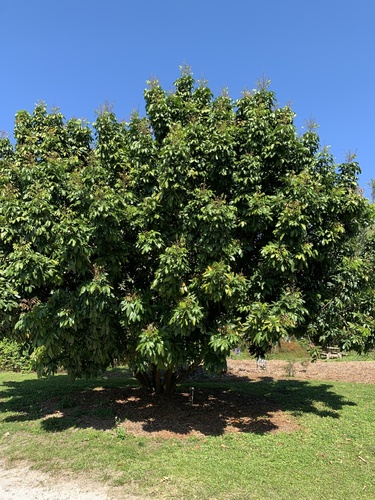
Dimocarpus longan subsp. malesianus var. echinatus
Spiny longan
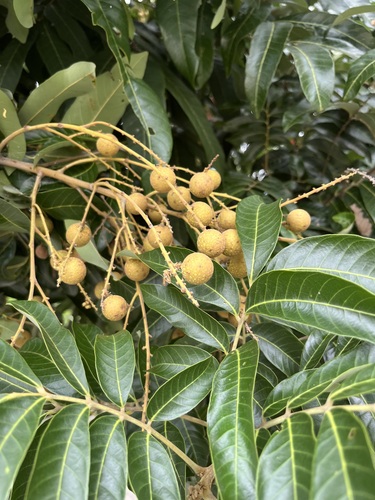
Dimocarpus longan subsp. malesianus var. malesianus cv. kakus
Kakus
Dimocarpus longan subsp. malesianus var. sau
Sau
Diploglottis berniana
Giant-leaved tamarind