Lecaniodiscus fraxinifolius subsp. vaughanii
(Dunkley) Friis
River litchi
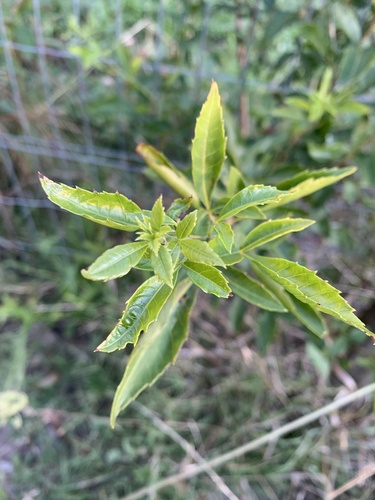
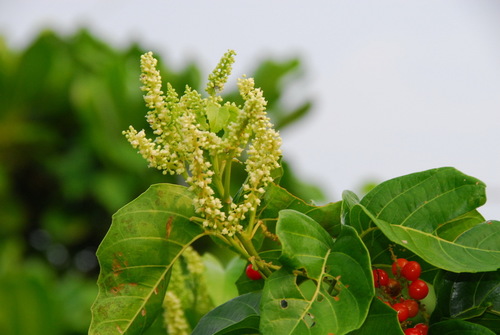
iNaturalist· cc-by-nc
(c) Bart Wursten, some rights reserved (CC BY-NC)
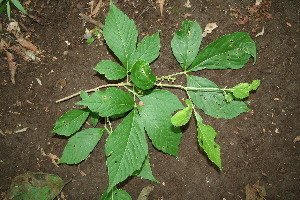
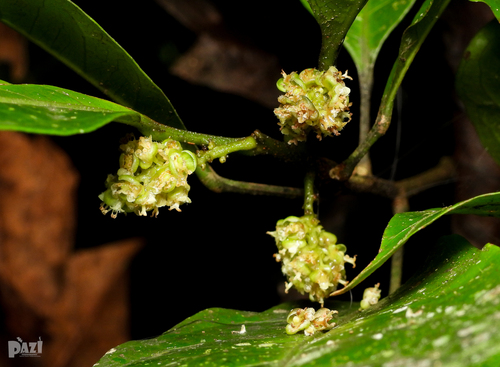
iNaturalist· cc-by-nc
(c) Bart Wursten, some rights reserved (CC BY-NC)
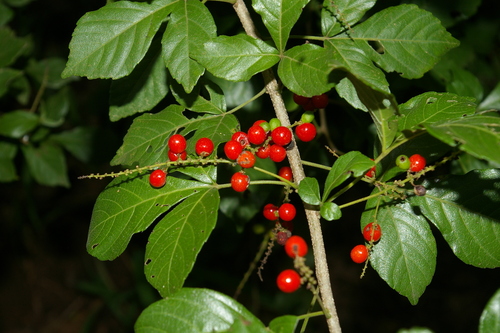
iNaturalist· cc-by-nc
(c) Bart Wursten, some rights reserved (CC BY-NC)
Description
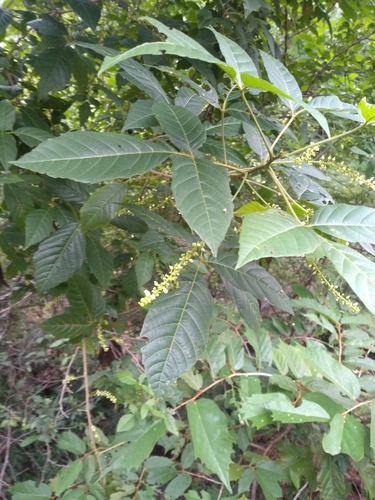
A leafy tree. It grows 5-18 m tall. The bark is grey and fairly smooth. It becomes darker and more rough with age. The leaves are alternate and compound. There are 3-7 pairs of thin leaflets. They are 3-11 cm long. Young leaflets are orange to red. They turn pale green. The flowers are yellow to green. They are along loose spike like heads. These are 10 cm long. They occur in the axils of leaves. Trees are separately male and female. The female flower stalks are shorter than the male. The fruit ate yellow to orange capsules. They are oval and 1 cm long. They are covered with short hairs. The flesh is blue. There is one seed.
Edible Uses
The ripe fruit are eaten as a snack.
Traditional Uses
The ripe fruit are eaten as a snack.
This uses section is brief — help expand it
Distribution
It is a tropical plant. It grows near rivers and the edges of forests. It can form thickets. In Tanzania it grows from sea level to 1,400 m above sea level.
Where It Grows
Africa, East Africa, Ethiopia, Kenya, Somalia, Tanzania, Uganda,
Cultivation
Plants can be grown from seeds.
Production
In Tanzania fruit are collected from April to June.
Synonyms
Also Known As
Kafulujege, Mbwewe, Mnanyakanda, Mnyanza, Muyanza, Mzindanguruwe, Riangata
References (1)
- Ruffo, C. K., Birnie, A. & Tengnas, B., 2002, Edible Wild Plants of Tanzania. RELMA p 434