Dinetus racemosus
(Roxb.) Buch.-Ham. ex Sweet
Snow creeper
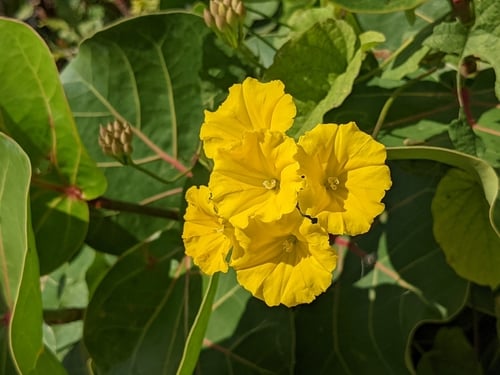
iNaturalist· cc-by-nc
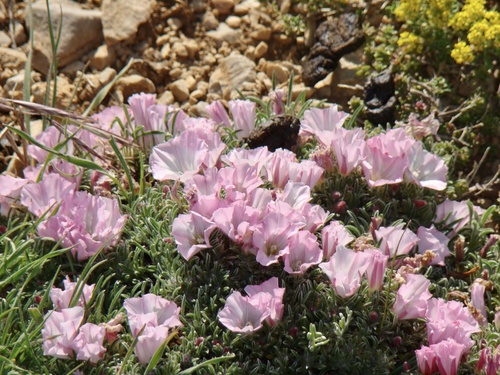
(c) 小铖/Smalltown, some rights reserved (CC BY-NC), uploaded by 小铖/Smalltown
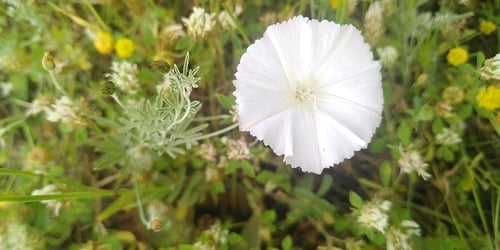
iNaturalist· cc-by-nc
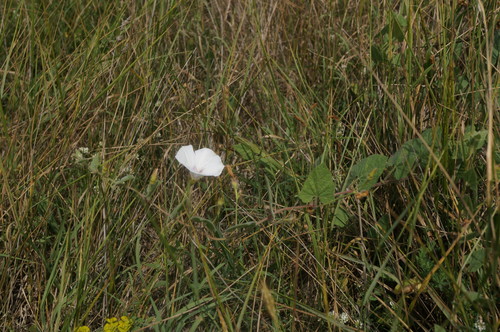
(c) 綾蛾Actias, some rights reserved (CC BY-NC), uploaded by 綾蛾Actias
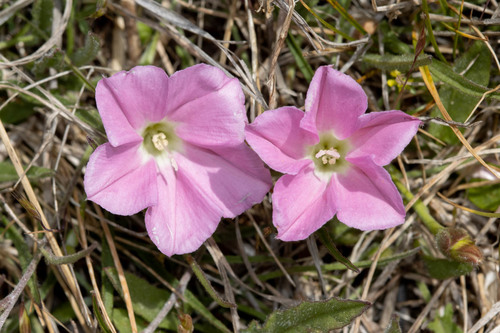
iNaturalist· cc-by-nc-sa
(c) Satish Nikam, some rights reserved (CC BY-NC-SA)
Description
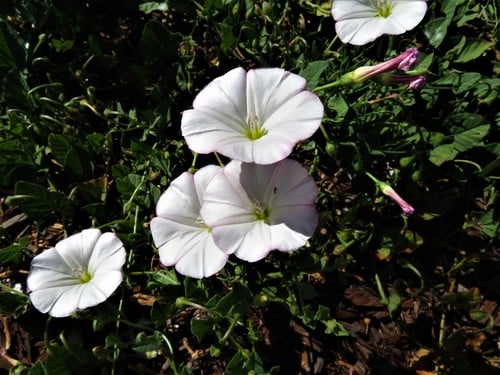
A twining herb. It usually grows 2-3 m long but can be much longer. The stems are angular and initially hairy. The leaf stalks are 3-7 cm long. The leaf blades are deeply heart shaped and 6-17 cm long by 4-9 cm wide. It is paler and hairy underneath. The flowering stalks occur singly or in pairs. They can be 13-45 cm long. The flowers are funnel shaped and usually white. The fruit is light brown and narrowly oval.
Edible Uses
The young leaves are eaten fresh or dried with pepper, and the fruit stalks are eaten when food is scarce.
Traditional Uses
The young leaves are eaten with pepper, either fresh or dried. The fruit stalks are eaten when food is scarce.
This uses section is brief — help expand it
Distribution
It is a tropical plant. It grows in open sites in forest and scrub. It grows between 1,000-2,000 m above sea level. In Sichuan and Yunnan.
Where It Grows
Asia, Bhutan, China, East Timor, Himalayas, India, Indochina, Indonesia, Laos, Myanmar, Nepal, Pakistan, Papua New Guinea, PNG, Philippines, SE Asia, Thailand, Tibet, Timor-Leste, Vietnam, West Timor,
Synonyms
Also Known As
Bai hua teng, Bhowri, Gariya, Ma-ywe
References (6)
- Ambasta, S.P. (Ed.), 2000, The Useful Plants of India. CSIR India. p 485 (As Porana racemosa)
- Burkill, I.H., 1966, A Dictionary of the Economic Products of the Malay Peninsula. Ministry of Agriculture and Cooperatives, Kuala Lumpur, Malaysia. Vol 2 (I-Z) p 1831 (As Porana racemosa)
- Fl. ind. 2:41. 1824 (As Porana racemosa)
- Simoes, A. R. et al, 2011, The Convolvulaceae of Timor with special reference to east Timor. Blumea 56:49-72
- Singh, H.B., Arora R.K.,1978, Wild edible Plants of India. Indian Council of Agricultural Research, New Delhi. p 40 (As Porana malabarica)
Show all 6 references Hide references
- WATT, (As Porana racemosa)