Vigna frutescens
A. Rich.
Trailing fire pea
iNaturalist· cc-by-nc
(c) Troos van der Merwe, some rights reserved (CC BY-NC), uploaded by Troos van der Merwe
iNaturalist· cc-by-nc-nd
(c) Joseph Heymans, some rights reserved (CC BY-NC-ND), uploaded by Joseph Heymans
Description
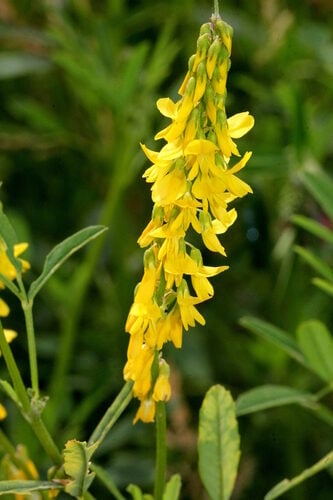
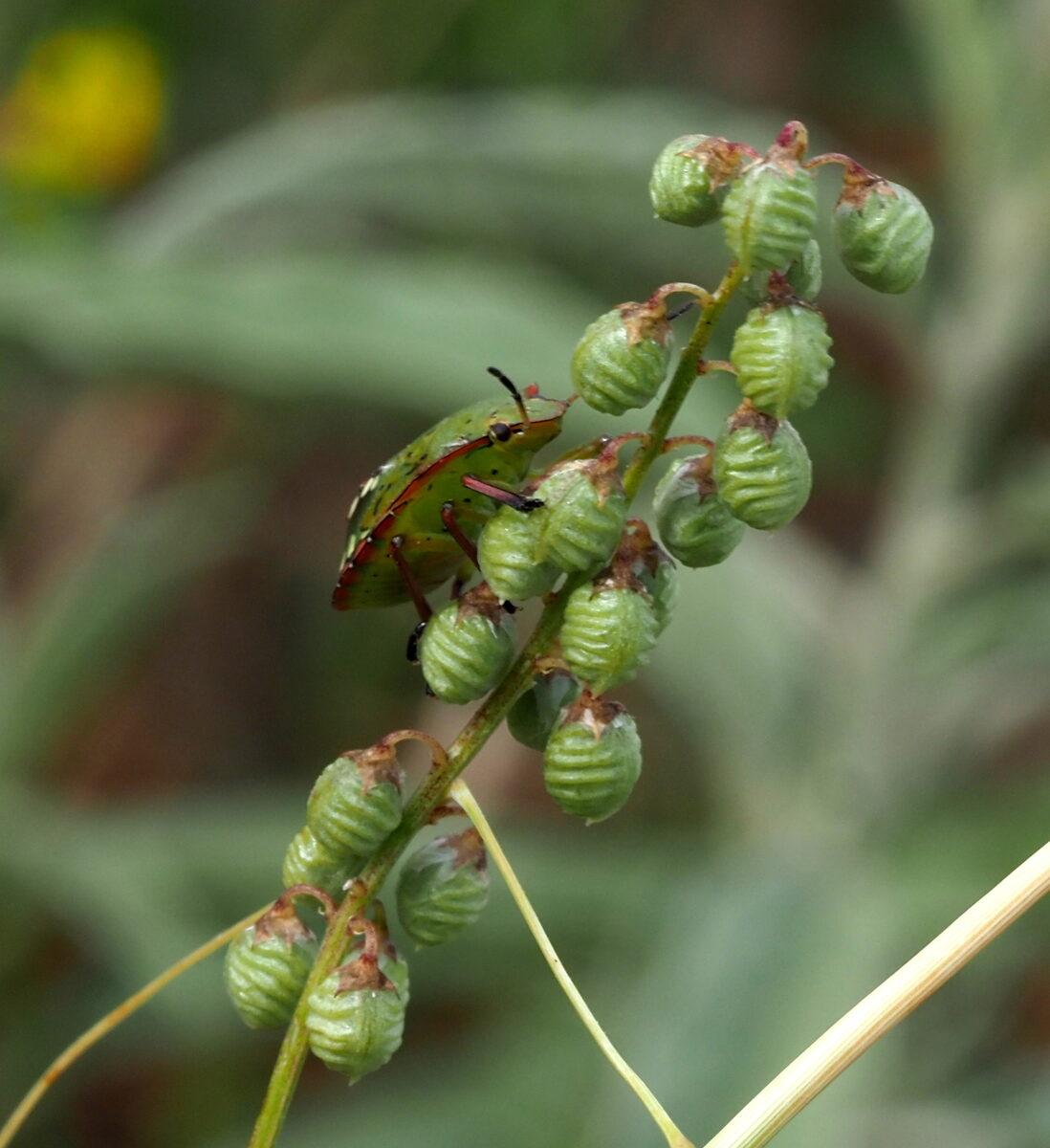
A climbing herb. It grows 1.5 m long. It has a root tuber 5 cm across. The leaves have 3 leaflets. There are several flowers in a group. The flowers have a scent. The pods are erect and 6-11 cm long by 5-4 mm wide. The seeds are red-brown with red speckles.
Edible Uses
Roots - raw or cooked. The younger ones are often eaten raw, older ones either cooked or dried and ground to a powder. The roots are rather fibrous, traditionally they would be chewed and the fibrous portion spat out. If the root is dried and powdered, the fibre can be separated by sieving prior to cooking
Traditional Uses
The roots are eaten as a snack.
This uses section is brief — help expand it
Distribution
It is a tropical plant.
Where It Grows
Africa, East Africa, Kenya, Mozambique, Southern Africa, Tanzania, Zimbabwe,
Cultivation
This species has a symbiotic relationship with certain soil bacteria; these bacteria form nodules on the roots and fix atmospheric nitrogen. Some of this nitrogen is utilized by the growing plant but some can also be used by other plants growing nearby.
Other Uses
A fibre is obtained from the stem.
Nutrition
| Part | Moisture | kJ | kcal | Protein | Vit A | Vit C | Iron | Zinc |
|---|---|---|---|---|---|---|---|---|
| Tuber | 75.8 | 230 | 55 | 5.6 | — | — | — | — |
Synonyms
Also Known As
Nannyoi
References (8)
- Ichikawa, M., 1980, The Utilization of Wild Food Plants by the Suiei Dorobo in Northern Kenya. J. Anthrop. Soc. Nippon. 88(1): 25-48
- Mutie, F. G., 2020, Conservation of Wild Food Plants and Their Potential for Combatting Food Insecurity in Kenya as Exemplified by the Drylands of Kitui County. Plants 2020, 9, 1017
- Mutie, F. M., et al, 2023, Important Medicinal and Food Taxa (Orders and Families) in Kenya, Based on Three Quantitative Approaches. Plants 2023, 12, 1145
- Ruiters-Welcome, A. K., 2019, Food plants of southern Africa. Ph.D. thesis. Univ. of Johannesburg p 62
- www.sscnet.ucla.edu/anthro/bec/papers/Schoeninger1.pdf
Show all 8 references Hide references
- van Wyk, Ben-Erik, 2019, The diversity and multiple uses of southern African legumes. Australian Systematic Botany, 2019, 32, 519–546
- Welcome, A. K. & Van Wyk, B.-E., 2019, An inventory and analysis of the food plants of southern Africa. South African Journal of Botany 122 (2019) 136–179
- World Checklist of Useful Plant Species 2020. Royal Botanic Gardens, Kew