Rothmannia capensis
Thunb.
Cape gardenia, Candlewood
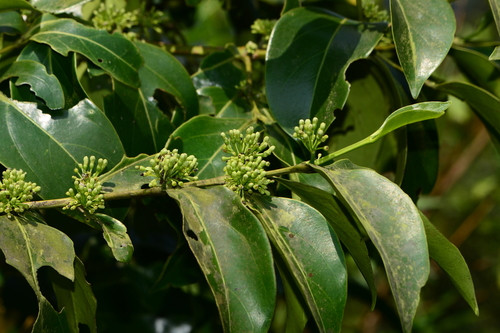
iNaturalist· cc-by-nc
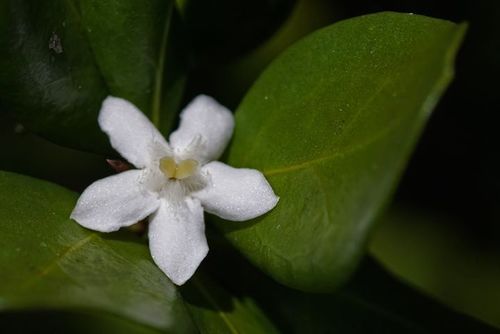
(c) YvettevWijk, some rights reserved (CC BY-NC), uploaded by YvettevWijk
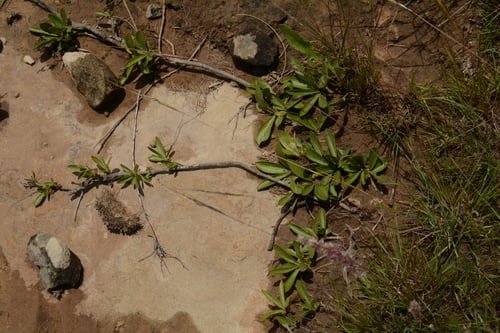
iNaturalist· cc-by-nc
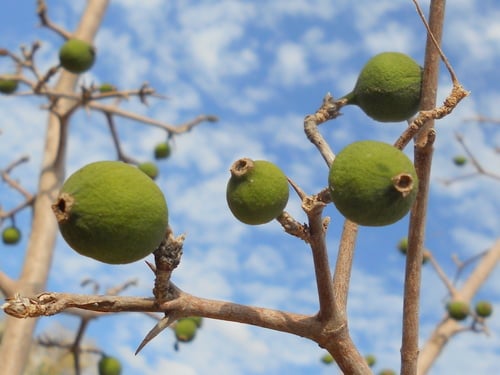
(c) R.Lecuona, some rights reserved (CC BY-NC), uploaded by R.Lecuona
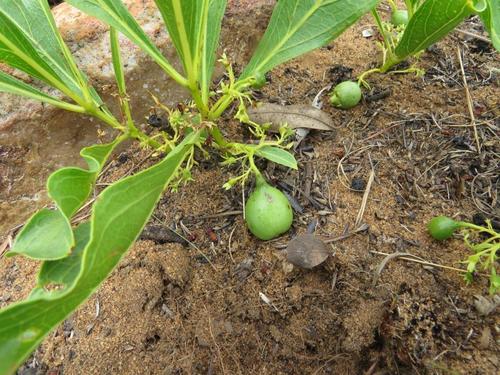
iNaturalist· cc-by-nc
(c) tjeerd, some rights reserved (CC BY-NC), uploaded by tjeerd
Summary
Source: WikipediaRothmannia capensis is a South African tree belonging to the Rubiaceae, usually about 5 m high in the open, but reaching 20 m under forest conditions. It occurs from the south-western Cape Province along the coastal regions and inland to the Waterberg and Soutpansberg in the Transvaal. It is a common tree on the Witwatersrand in Johannesburg. It produces abundant sweetly fragrant flowers in summer, and these are followed by smooth, dark green spherical fruits about 80mm in diameter. The blackish bark has a distinctive rectangular pattern of fine cracks. The genus was named for Göran Rothman (1739–1778) by Thunberg – both were pupils of Linnaeus.
Description
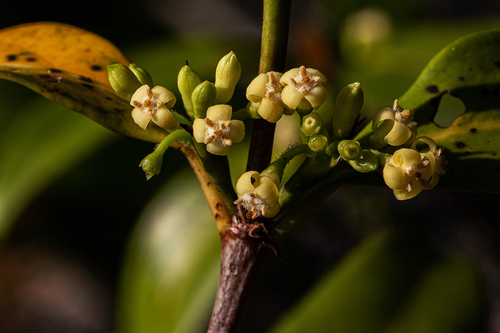
A medium sized tree. It is evergreen. The trunk is slender and straight. It can be 10 m high. The branches go out horizontal and droop down at the ends. The leaves are opposite, with an odd third leaf. The leaves are crowded towards the ends of branches. The crown is narrow. The flowers are at the ends of branches. They occur singly and are white with red streaks inside. The fruit is round and 7 cm across. They are green.
Edible Uses
The round fruit are edible but not pleasant to eat.
Medicinal Uses
The powdered roots are used for treating leprosy and rheumatism - the powder is rubbed into tiny incisions made into the skin over the effected parts. Juice from the fruits is heated and applied to wounds and burns to speed up the healing process. The effected parts are also held in smoke from the burning roots.
Distribution
It is a subtropical plant. It grows in forest and on rocky hillsides.
Where It Grows
Africa, Botswana, East Africa, Eswatini, South Africa, Southern Africa, Swaziland, Zambia,
Cultivation
A plant mainly of subtropical areas, though its range does just enter the tropics. It is resistant to at least light frosts. Prefers loam or sandy soils. Grows very well in light shade or in full sun. The plant is somewhat drought resistant. A moderately fast growing plant, able to increase in height by 70cm per year. Plants can flower when only two years old, though most take a little longer.
Propagation
Seed - fairly easy. Remove the seeds from the brown fruit and sow them in containers. It is important to keep the seed mix moist until germination, which takes place from 14 days onwards.
Other Uses
The wood is very hard, pliable and close-grained. It is popular for making instrument handles and also for making various household utensils, tools, felloes etc. It makes durable spoons for cooking and stirring sticks for porridge. It is also used for engraving. The dry wood makes a hot fire.
Other Information
The fruit are edible but not pleasant.
Notes
There are 30 Rothmannia species.
Synonyms
Also Known As
Common Rothmannia, Intumbamadlozi, Kaapse katjiepiering, Munyanya, Sikhokho
References (7)
- Fowler, D. G., 2007, Zambian Plants: Their Vernacular Names and Uses. Kew. p 57
- Joffe, P., 2007, Creative Gardening with Indigenous Plants. A South African Guide. Briza. p 81
- Kongl. Vetensk. Acad. Handl. 37:67, t. 2. 1776
- Long, C., 2005, Swaziland's Flora - siSwati names and Uses http://www.sntc.org.sz/flora/
- Swaziland's Flora Database http://www.sntc.org.sz/flora
Show all 7 references Hide references
- van Wyk, B, van Wyk, P, and van Wyk B., 2000, Photographic guide to Trees of Southern Africa. Briza. p 273
- Venter, F & J., 2009, Making the most of Indigenous Trees. Briza. p 268