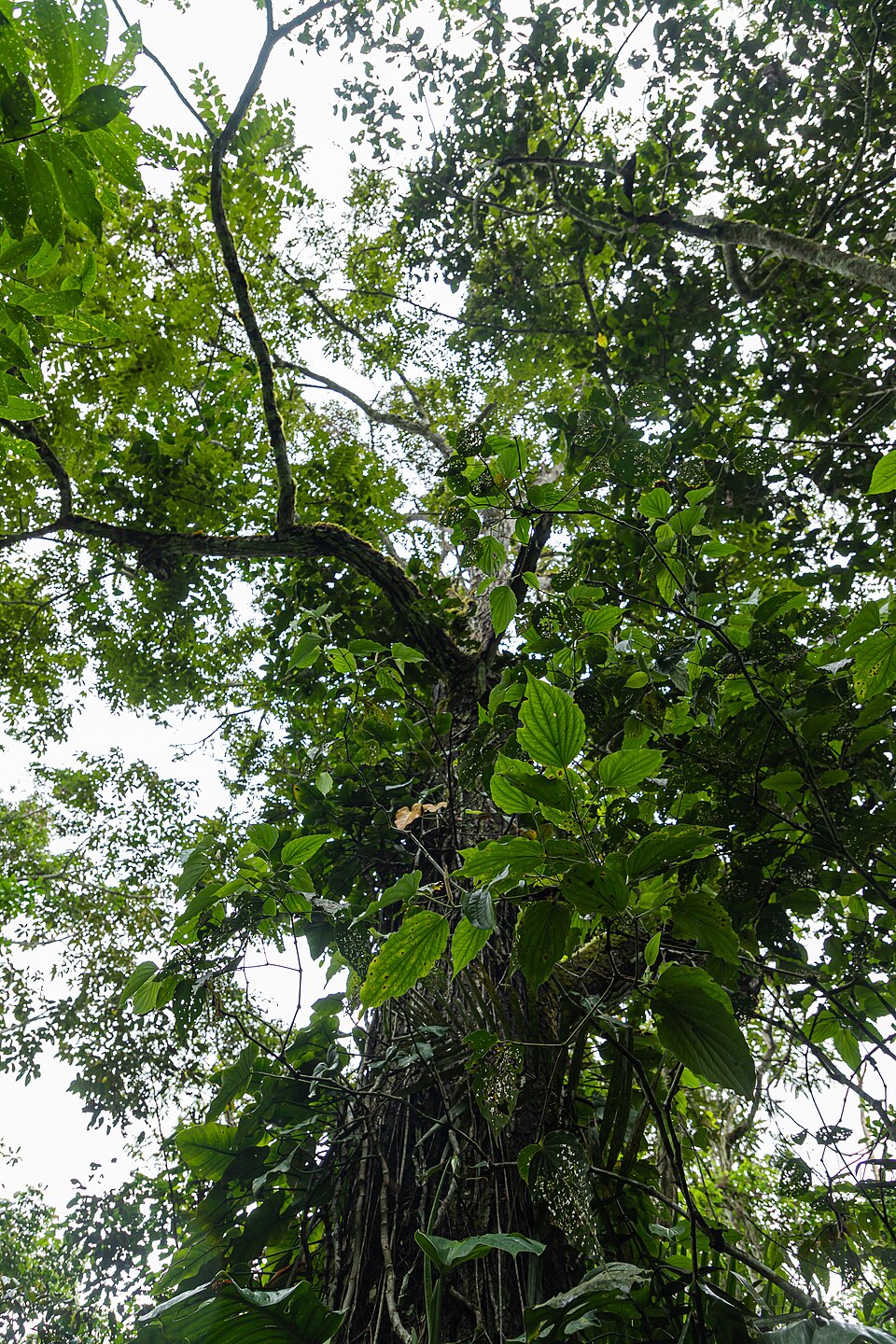
Carya myristiciformis
(F. Michx.) Nutt.
Nutmeg hickory, Bitter water hickory
iNaturalist· cc-by-nc
(c) J. Richard Abbott, some rights reserved (CC BY-NC)
iNaturalist· cc-by-nc
(c) J. Richard Abbott, some rights reserved (CC BY-NC)
iNaturalist· cc-by-nc
(c) J. Richard Abbott, some rights reserved (CC BY-NC)
Summary
Source: WikipediaCarya myristiciformis, the nutmeg hickory, a tree of the Juglandaceae or walnut family, also called swamp hickory or bitter water hickory, is found as small, possibly relict populations across the Southern United States and in northern Mexico on rich moist soils of higher bottom lands and stream banks. Little is known of the growth rate of nutmeg hickory. Logs and lumber are sold mixed with other hickories. The nuts are an oil-rich food for wildlife.
Description
A tree. It grows 21 m high and spreads 8 m wide. The bark is dark brown. The new shoots have glossy yellow scales. The leaves are green. They have broadly oval leaflets. The end leaflet is larger. The leaflets are white underneath. The flowers are very small and greenish. The male flowers have 6-7 stamen and the flowers are in slender drooping catkins. There are 3 hanging from one stalk. There are 2-10 female flowers at the tip of the same twig. The fruit is an egg shaped nut. It is 3-4 cm long. It is rust coloured. The shell is hard and grooved. The seed is edible.
Edible Uses
The seed can be eaten raw or cooked. It is sweet but enclosed in a thick shell, and measures up to 3cm in diameter. Seeds ripen in late autumn and will keep for at least 6 months when stored in the shell in a cool place.
Traditional Uses
The nuts are eaten.
This uses section is brief — help expand it
Medicinal Uses
None known.
Distribution
t. It is a subtropical planIt grows up to 150 m altitude in the southern USA. It grows in moist soils in valleys. It suits hardiness zones 9-11.
Where It Grows
Australia, Mexico, North America, USA,
Propagation
Seed requires cold stratification before it will germinate. Sow in a cold frame as soon as seed is ripe; stored seed should be kept moist (but not wet) and sown in a cold frame as soon as possible. Where possible, sow 1 or 2 seeds per deep pot and thin to the strongest seedling. Transplant seedlings as soon as they are large enough to handle, using deep pots to accommodate the taproot, and move plants to their permanent positions as soon as possible — ideally in their first summer — with cold protection for at least the first winter. Seed can also be sown in situ with protection from mice and cold; a bottomless plastic bottle capped with wire mesh works well for both purposes.
Other Uses
The wood is hard, very strong, tough, and close-grained. It makes a good fuel, burning well and producing substantial heat.
Notes
There are about 14-25 Carya species.
Also Known As
Nogal
References (11)
- Bircher, A. G. & Bircher, W. H., 2000, Encyclopedia of Fruit Trees and Edible Flowering Plants in Egypt and the Subtropics. AUC Press. p 86
- Cundall, P., (ed.), 2004, Gardening Australia: flora: the gardener's bible. ABC Books. p 335
- Facciola, S., 1998, Cornucopia 2: a Source Book of Edible Plants. Kampong Publications, p 123
- Gen. N. Amer. pl. 2:222. 1818 "myristicaeformis" (ex Elliott, Sketch bot. S. Carolina 2:628. 1824)
- Grandtner, M. M., 2008, World Dictionary of Trees. Wood and Forest Science Department. Laval University, Quebec, Qc Canada. (Internet database http://www.WDT.QC.ca)
Show all 11 references Hide references
- Krochmal, A. & Krochmal, C., 1982, Uncultivated Nuts of The United States. United States Department of Agriculture Forest Service. p 41
- Little, E.L., 1980, National Audubon Society Field Guide to North American Trees. Alfred A. Knopf. p 351
- Martin, F. W., et al, 1987, Perennial Edible Fruits of the Tropics. USDA Handbook 642 p 97
- Plants for a Future database, The Field, Penpol, Lostwithiel, Cornwall, PL22 0NG, UK. http://www.scs.leeds.ac.uk/pfaf/
- Segura, S., et al, 2018, The edible fruit species in Mexico. Genet Resour Crop Evol (2018) 65:1767–1793
- Wickens, G.E., 1995, Edible Nuts. FAO Non-wood forest products. FAO, Rome. p 134
More from Juglandaceae
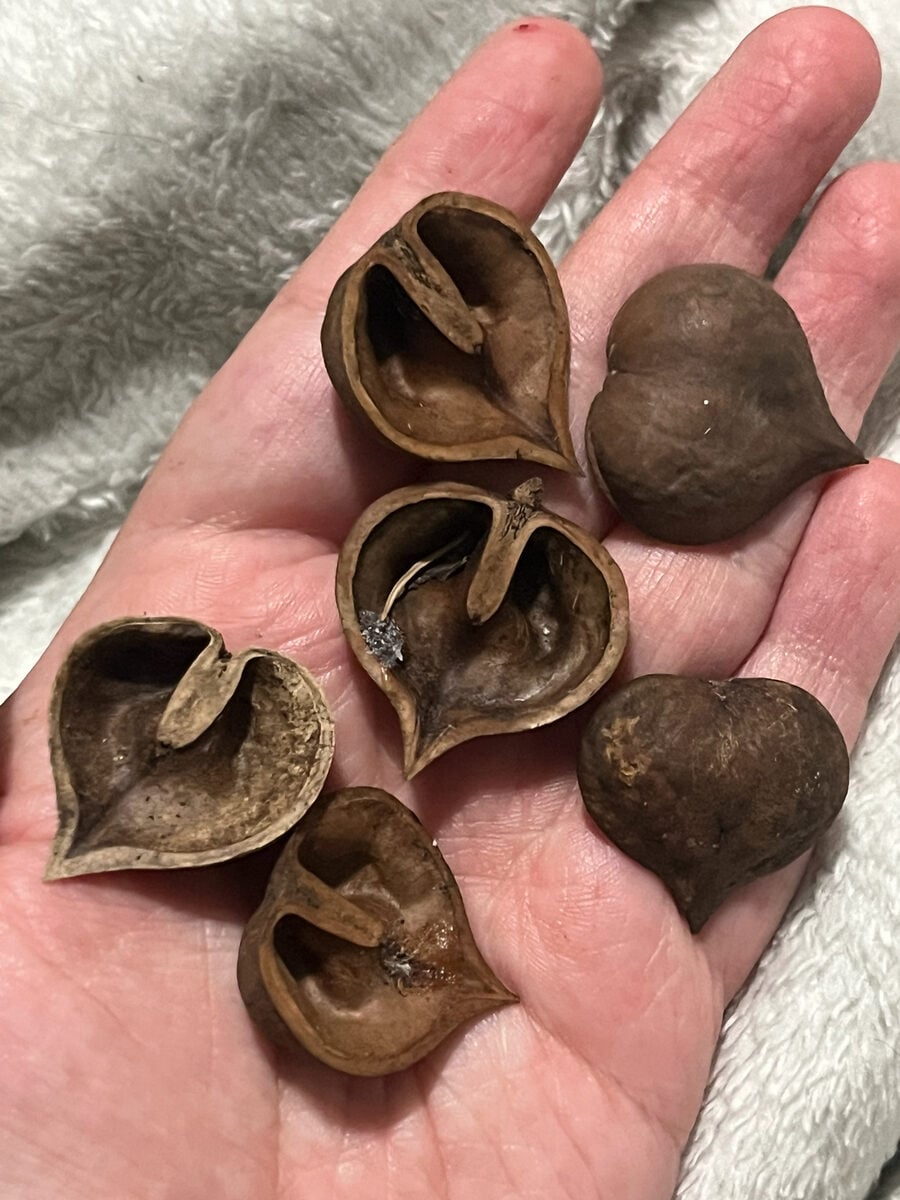
Juglans ailanthifolia cordiformis - (Makino.)Rehder.
Heartseed Walnut
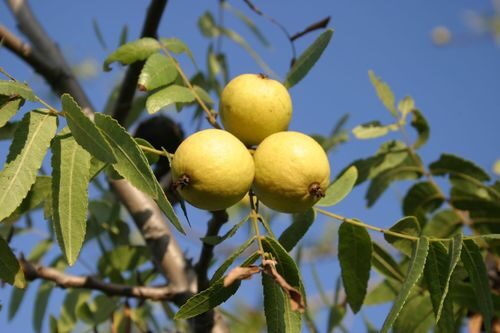
Juglans californica
California Walnut, Southern California walnut
Juglans cathayensis
Chinese Walnut
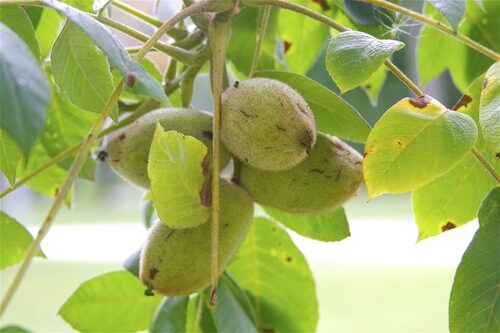
Juglans cinerea
Butternut - White Walnut, Butternut
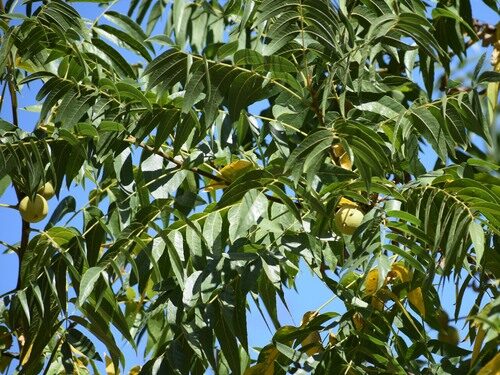
Juglans hindsii
Hind's Black Walnut, Northern California walnut, Paradox hybrid walnut
Juglans honorei
Ecuador walnut