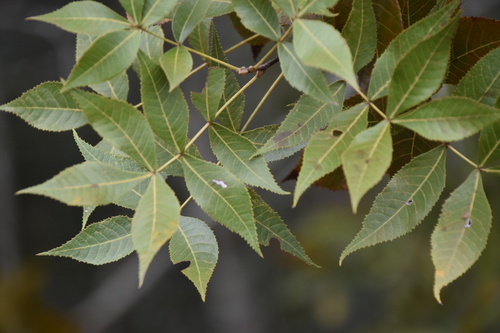
Carya illinoinensis
(Wang.) K. Koch
Pecan
iNaturalist· cc-by-nc-sa
(c) Tony Rodd, some rights reserved (CC BY-NC-SA)
iNaturalist· cc-by-nc
(c) Matt Tomlinson, some rights reserved (CC BY-NC)
iNaturalist· cc-by-sa
(c) Plant Image Library, some rights reserved (CC BY-SA)
Summary
Source: WikipediaPecan is a deciduous tree growing to 50 m (164 ft) at a medium rate, hardy to UK zone 5. Foliage present June to October; flowers April to May; seeds mature in October. Monoecious, wind-pollinated, self-fertile, and noted for attracting wildlife. Grows in light sandy, medium loamy, and heavy clay soils with mildly acidic to basic pH tolerance, even thriving in very acidic or very alkaline conditions. Requires full sun and prefers moist soil.
Description
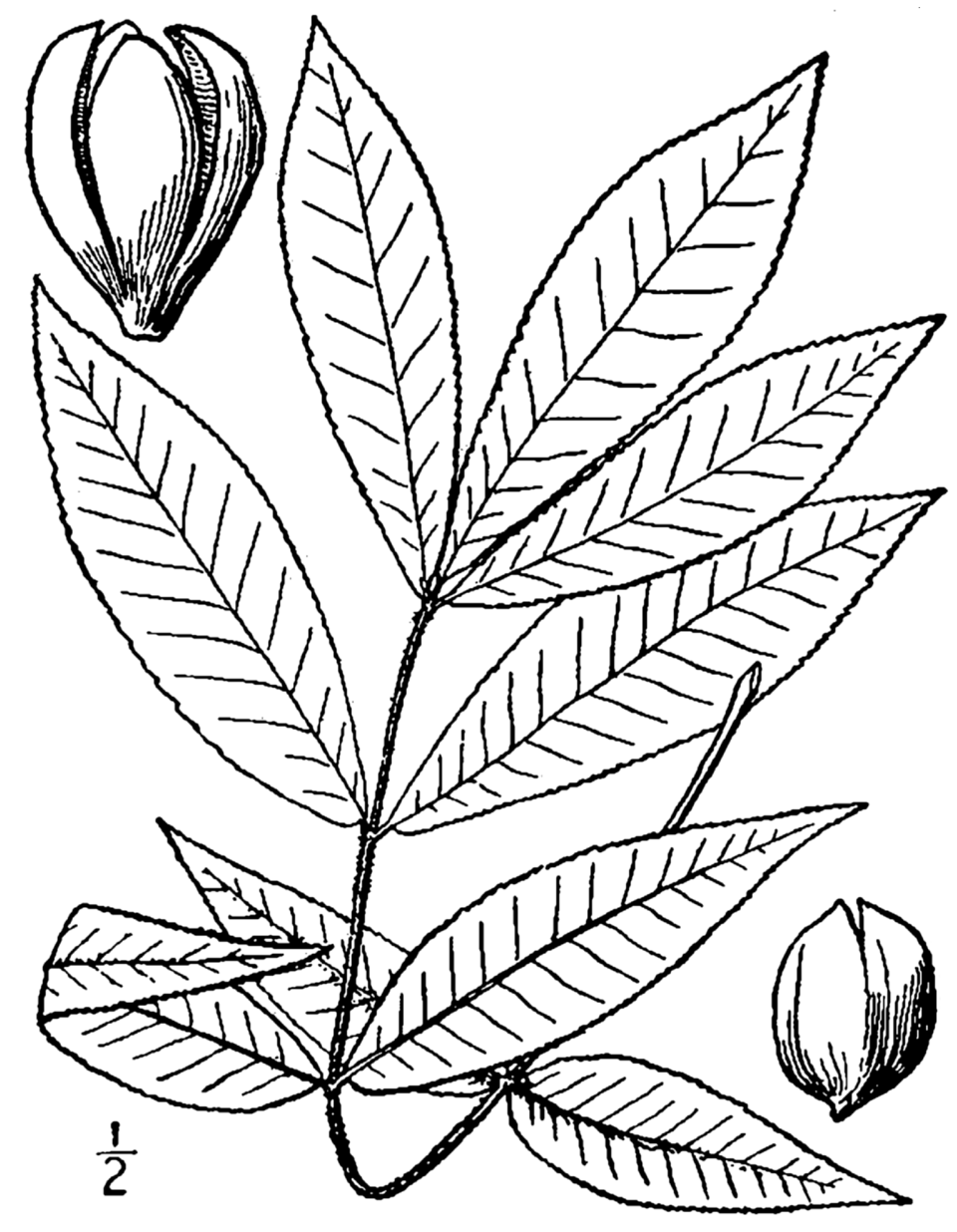
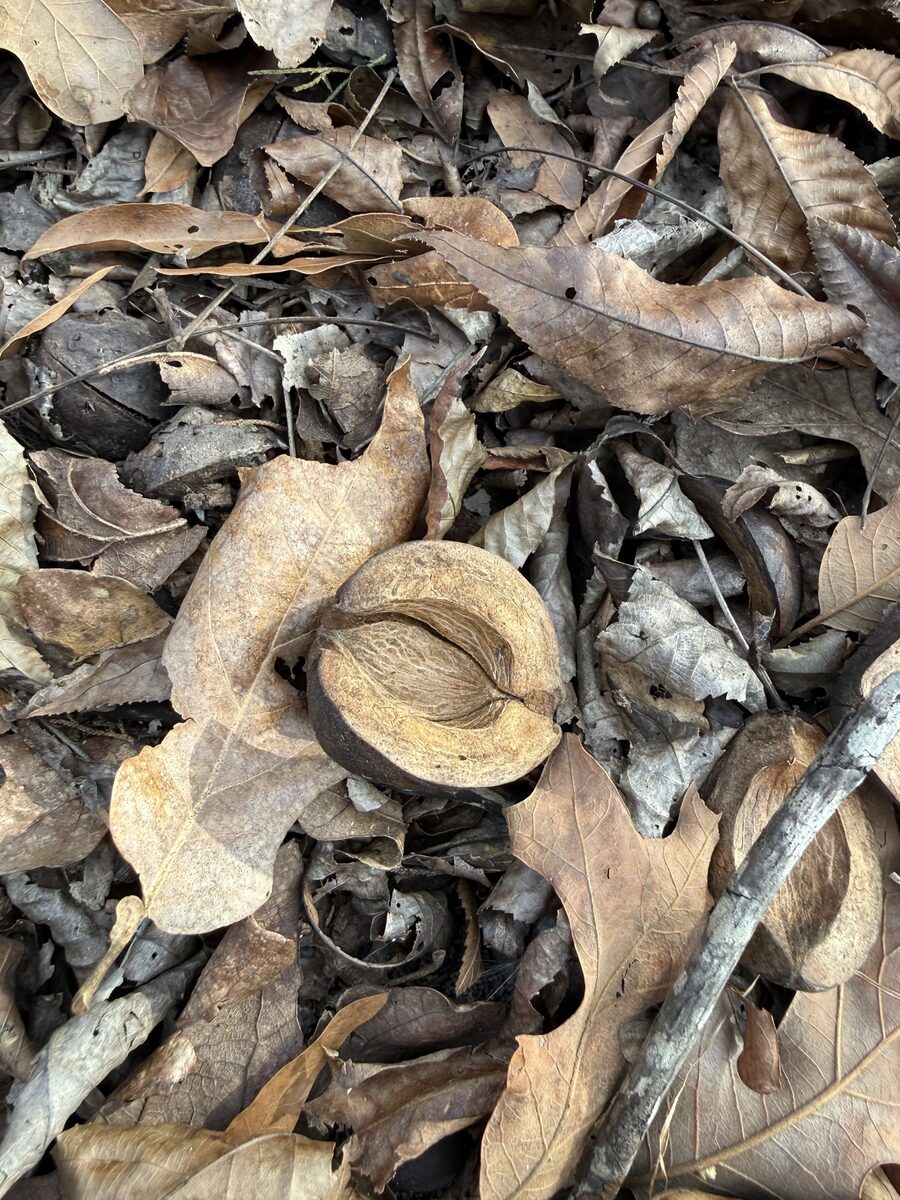
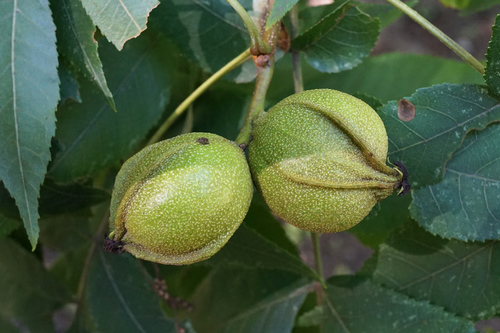
A large tree up to 55 m high. Trees lose their leaves during the year. Branches extend upwards giving the tree an open, rounded crown and the tree can be 8 m wide. The stem is stout and erect. The bark is grey and furrowed with an ornamental appearance. The leaves are bright green, compound leaves. The leaves are 30-50 cm long. The leaves are made up of 7-10 leaflets. These are long and curved sword shaped. The leaflets have short leaf stalks. The leaves turn yellow before they fall. The flowers are greenish and small. Trees normally have male and female flowers separately on the same plant, but because the flower parts develop at separate times, cross pollination normally occurs. Male flowers grow on catkins near the branches on the previous year's growth. The fruit are dark brown nuts that are carried in clusters of 4-12. The fruit can be 6 cm long. It has a thin shell. At maturity the fruit splits into 4 valves and reveal the smooth brown kernel. There are many cultivated varieties.
Edible Uses
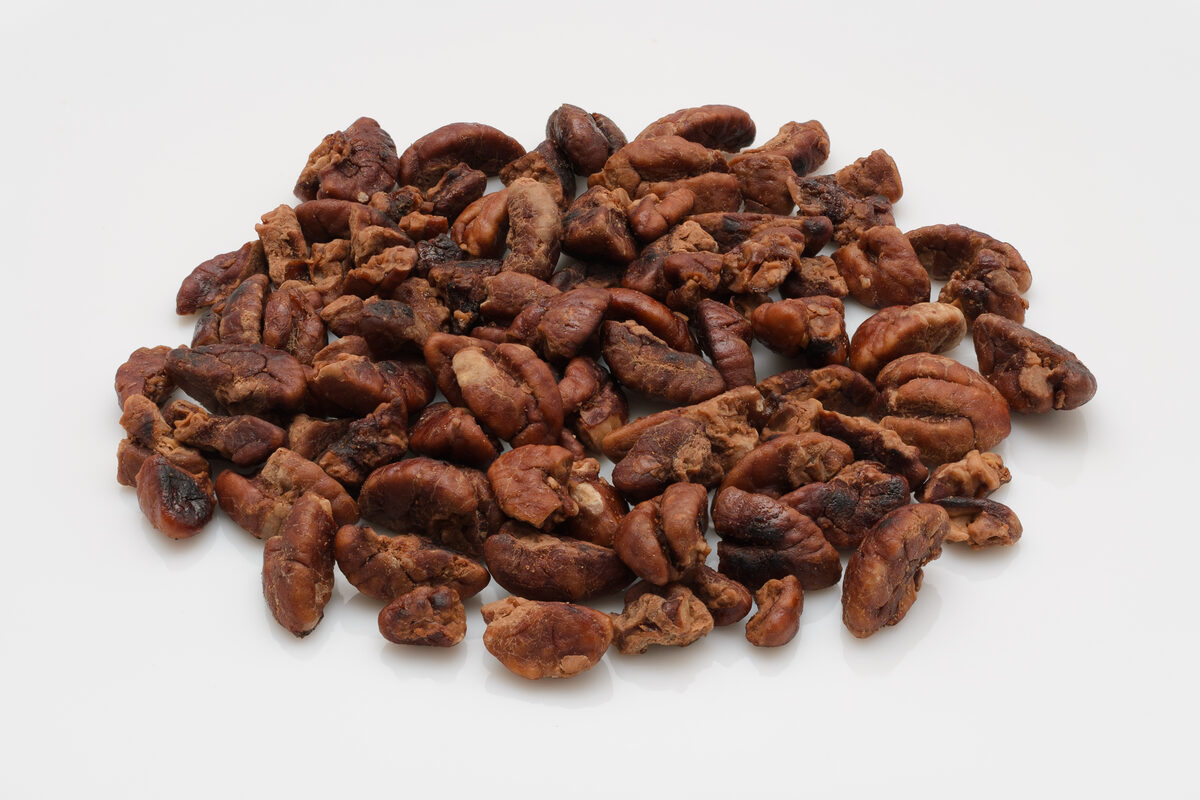
The seed is sweet and delicious eaten raw or cooked, making an excellent dessert nut and a popular addition to ice cream, cakes, and bread. A milk made from the seed is used to thicken soups and to season corn cakes and hominy. Seeds reach up to 4cm long and are produced in clusters of 3 to 11; they ripen in late autumn and keep for at least 6 months in the shell in a cool place. An edible oil is also extracted from the seed. The leaves are said to be used as a tea. This species is noted as a carbon-farming staple crop for oil production.
Traditional Uses
The nuts are eaten raw or cooked. They are used in pies, candies, cakes, breads, ice cream, and to thicken soups. They are a source of an edible oil. The leaves are used for tea.
Medicinal Uses
The bark and leaves are astringent. A decoction of the bark has been used to treat TB, and the pulverized leaves have been rubbed onto the skin to treat ringworm.
Distribution
It is native to S. United States. It requires a dry subtropical climate. It suits the tropical highlands. It does best in loamy soil in an open sunny position. It is frost resistant but drought tender. They need to be in areas with warm summers. Trees grow naturally near streams in arid areas. They need deep fertile, well drained soil. Thick shelled varieties are more cold tolerant. Trees can tolerate temperatures above 38°C. Trees need to have 700 hours with a temperature under 7°C. Trees need 5,000 degree days above 10°C and a high level of sunlight during the 210 day growing season. It is grown extensively in China. It can grow with a pH between 5-8 but 6.5 is best. The soil needs to be well aerated. In PNG it is recorded between 1,400-1,600 m above sea level. It suits hardiness zones 6-11. National Arboretum Canberra.
Where It Grows
Africa, Asia, Australia, Brazil, Britain, Central America, Central Asia, China, Cuba, Dominican Republic, East Africa, Europe, Haiti, India, Israel, Mediterranean, Mexico, Middle East, Mozambique, North America, Pacific, Pakistan, Papua New Guinea, PNG, Philippines, SE Asia, South Africa, Southern Africa, South America, Tajikistan, Uruguay, USA*, West Indies, Zimbabwe,
Cultivation
Plants are normally grown from seeds. It can be grown from root-shoots. Seeds need to be fresh or they won't grow. Nuts which will grow, sink when put into water. Trees can be pruned to stop them growing too tall. Often trees are pruned to 15 m high. Trees easily suffer from zinc deficiency. Thin shelled selections are grown using cuttings grafted onto seedlings. Cross pollination normally means better nut production. Different pollinating kinds are inter planted to ensure pollen is shed while female flowers are receptive. The flowers are wind pollinated. A spacing of 10 m is suitable.
Propagation
Seed requires cold stratification before it will germinate. Sow in a cold frame as soon as seed is ripe; stored seed should be kept moist (but not wet) and sown in a cold frame as soon as possible. Where possible, sow 1 or 2 seeds per deep pot and thin to the strongest seedling. Transplant seedlings as soon as they are large enough to handle, using deep pots to accommodate the taproot, and move plants to their permanent positions as soon as possible — ideally in their first summer — with cold protection for at least the first winter. Seed can also be sown in situ with protection from mice and cold; a bottomless plastic bottle capped with wire mesh works well for both purposes.
Other Uses
The wood is coarse-grained, hard, heavy, and brittle but not particularly strong, weighing 45 lb per cubic foot. It is used mainly for fuel and occasionally for wagons and agricultural implements. Carya species function well as shade trees in agroforestry systems, contributing high-quality timber and nut production while enhancing biodiversity and providing wildlife habitat. The nuts are an important food source for birds, squirrels, and other small mammals; the dense canopy offers shelter and nesting and roosting sites for birds; and the rough bark and fallen leaf litter provide overwintering habitat for invertebrates. The tree acts as a dynamic accumulator, gathering minerals and nutrients from the soil and storing them in a more bioavailable form suitable for use as fertilizer or mulch improvement.
Production
Trees grow slowly at first while they form a taproot, then they grow more quickly. During the first 8-15 years they do not produce nuts. Trees can live for 1000 years. Grafted trees produce more quickly. A tree can produce 20-25 kg on nuts.
Other Information
It is a cultivated food plant. Nuts have been imported into Papua New Guinea for trial plantings. Trees at Aiyura bear irregularly.
Notes
There are about 14-25 Carya species.
Nutrition
| Part | Moisture | kJ | kcal | Protein | Vit A | Vit C | Iron | Zinc |
|---|---|---|---|---|---|---|---|---|
| Seed | 3.2 | 3188 | 763 | 9.3 | 8 | 2 | 2.4 | 4.5 |
| Seed - oil | — | — | — | — | — | — | — | — |
| Leaves - tea | — | — | — | — | — | — | — | — |
Synonyms
Also Known As
Carya pecan, Mei guo shan he tao, Nogal pecanero, Noix de pacane, Pacana, Paccan, Pagan, Pekannuss
References (56)
- Beckstrom-Sternberg, Stephen M., and James A. Duke. "The Foodplant Database." http://probe.nalusda.gov:8300/cgi-bin/browse/foodplantdb.(ACEDB version 4.0 - data version July 1994) (As Hicoria pecan)
- Bianchini, F., Corbetta, F., and Pistoia, M., 1975, Fruits of the Earth. Cassell. p 194
- Bircher, A. G. & Bircher, W. H., 2000, Encyclopedia of Fruit Trees and Edible Flowering Plants in Egypt and the Subtropics. AUC Press. p 86
- Bodkin, F., 1991, Encyclopedia Botanica. Cornstalk publishing, p 219
- Bourke, R. M., Altitudinal limits of 230 economic crop species in Papua New Guinea. Terra australis 32.
Show all 56 references Hide references
- Brickell, C. (Ed.), 1999, The Royal Horticultural Society A-Z Encyclopedia of Garden Plants. Convent Garden Books. p 233
- Brouk, B., 1975, Plants Consumed by Man. Academic Press, London. p 221
- Cheifetz, A., (ed), 1999, 500 popular vegetables, herbs, fruits and nuts for Australian Gardeners. Random House p 175
- Coombes, A.J., 2000, Trees. Dorling Kindersley Handbooks. p 182
- Cundall, P., (ed.), 2004, Gardening Australia: flora: the gardener's bible. ABC Books. p 334
- Dendrologie 1:593. 1869 "illinoensis"
- Elias, T.S. & Dykeman P.A., 1990, Edible Wild Plants. A North American Field guide. Sterling, New York p 240
- Esperanca, M. J., 1988. Surviving in the wild. A glance at the wild plants and their uses. Vol. 2. p 141
- Estrada-Castillon, E., et al, 2014, Ethnobotany in Rayones, Nuevo Leon, Mexico. Journal of Ethnobiology and Ethnomedicine, 10:62
- Etherington, K., & Imwold, D., (Eds), 2001, Botanica's Trees & Shrubs. The illustrated A-Z of over 8500 trees and shrubs. Random House, Australia. p 184
- Facciola, S., 1998, Cornucopia 2: a Source Book of Edible Plants. Kampong Publications, p 123
- FAO, 1995, Edible Nuts. Non Wood Forest Products 5.
- Flora of China. Vol 4 p 284www.eFloras.org
- Flowerdew, B., 2000, Complete Fruit Book. Kyle Cathie Ltd., London. p 194
- French, B.R., 1986, Food Plants of Papua New Guinea, A Compendium. Asia Pacific Science Foundation p 183
- Glowinski, L., 1999, The Complete Book of Fruit Growing in Australia. Lothian. p 100
- Gonzalez-Espinosa, M. et al, 2011, The Red List of Mexican Cloud Forest Trees. Flora and Fauna International, Cambridge. p 104
- Gouldstone, S., 1983, Growing your own Food-bearing Plants in Australia. Macmillan p 149
- Hedrick, U.P., 1919, (Ed.), Sturtevant's edible plants of the world. p 171 (As Carya olivaeformis)
- Hibbert, M., 2002, The Aussie Plant Finder 2002, Florilegium. p 60
- Hu, Shiu-ying, 2005, Food Plants of China. The Chinese University Press. p 336
- Illustrated Flora of Central Texas p 747
- Jardin, C., 1970, List of Foods Used In Africa, FAO Nutrition Information Document Series No 2.p 32
- Jordan, J., et al, 2006, Vascular Plants Utilized by the Plains Apache in Southwestern Oklahoma, Publications of the Oklahoma Biological Survey. 2nd Series. Volume 7: 24-33, 2006
- Kiple, K.F. & Ornelas, K.C., (eds), 2000, The Cambridge World History of Food. CUP p 1831
- Krochmal, A. & Krochmal, C., 1982, Uncultivated Nuts of The United States. United States Department of Agriculture Forest Service. p 41
- Lazarides, M. & Hince, B., 1993, Handbook of Economic Plants of Australia, CSIRO. p 50
- Little, E.L., 1980, National Audubon Society Field Guide to North American Trees. Alfred A. Knopf. p 348
- Lu Anmin, Stone, D.E., Grauke, L.J., Juglandaceae. Flora of China.
- Lord, E.E., & Willis, J.H., 1999, Shrubs and Trees for Australian gardens. Lothian. p 49
- Lyle, S., 2006, Discovering fruit and nuts. Land Links. p 109
- Macmillan, H.F. (Revised Barlow, H.S., et al) 1991, Tropical Planting and Gardening. Sixth edition. Malayan Nature Society. Kuala Lumpur. p 313
- Martin, F. W., et al, 1987, Perennial Edible Fruits of the Tropics. USDA Handbook 642 p 31, 97
- Menninger, E.A., 1977, Edible Nuts of the World. Horticultural Books. Florida p 5
- Miguel, E., et al, 1989, A checklist of the cultivated plants of Cuba. Kulturpflanze 37. 1989, 211-357
- Mulherin, J., 1994, Spices and natural flavourings. Tiger Books, London. p 112
- Piedra-Malagón, E. M., et al, 2022, Edible native plants of the Gulf of Mexico Province. Biodiversity Data Journal 10: e80565 p 20
- Plants for a Future database, The Field, Penpol, Lostwithiel, Cornwall, PL22 0NG, UK. http://www.scs.leeds.ac.uk/pfaf/
- Plants of Haiti Smithsonian Institute http://botany.si.edu/antilles/West Indies (As Carya pecan)
- Recher, P, 2001, Fruit Spirit Botanical Gardens Plant Index. www.nrg.com.au/~recher/ seedlist.html p 1
- Schuler, S., (Ed.), 1977, Simon & Schuster's Guide to Trees. Simon & Schuster. No. 188
- Segura, S., et al, 2018, The edible fruit species in Mexico. Genet Resour Crop Evol (2018) 65:1767–1793
- Sharma, B.B., 2005, Growing fruits and vegetables. Publications Division. Ministry of Information and broadcasting. India. p 115
- Smith, P.M., 1979, Pecan, in Simmonds, N.W., (ed), Crop Plant Evolution. Longmans. London. p 310
- Tozer, F., 2007, The Uses of Wild Plants. Green Man Publishing. p 57
- USDA, ARS, National Genetic Resources Program. Germplasm Resources Information Network - (GRIN). [Online Database] National Germplasm Resources Laboratory, Beltsville, Maryland. Available: www.ars-grin.gov/cgi-bin/npgs/html/econ.pl (10 April 2000)
- van Wyk, B., 2005, Food Plants of the World. An illustrated guide. Timber press. p 122
- Wickens, G.E., 1995, Edible Nuts. FAO Non-wood forest products. FAO, Rome. p 23, 124
- Wiersema, J. H. & Leon, B., 2013, World Economic Plants. A Standard Reference CRC Press. 2nd Ed. p 147
- World Checklist of Useful Plant Species 2020. Royal Botanic Gardens, Kew
- Young, J., (Ed.), 2001, Botanica's Pocket Trees and Shrubs. Random House. p 201