Carya cordiformis
(Wangenh.) K.Koch.
Bitternut, Swamp hickory, Bitternut hickory
iNaturalist· cc-by-sa
(c) Plant Image Library, some rights reserved (CC BY-SA)
iNaturalist· cc-by
(c) Sandy Wolkenberg, some rights reserved (CC BY), uploaded by Sandy Wolkenberg
iNaturalist· cc-by-sa
(c) Douglas Goldman, some rights reserved (CC BY-SA), uploaded by Douglas Goldman
Summary
Source: WikipediaCarya cordiformis, the bitternut hickory, also called bitternut, yellowbud hickory, or swamp hickory, is a large hickory species native to the eastern United States and adjacent Canada. Notable for its unique sulphur-yellow buds, it is one of the most widespread hickories and is the northernmost species of pecan hickory (Carya sect. Apocarya). It is the shortest-lived of the hickories, living to about 200 years.
Description
A medium sized tree. It grows to 24 m high. The trunk can be 50 cm across. The trunk is long and branch free. The limbs are spreading and the crown is round. The bark is grey or pale brown and smooth. It gradually develops narrow cracks. The leaves are 12-20 cm long with 7-11 leaflets along it. The leaflet at the end is about the same size as the last pair. The leaflets get smaller towards the base or the leaf stalk. The leaflets are slightly curved and have fine teeth. They are shiny and dark green on top and paler, hairy and with small dots underneath. They turn yellow in autumn, The male and female flowers are separate. The fruit have irregular lines along them when young. The fruit are broadest at the tip. They are 20-35 mm long. They occur either singly or in pairs. The nuts are small, rounded and thin shelled. They can be cut with a knife. The kernel is reddish-brown and bitter.
Edible Uses
The seed can be eaten raw or cooked but is thin-shelled, bitter, and astringent — even squirrels tend to avoid it. The seed is about 3cm long. It ripens in late autumn and, when stored in the shell in a cool place, will keep for at least 6 months. An oil can also be expressed from the seeds.
Traditional Uses
The kernels are bitter. They are sometimes eaten.
This uses section is brief — help expand it
Medicinal Uses
The oil from the seeds has been used in treating rheumatism. The bark is diuretic and laxative.
Distribution
It grows in moist lowlands in Canada and the USA. It can tolerate some shade. It is very hardy. It suits hardiness zones 4-9.
Where It Grows
Australia, Britain, Canada, Europe, North America, USA*,
Cultivation
Plants can be grown from seed which should be sown where they are to grow. They are not easy to transplant.
Propagation
Seed requires a period of cold stratification and is best sown in a cold frame as soon as it is ripe. Stored seed should be kept moist but not wet before sowing and placed in a cold frame as soon as possible. Where feasible, sow only 1 or 2 seeds per deep pot and thin to the strongest seedling. Transplant seedlings as soon as they are large enough to handle, again using deep pots to accommodate the taproot. Move plants to their permanent positions as soon as possible — ideally in their first summer — and provide some frost protection for at least the first winter. Seed can also be sown in situ provided it is protected from mice and cold; a plastic bottle with top and bottom removed and a wire mesh top makes a suitable guard.
Other Uses
Oil expressed from the seeds has been used as an illuminant in oil lamps. The species is frequently used as rootstock for grafting pecan varieties (C. illinoensis). The wood is heavy, very hard, strong, elastic, tough, and close-grained, weighing 47lb per cubic foot. Although it tends to be brittle, it has notable shock-resistance and is used for hoops and tool handles, though it is generally regarded as inferior to other hickories. It is an excellent fuel, burning well and producing a high heat output.
Production
A fast growing tree. Trees start to produce nuts after 30 years. Nut production is high every 3-5 years. Trees can live for 150 years.
Notes
There are about 14-25 Carya species.
Synonyms
References (19)
- Beckstrom-Sternberg, Stephen M., and James A. Duke. "The Foodplant Database." http://probe.nalusda.gov:8300/cgi-bin/browse/foodplantdb.(ACEDB version 4.0 - data version July 1994) (As Hicoria cordiformis)
- Bircher, A. G. & Bircher, W. H., 2000, Encyclopedia of Fruit Trees and Edible Flowering Plants in Egypt and the Subtropics. AUC Press. p 86
- Bodkin, F., 1991, Encyclopedia Botanica. Cornstalk publishing, p 218
- Coombes, A.J., 2000, Trees. Dorling Kindersley Handbooks. p 182 (Fruit bitter and inedible)
- Cundall, P., (ed.), 2004, Gardening Australia: flora: the gardener's bible. ABC Books. p 334
Show all 19 references Hide references
- Dendrologie 1:597. 1869
- Etherington, K., & Imwold, D., (Eds), 2001, Botanica's Trees & Shrubs. The illustrated A-Z of over 8500 trees and shrubs. Random House, Australia. p 184
- Facciola, S., 1998, Cornucopia 2: a Source Book of Edible Plants. Kampong Publications, p 123
- Farrar, J.L., 1995, Trees of the Northern United States and Canada. Iowa State University press/Ames p 210 (Listed as non edible)
- Flowerdew, B., 2000, Complete Fruit Book. Kyle Cathie Ltd., London. p 194
- Glowinski, L., 1999, The Complete Book of Fruit Growing in Australia. Lothian. p 106
- Harris, E & J., 1983, Field Guide to the Trees and Shrubs of Britain. Reader's Digest. p 168
- Krochmal, A. & Krochmal, C., 1982, Uncultivated Nuts of The United States. United States Department of Agriculture Forest Service. p 39
- Little, E.L., 1980, National Audubon Society Field Guide to North American Trees. Alfred A. Knopf. p 345
- Lyle, S., 2006, Discovering fruit and nuts. Land Links. p 112
- MacKinnon, A., et al, 2009, Edible & Medicinal Plants of Canada. Lone Pine. p 62
- Plants for a Future database, The Field, Penpol, Lostwithiel, Cornwall, PL22 0NG, UK. http://www.scs.leeds.ac.uk/pfaf/
- Wickens, G.E., 1995, Edible Nuts. FAO Non-wood forest products. FAO, Rome. p 133
- Young, J., (Ed.), 2001, Botanica's Pocket Trees and Shrubs. Random House. p 201
More from Juglandaceae
Carya buckleyi
Carya californica
California walnut
Carya carolinae-septentrionalis - (Ashe.)Engelm.&Graebn.
Southern Shagbark, Southern shagbark hickory
Carya cathayensis
Chinese Hickory
Carya floridana
Scrub hickory, Scrub pecan
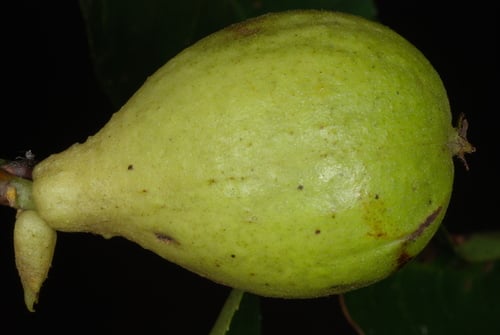
Carya glabra
Pignut, Redheart Hickory, Sweet pignut, Broom hickory, False shagbark hickory, Hognut broom hickory