Petroselinum crispum var. neapolitanum
Danert
Italian parsley, French parsley, Flat-leaved parsley
gbif· cc0
Erskine College Herbarium (ERSK-)
gbif· cc-by-nc
Arizona State University Vascular Plant Herbarium (ASU-Plants)
gbif· cc-by-nc
Arizona State University Vascular Plant Herbarium (ASU-Plants)
Description
A clump forming herb. It grows to 45-90 cm high and spreads to 60 cm wide. It has larger flat leaves. They are not curled.
This description is brief — help expand it
Edible Uses
Parsley is widely used in Middle Eastern, Mediterranean, Brazilian, and American cuisine. Curly leaf parsley is used often as a garnish. Green parsley is used frequently as a garnish on potato dishes (boiled or mashed potatoes), on rice dishes (risotto or pilaf), on fish, fried chicken, lamb, goose, and steaks, as well as in meat or vegetable stews (including shrimp creole, beef bourguignon, goulash, or chicken paprikash). Parsley seeds are also used in cooking, imparting a stronger parsley flavor than leaves. Parsley, when consumed, is credited with neutralising odours associated with garlic in cooking. In central Europe, eastern Europe, and southern Europe, as well as in western Asia, many dishes are served with fresh green, chopped parsley sprinkled on top. In southern and central Europe, parsley is part of bouquet garni, a bundle of fresh herbs used as an ingredient in stocks, soups, and sauces. Freshly chopped green parsley is used as a topping for soups such as chicken soup, green salads, or salads such as salade Olivier, and on open sandwiches with cold cuts or pâtés. Persillade is a mixture of chopped garlic and chopped parsley in French cuisine. Parsley is the main ingredient in Italian salsa verde, which is a mixed condiment of parsley, capers, anchovies, garlic, and sometimes bread, soaked in vinegar. It is an Italian custom to serve it with bollito misto or fish. Gremolata, a mixture of parsley, garlic, and lemon zest, is a traditional accompaniment to the Italian veal stew, ossobuco alla milanese. Root parsley is very common in Central, Eastern, and Southern European cuisines, where it is used as a snack or a vegetable in many soups, stews, and casseroles, and as ingredient for broth. Freshly chopped parsley (salsa) and freshly chopped scallion (cebolinha) are the main ingredients in the herb seasoning called cheiro-verde (literally "green aroma"), which is used as key seasoning for major Brazilian dishes, including meat, chicken, fish, rice, beans, stews, soups, vegetables, salads, condiments, sauces, and stocks. Cheiro-verde is sold in food markets as a bundle of both types of fresh herbs. In some Brazilian regions, chopped parsley may be replaced by chopped coriander (also called cilantro, coentro in Portuguese) in the mixture. Parsley is a key ingredient in several Middle Eastern salads such as Lebanese tabbouleh; it is also often mixed in with the chickpeas and/or fava beans while making falafel (that gives the inside of the falafel its green color). It is also a main component of the Iranian stew ghormeh sabzi. Parsley is a component of a standard Seder plate arrangement, it is eaten to symbolize the flourishing of the Jews after first arriving in Egypt.
Distribution
It is a temperate to subtropical plant. It is hardier and more weather resistant. It suits plant hardiness zones 5-11.
Where It Grows
Australia, Europe, France, Hawaii, Italy, Mediterranean, Pacific, Tasmania, USA,
Other Information
It is a commercially cultivated vegetable.
Dangerous Lookalikes
This plant can be confused with the following toxic species. Always verify identification carefully before consuming any wild plant.
Fool's Parsley
Aethusa cynapium
H. Zell
Italian parsley
Petroselinum crispum var. neapolitanum
Erskine College Herbarium (ERSK-)
Fool's Parsley: Long downward-pointing bracts beneath flower clusters, bitter taste, slightly shinier leaves.
Italian parsley: Pleasant parsley flavour, no downward-pointing bracts under flowers.
Synonyms
References (10)
- Bremness, L., 1994, Herbs. Collins Eyewitness Handbooks. Harper Collins. p 264
- Cheifetz, A., (ed), 1999, 500 popular vegetables, herbs, fruits and nuts for Australian Gardeners. Random House p 148
- Cundall, P., (ed.), 2004, Gardening Australia: flora: the gardener's bible. ABC Books. p 1016
- Hemphill, I, 2002, Spice Notes. Macmillan. p 285
- Hibbert, M., 2002, The Aussie Plant Finder 2002, Florilegium. p 229
Show all 10 references Hide references
- Kays, S. J., and Dias, J. C. S., 1995, Common Names of Commercially Cultivated Vegetables of the World in 15 languages. Economic Botany, Vol. 49, No. 2, pp. 115-152
- R. Mansfeld, Die Kulturpflanze 322. 1959
- Staples, G.W. and Herbst, D.R., 2005, A tropical Garden Flora. Bishop Museum Press, Honolulu, Hawaii. p 115
- van Wyk, B., 2005, Food Plants of the World. An illustrated guide. Timber press. p 287
- Wiersema, J. H. & Leon, B., 2013, World Economic Plants. A Standard Reference CRC Press. 2nd Ed. p 512
More from Apiaceae
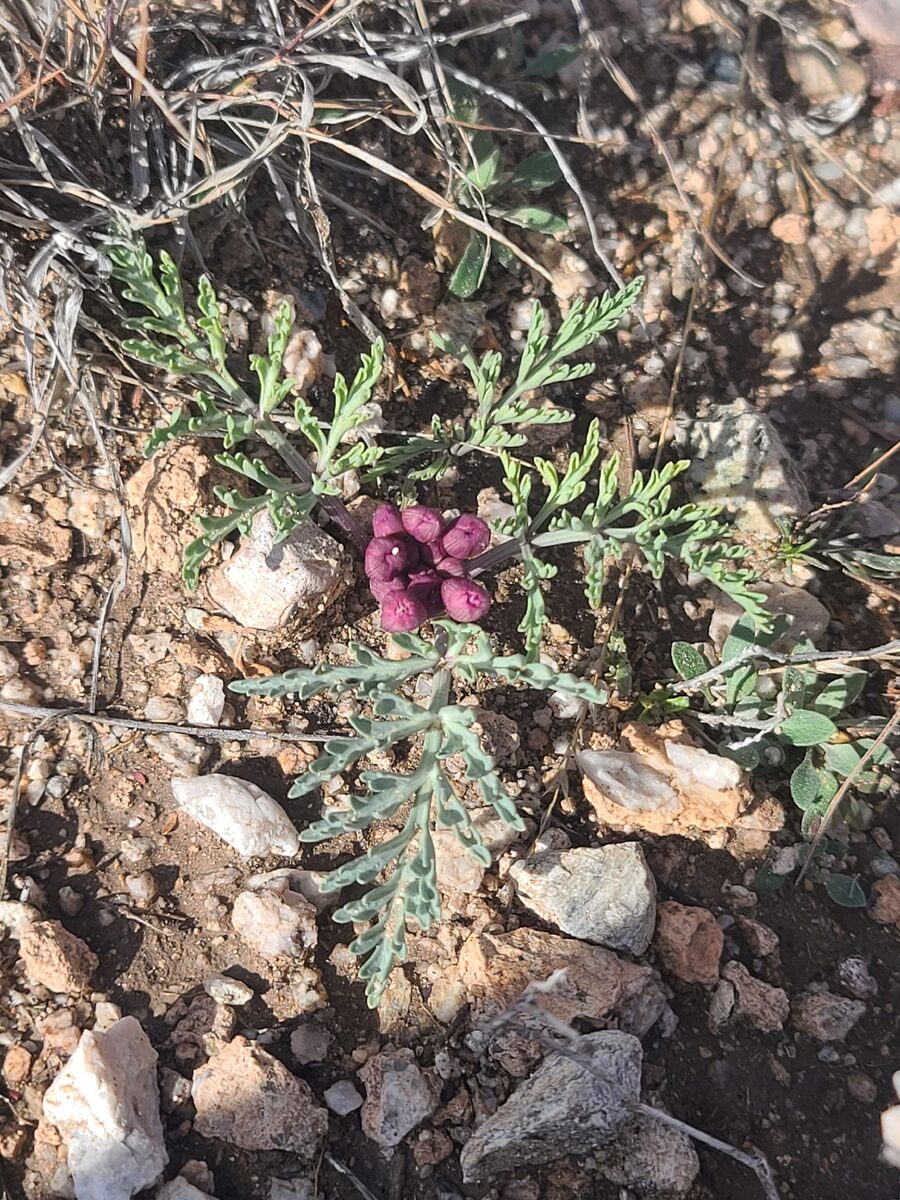
Vesper multinervatus - (J.M.Coult. & Rose) R.L.Hartm. & G.L.Nesom
Purplenerve Wavywing
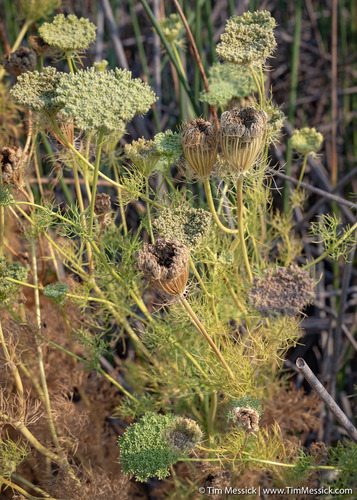
Visnaga daucoides
Visnaga, Bisnaga, Toothpick weed
Wendia pastinacifolia
ZZZ Conium maculatum
Hemlock, Poison hemlock, Herb Bennet
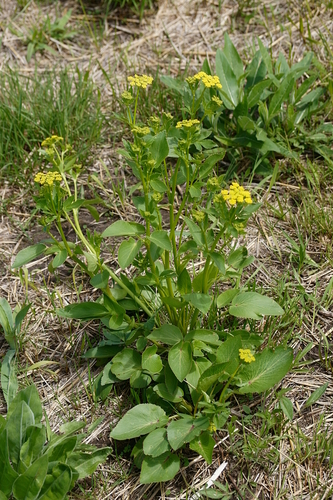
Zizia aptera
Golden alexanders
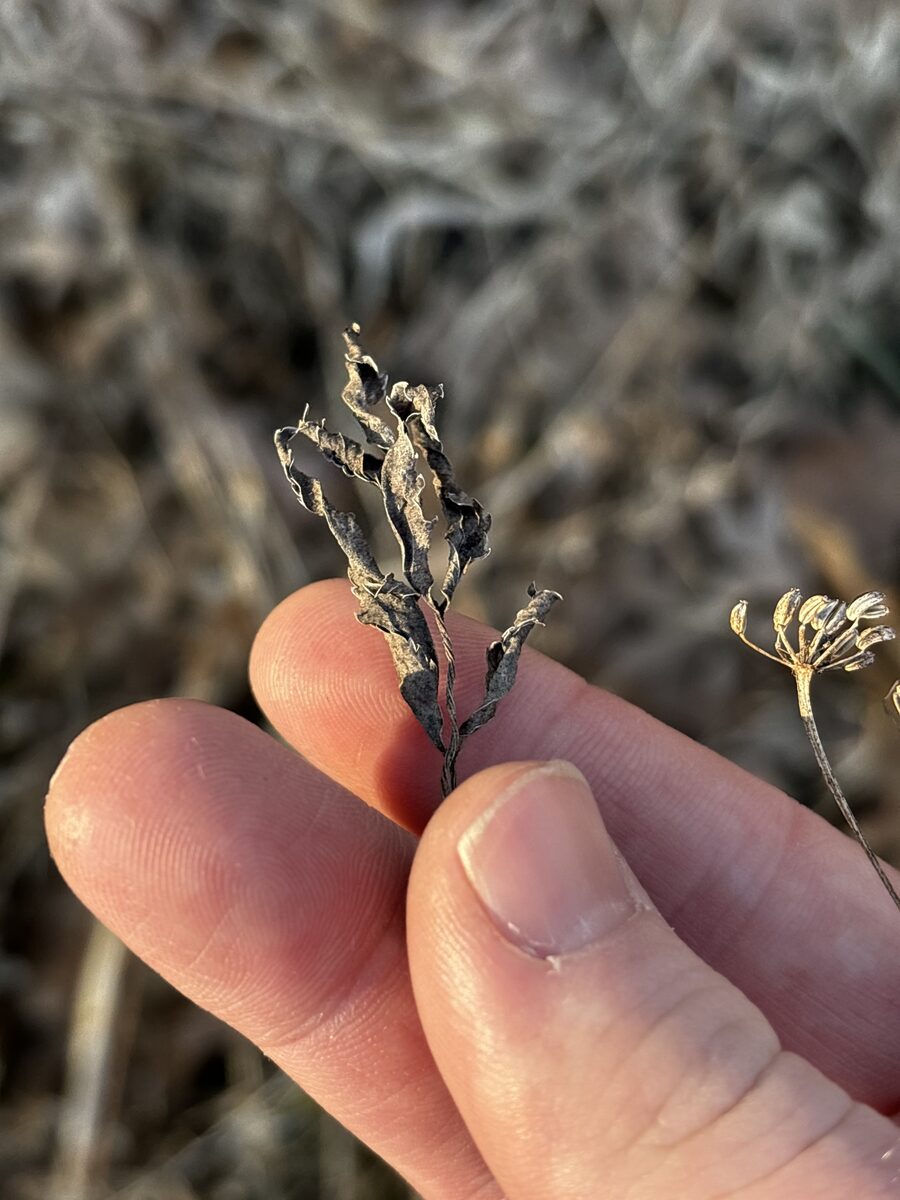
Zizia aurea - (L.)Koch.
Golden Alexanders, Golden zizia