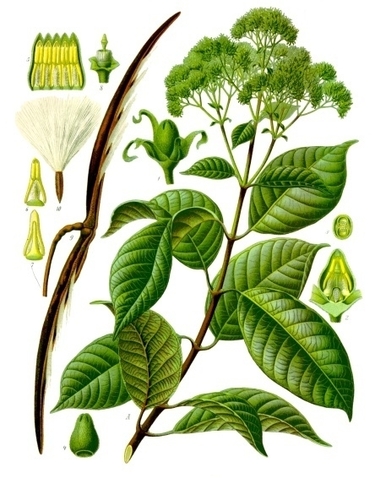
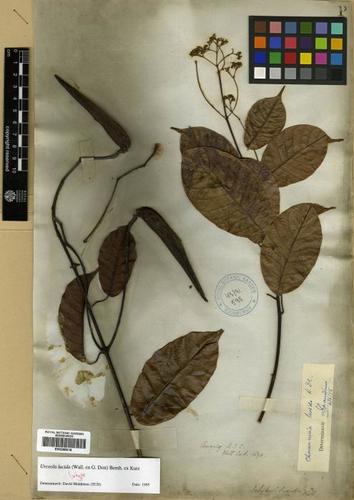
Acokanthera oppositifolia
(Lam.) Codd
Bushman's poison, Poison bush
iNaturalist· cc-by-nc
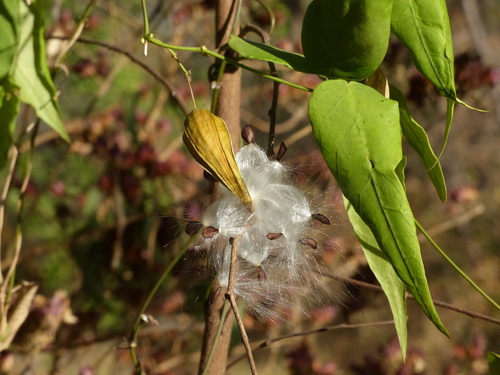
(c) Sandra Falanga, some rights reserved (CC BY-NC), uploaded by Sandra Falanga
iNaturalist· cc-by-sa
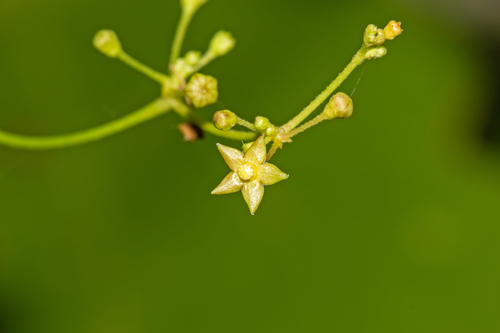
(c) Paul venter, some rights reserved (CC BY-SA)
iNaturalist· cc-by-nc
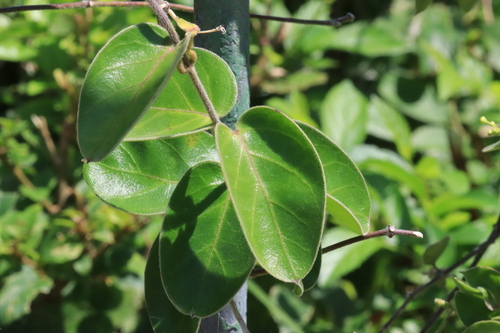
(c) Tinus Oberholzer, some rights reserved (CC BY-NC), uploaded by Tinus Oberholzer
Summary
Source: WikipediaAcokanthera oppositifolia, the poison arrow tree, is a shrub used as the source of an arrow poison and to coat caltrops made from the sharp fruits of the puncture vine (Tribulus terrestris). All plants of the genus Acokanthera contain toxic cardiac glycosides strong enough to cause death. Acokanthera oppositifolia is widespread in southern and central Africa from Cape Province north to The Democratic Republic of the Congo + Tanzania. Acokanthera schimperi is employed for the same purpose. Unlike all other parts of the plant, the ripe fruit is sweet and edible. Unripe fruit are still poisonous, so only really ripe fruit are eaten.
Description
A shrub or small tree. It grows 5 m tall. There are prickles along the stem. The leaves are twice divided and there are 8-18 pairs of pinnae. There are up to 50 pairs of pinnules on each pinnae. The flowers are yellow. They are in large clusters at the ends of branches. The pods are flattened.
Edible Uses
The fruit can be eaten when fully ripe and has been used for making jams, though this use is cautioned against. The latex from the fruit is chewed as gum by children.
Traditional Uses
CAUTION: This fruit is poisonous when unripe. It contains alkaloids that can affect the heart. Although used for jams it is probably not wise. The fruit should only be used when very ripe. The latex from the fruit is used by children as chewing gum.
Medicinal Uses
Although very poisonous, the plant has been used medicinally in Africa, particularly to combat poisoning and parasites. All parts of the plant, except for the pulp of the ripe fruit, contain large amounts of cardiac glycosides (cardenolides), of which about 15 have been identified. These glycosides are responsible for the plant's activity as an arrow poison, but they also act as cardiac stimulants. The main compounds are acovenoside A, acovenosigenin, acolongifloroside K and ouabagenin. To treat snakebites and spider bites, a small amount of the leaves is eaten, a leaf or root decoction is drunk and the leaf or root pulp is rubbed into the wound. Alternatively, the root powder is sniffed and a dressing made of the roots or leaves is put on the swollen part. An infusion of the roots is taken to expel tapeworm; to treat excessive and irregular menstruation; as a treatment for syphilis. The powdered root is sniffed as a cure for headaches. A leaf infusion is taken to treat abdominal pain, colds, measles and blood poisoning. The powdered leaf is sniffed, or an infusion of the leaves is used as a nasal spray, in order to combat headaches. Small pieces of the stem are chewed to relieve toothache.
Known Hazards
The fruit is poisonous when unripe and contains alkaloids that can affect the heart. The fruit should only be used when very ripe. Wood from this plant should not be used for cooking food, as it can make the food poisonous.
Distribution
A tropical plant. It grows on high hill-slopes and dry plateaux from East Africa to South Africa. It grows up to 2,400 m above sea level. It can grow in arid places. It grows in area with a rainfall between 600-1,000 mm. In Tanzania it grows between 1,500-2,100 m above sea level and can be on termite mounds. It grows in Miombo woodland in Africa. It suits hardiness zones 9-11.
Where It Grows
Africa, Asia, Botswana, Central Africa, China, Congo, East Africa, Eswatini, India, Kenya, Malawi, Mozambique, South Africa, Southern Africa, Swaziland, Tanzania, Zambia, Zimbabwe,
Cultivation
It can be grown from seeds or semi-ripe cuttings.
Propagation
Seed - it requires no pre-treatment, but has a very limited viability and so should be sown as soon as it is ripe. Cuttings of half-ripe wood.
Notes
There are about 15 Acokanthera species. If this wood is used to cook food it can make the food poisonous.
Nutrition
| Part | Moisture | kJ | kcal | Protein | Vit A | Vit C | Iron | Zinc |
|---|---|---|---|---|---|---|---|---|
| Fruit - very ripe | 89 | — | — | — | — | 3.6 | — | — |
Synonyms
Also Known As
Common poison-bush, Kibaichiago, Kikwei, Kiruru, Luzekwa, Mekweu, Msunguti, Murichu, Mururu, Musungu-sungu, Ngweo, Ol-morijoi, Ordeal poisonwood, Rumbara, Usungu
References (26)
- Barwick, M., 2004, Tropical and Subtropical Trees. A Worldwide Encyclopedic Guide. Thames and Hudson p 6
- Bethwell, O.O., 2007. Acokanthera oppositifolia (Lam.) Codd. [Internet] Record from Protabase. Schmelzer, G.H. & Gurib-Fakim, A. (Editors). PROTA (Plant Resources of Tropical Africa / Ressources végétales de l’Afrique tropicale), Wageningen, Netherlands. < http://database.prota.org/search.htm>. Accessed 13 October 2009
- Bircher, A. G. & Bircher, W. H., 2000, Encyclopedia of Fruit Trees and Edible Flowering Plants in Egypt and the Subtropics. AUC Press. p 7 (As Acokanthera longiflora)
- Bothalia 7:448. 1961
- Burkill, H. M., 1985, The useful plants of wet tropical Africa. Vol. 1
Show all 26 references Hide references
- Dale, I. R. and Greenway, P. J., 1961, Kenya Trees and Shrubs. Nairobi. p 43 (As Acokanthera longiflora)
- Dharani, N., 2002, Field Guide to common Trees & Shrubs of East Africa. Struik. p 39
- Etherington, K., & Imwold, D., (Eds), 2001, Botanica's Trees & Shrubs. The illustrated A-Z of over 8500 trees and shrubs. Random House, Australia. p 74
- Fowler, D. G., 2007, Zambian Plants: Their Vernacular Names and Uses. Kew. p 9
- Global Plants JSTOR
- Herb., E. A., 1981,
- Jardin, C., 1970, List of Foods Used In Africa, FAO Nutrition Information Document Series No 2.p 118 (As Acokanthera longiflora)
- Long, C., 2005, Swaziland's Flora - siSwati names and Uses http://www.sntc.org.sz/flora/
- Maundu, P. et al, 1999, Traditional Food Plants of Kenya. National Museum of Kenya. p 51
- Msuya, T. S., et al, 2010, Availability, Preference and Consumption of Indigenous Foods in the Eastern Arc Mountains, Tanzania, Ecology of Food and Nutrition, 49:3, 208-227
- Mutie, F. M., et al, 2023, Important Medicinal and Food Taxa (Orders and Families) in Kenya, Based on Three Quantitative Approaches. Plants 2023, 12, 1145
- Palgrave, K.C., 1996, Trees of Southern Africa. Struik Publishers. p 781
- Palmer, E and Pitman, N., 1972, Trees of Southern Africa. Vol. 2. A.A. Balkema, Cape Town p 1895
- Peters, C. R., O'Brien, E. M., and Drummond, R.B., 1992, Edible Wild plants of Sub-saharan Africa. Kew. p 56
- PROTA 11(1) Medicinal Plants 1. p 30
- Royal Botanic Gardens, Kew (1999). Survey of Economic Plants for Arid and Semi-Arid Lands (SEPASAL) database. Published on the Internet; http://www.rbgkew.org.uk/ceb/sepasal/internet [Accessed 28th March 2011]
- Ruffo, C. K., Birnie, A. & Tengnas, B., 2002, Edible Wild Plants of Tanzania. RELMA p 100
- Schmelzer, G.H. & Gurib-Fakim, A. (Editors), 2008. Plant Resources of Tropical Africa 11(1)-Medicinal plants 1.PROTA Foundation, Wageningen, Netherlands /791 pp
- Swaziland's Flora Database http://www.sntc.org.sz/flora
- Vickery, M.L. and Vickery, B., 1979, Plant Products of Tropical Africa, Macmillan. p 104, Other species (As Acokanthera longiflora)
- World Checklist of Useful Plant Species 2020. Royal Botanic Gardens, Kew