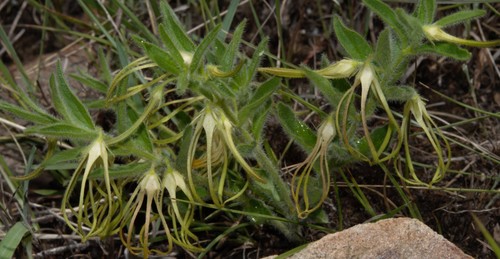
Riocreuxia burchellii
K. Schum.
iNaturalist· cc-by-nc
(c) Richard Gill, some rights reserved (CC BY-NC)
iNaturalist· cc-by-nc
(c) Richard Gill, some rights reserved (CC BY-NC)
iNaturalist· cc-by-nc
(c) Richard Gill, some rights reserved (CC BY-NC)
Description
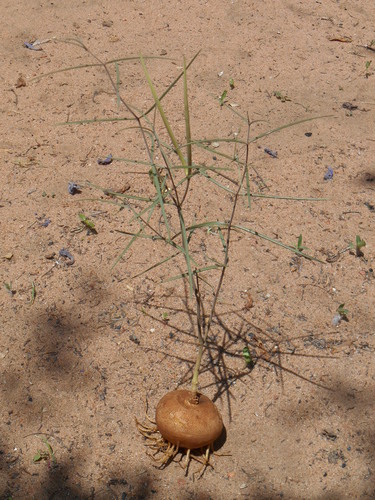
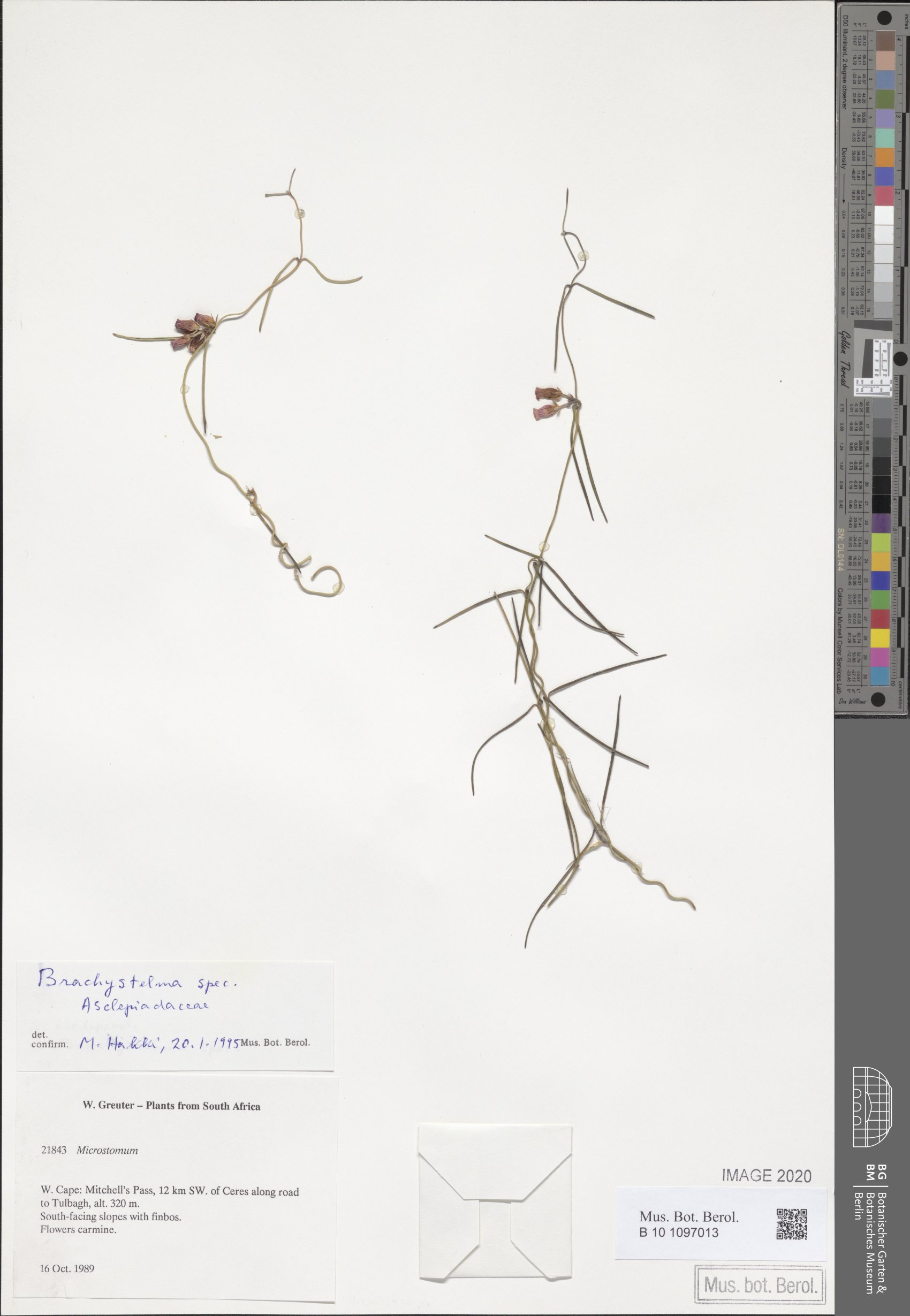
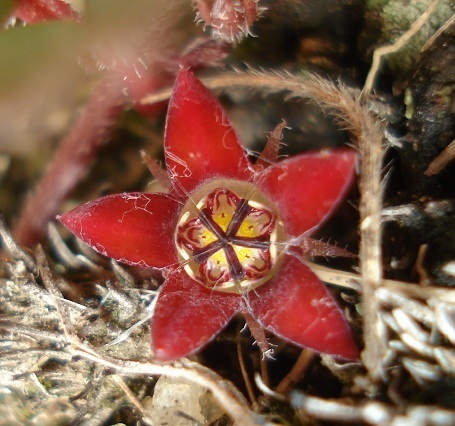
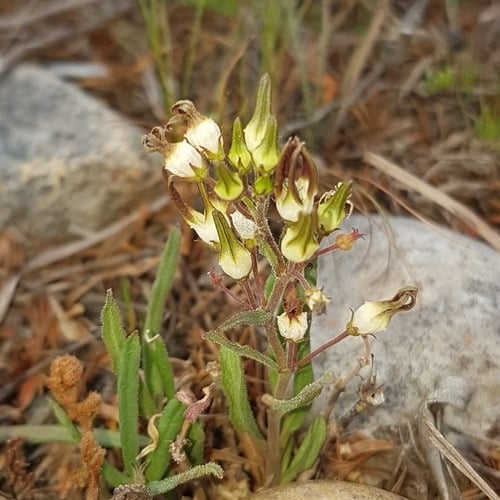
A tall straggling climber. The stems are twining and hairy. The leaves are simple and fleshy. They are broad at the base and taper to the tip. The flowers are in groups of 1-3 on the side of each node of the branches. They are tube shaped. The fruit is a slender follicle. It is broad at the base and tapers to the tip.
Edible Uses
The leaves are cooked as a potherb.
Traditional Uses
The leaves are cooked as a potherb.
This uses section is brief — help expand it
Distribution
It is a tropical plant. It grows on termite mounds.
Where It Grows
Africa, Angola, Burundi, Eswatini, Lesotho, Malawi, South Africa, Southern Africa,
Notes
There are 8 Riocreuxia species. These are closely linked to Ceropegia.
Synonyms
Also Known As
Koeiriempies
References (5)
- Fox, F. W. & Young, M. E. N., 1982, Food from the Veld. Delta Books. p 113
- Guillarmod, J., 1971,
- Ogle & Grivetti, 1985,
- Peters, C. R., O'Brien, E. M., and Drummond, R.B., 1992, Edible Wild plants of Sub-saharan Africa. Kew. p 66
- Ruiters-Welcome, A. K., 2019, Food plants of southern Africa. Ph.D. thesis. Univ. of Johannesburg p 27