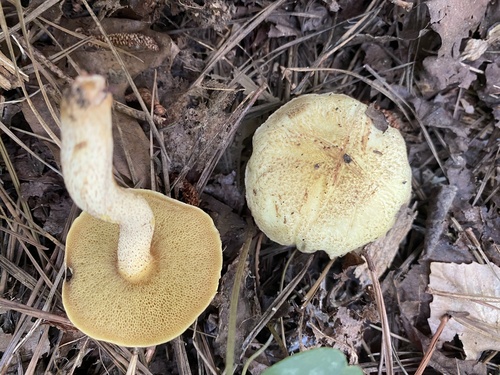
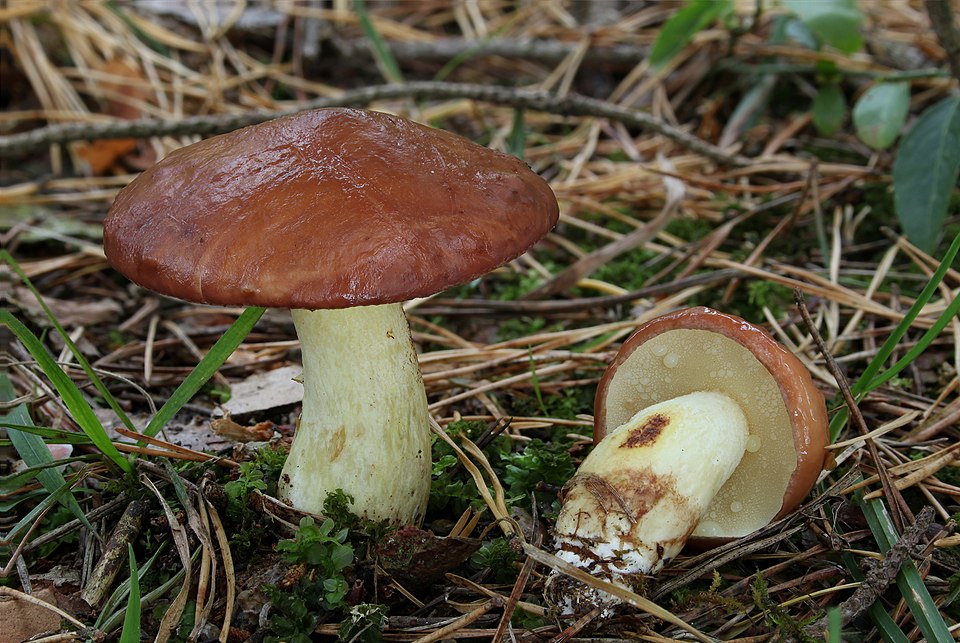
Suillus pungens
Thiers and Smith
Slippery jack
iNaturalist· cc-by-nc
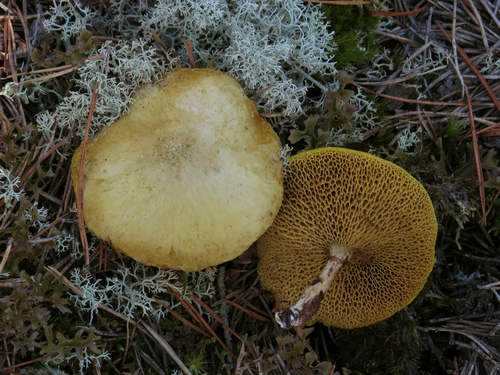
(c) Christian Schwarz, some rights reserved (CC BY-NC), uploaded by Christian Schwarz
iNaturalist· cc-by
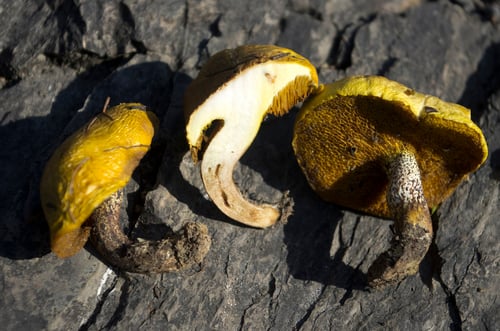
(c) Ken-ichi Ueda, some rights reserved (CC BY), uploaded by Ken-ichi Ueda
iNaturalist· cc-by
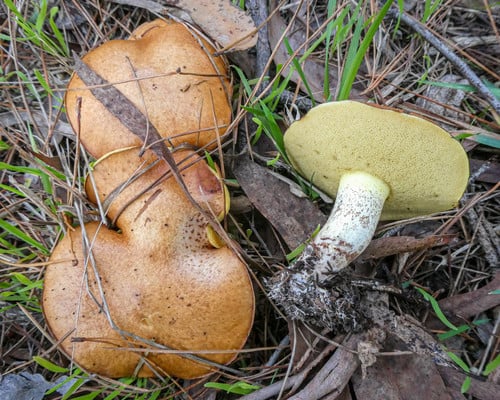
(c) Ken-ichi Ueda, some rights reserved (CC BY), uploaded by Ken-ichi Ueda
Summary
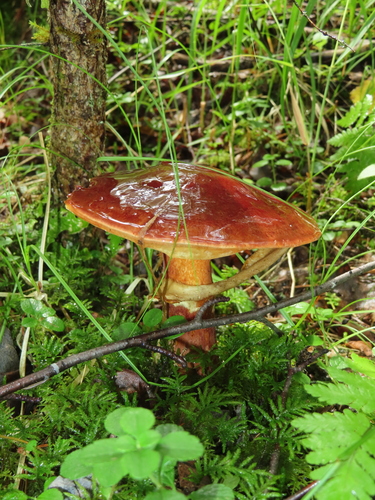
Source: WikipediaSuillus pungens, commonly known as the pungent slippery jack or the pungent suillus, is a species of fungus in the genus Suillus. The fruit bodies of the fungus have slimy convex caps up to 14 cm (5+1⁄2 in) wide. The mushroom is characterized by the very distinct color changes that occur in the cap throughout development. Typically, the young cap is whitish, later becoming grayish-olive to reddish-brown or a mottled combination of these colors. The mushroom has a dotted stipe up to 7 cm (2+3⁄4 in) long and 2 cm (3⁄4 in) thick. On the underside on the cap is the spore-bearing tissue, consisting of minute vertically arranged tubes that open as a surface of angular, yellowish pores. The presence of milky droplets on the pore surface of young specimens, especially in humid environments, is a characteristic feature of this species. S. pungens can usually be distinguished from other similar Suillus species by differences in distribution, odor and taste. An ectomycorrhizal species, S. pungens forms an intimate mutualistic relationship between its underground mycelium and the young roots of the associated host tree. In its native range, the fungus is associated mainly with Monterey pine and bishop pine in coastal California, but it also occurs with a wider range of planted and introduced pines in the state, including stone pine, maritime pine, and Aleppo pine, especially in urban areas. The species has also been reported as an introduction in New Zealand (commonly with introduced Monterey pine) and in Australia with introduced pines. Several studies have investigated the role of S. pungens in the coastal Californian forest ecosystem it occupies. Although the species produces more fruit bodies than other competing ectomycorrhizal fungi in the same location, it is not a dominant root colonizer, and occupies only a small percentage of ectomycorrhizal root tips. The fungus's propensity to fruit prolifically despite minimal root colonization is a result of its ability to efficiently transfer nutrients from its host for its own use. The mushroom is considered edible, but is not highly regarded.
Description
A mushroom in the family Suillaceae found in temperate regions including California.
This description is brief — help expand it
Edible Uses
The fruiting body (mushroom/fungus) is edible.
Distribution
It is a temperate plant. California.
Where It Grows
North America, USA,
Notes
Also put in the family Boletaceae.
References (1)
- http://www.mykoweb.com/CAF/edible.html