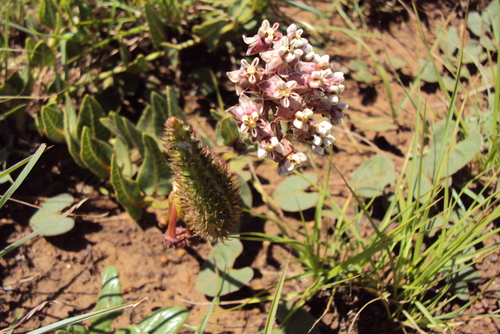
Blyttia fruticulosa
(Decne) D. V. Field
gbif· cc0
Royal Botanic Garden Edinburgh
gbif· cc-by
The New York Botanical Garden
Description
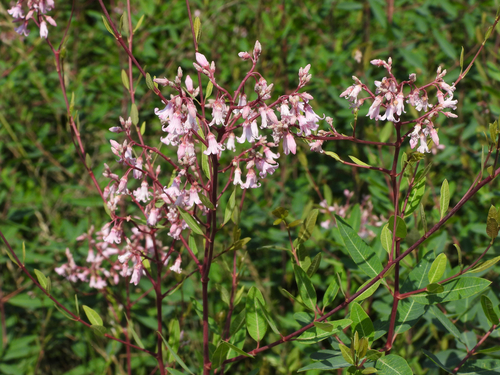
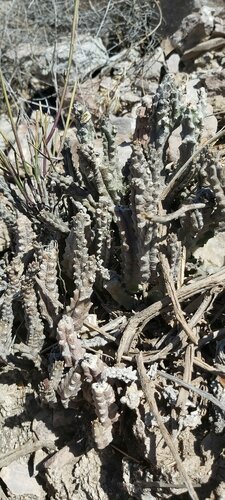
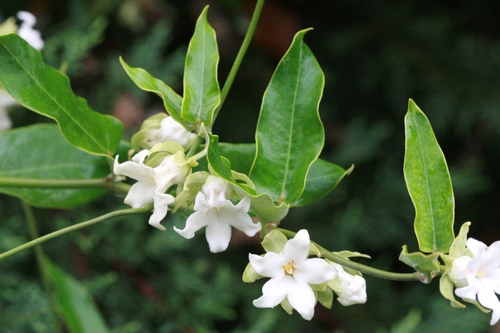
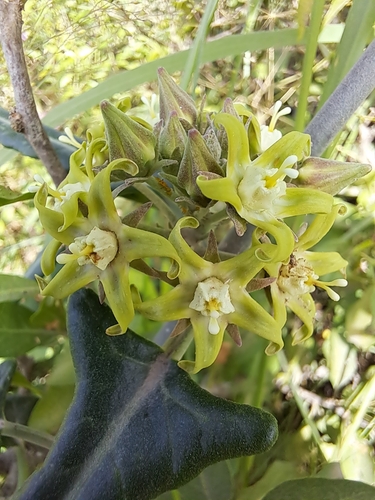
A shrub. It grows up to 80 cm high. The branches are erect, straight and woody. The young leaf bearing branches are grey-green and can be twining and 2 m long. The leaf blade is 7-30 mm long by 1-5 mm wide. They are narrowly oval. The flowering stalks are slender and the flowers are white or greenish. The fruit are follicles 3-5 cm long. They are narrowly sword shaped. They have thin walls and hang down.
Edible Uses
Fruit - cooked and eaten as a vegetable. The fruit is a single, pendent follicle, thin-walled, narrowly cylindrical, 2.5 - 5cm long.
Traditional Uses
The fruit are eaten raw or cooked as a vegetable.
This uses section is brief — help expand it
Medicinal Uses
An infusion of the aerial parts is used to treat painful menstruation.
Distribution
It is a tropical plant. It grows between 10-1,500 m above sea level. It grows on sand, silt and rocky soils.
Where It Grows
Africa, Djibouti, East Africa, Ethiopia, Kenya, Somalia, Tanzania,
Other Information
It is a minor plant.
Synonyms
Also Known As
Lamtta
References (5)
- Addis, G., Asfaw, Z & Woldu, Z., 2013, Ethnobotany of Wild and Semi-wild Edible Plants of Konso Ethnic Community, South Ethiopia. Ethnobotany Research and Applications. 11:121-141
- Ferns, Useful Tropical Plants
- Grubben, G. J. H. and Denton, O. A. (eds), 2004, Plant Resources of Tropical Africa 2. Vegetables. PROTA, Wageningen, Netherlands. p 560
- Ocho, D. L., et al, 2012, Assessing the levels of food shortage using the traffic light metaphor by analyzing the gathering and consumption of wild food plants, crop parts and crop residues in Konso, Ethiopia. Journal of Ethnobiology and Ethnomedicine 8:30
- World Checklist of Useful Plant Species 2020. Royal Botanic Gardens, Kew (As Vincetoxicum fruticulosum)