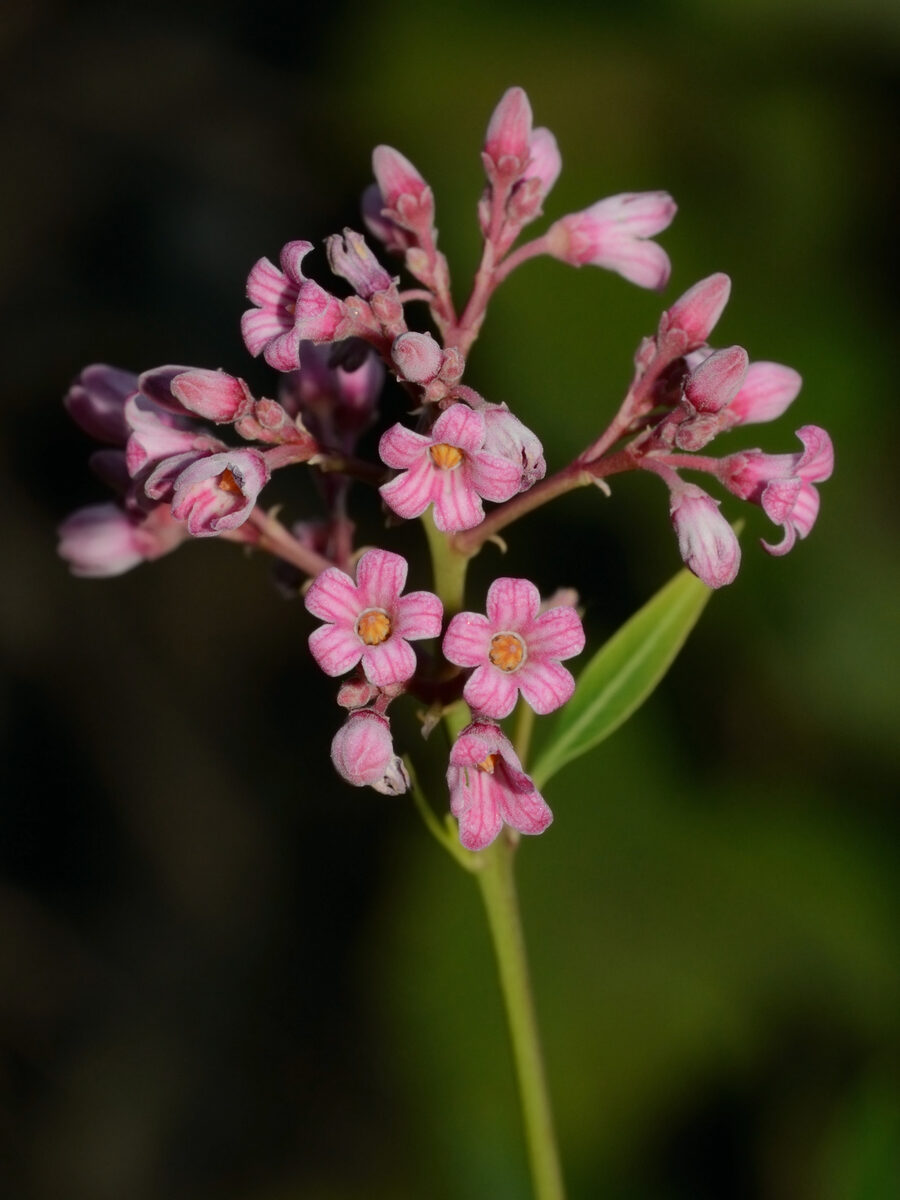
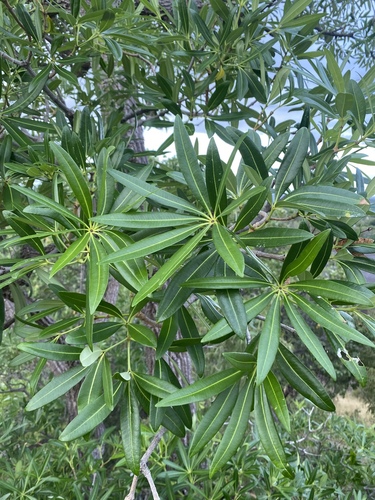
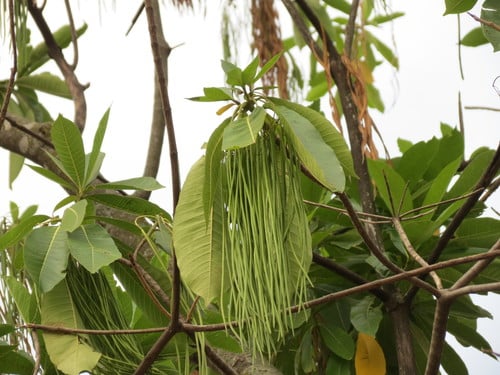
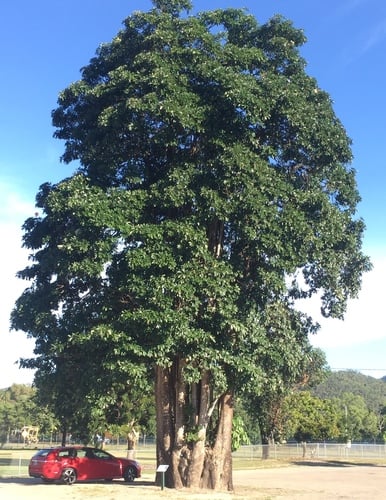
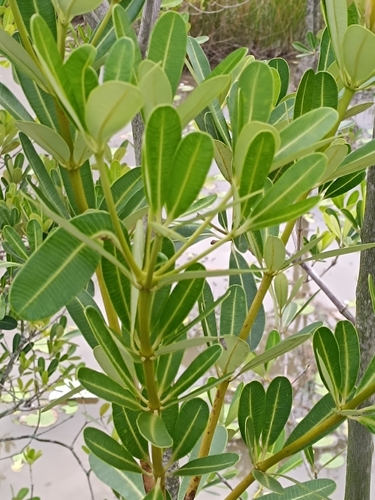
Pycnobotrya nitida
Benth.
wikimedia· cc-by-sa
Vinayaraj (via Wikimedia Commons)
gbif· cc-by-nc-sa
Jan Klein & West & Central Africa program
Description
A woody tropical creeper in the dogbane family that grows in forest environments.
This description is brief — help expand it
Edible Uses
Leaves - cooked and eaten as a vegetable. This is probably more for their medicinal benefits than for their taste.
Medicinal Uses
The leaves are eaten with other food to treat bronchitis and other chest infections. The latex is taken to treat haematuria, diarrhoea and dysentery. The above treatments are supplemented in traditional medicine by wearing a cord made from the bark of Pycnobotrya nitida and Haumantia sp. Round the neck or chest. The plant contains steroids and terpenes.
Distribution
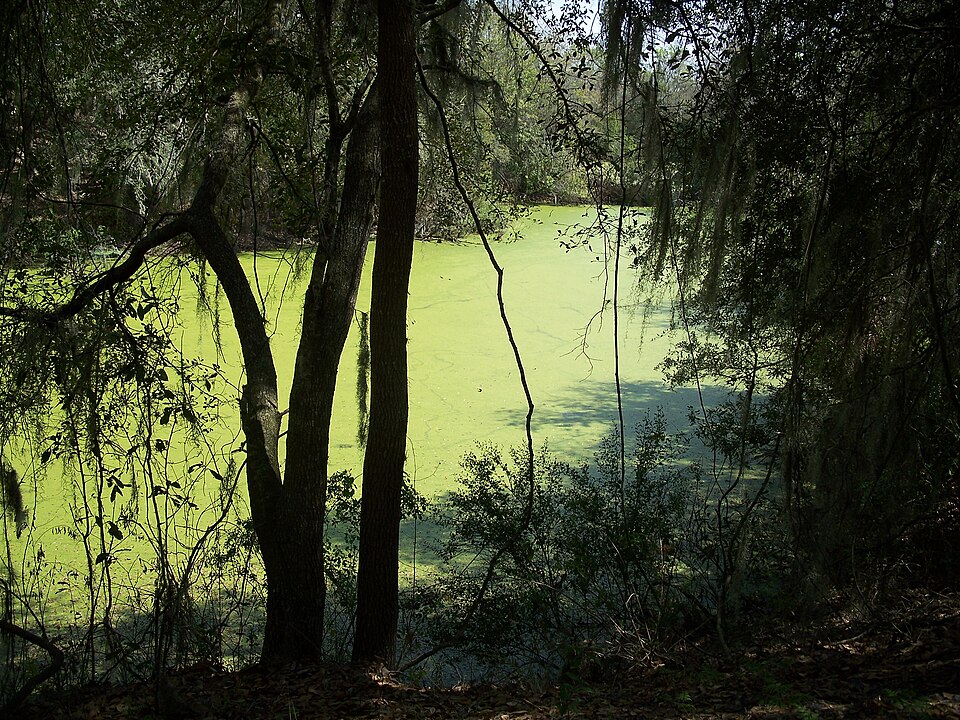
A tropical plant. It grows in the forest.
Where It Grows
Africa, Central Africa, Central African Republic, CAR, Congo DR, Congo R, Gabon, Nigeria,
Other Uses
A fibre obtained from the bark is used to make cords which are used for purposes such as crossbows.
Production
Plants flower in February and fruit June and November.
Also Known As
Bofifo, Mo ngenje, Mu lunda
References (5)
- Harris, D. J., 2002, The vascular plants of the Dzanga-Sangha Reserve, Central African Republic. National Botanic Garden of Belgium, 2002. – 274 pages p 53
- Jardin, C., 1970, List of Foods Used In Africa, FAO Nutrition Information Document Series No 2.p 97
- Martin, F.W. & Ruberte, R.M., 1979, Edible Leaves of the Tropics. Antillian College Press, Mayaguez, Puerto Rico. p 175
- Nkeoua, G. & Boundzanga, G. C., 1999, Donnees sur les produits forestieres non ligneux en Republique du Congo. FAO. p 35
- Terashima, H., Ichikawa, M. & Ohta, L., (Ed.), 1991, A Flora: Catalog of Useful Plants of Tropical Africa. African study monographs. Supplementary issue (1991), 16:195