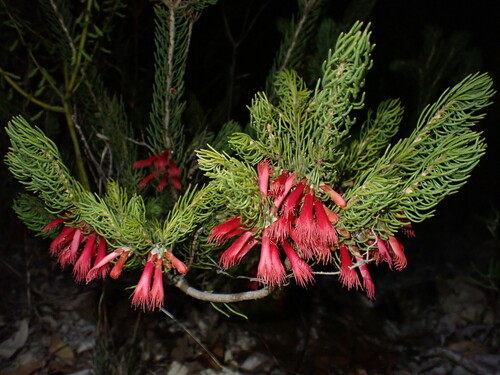
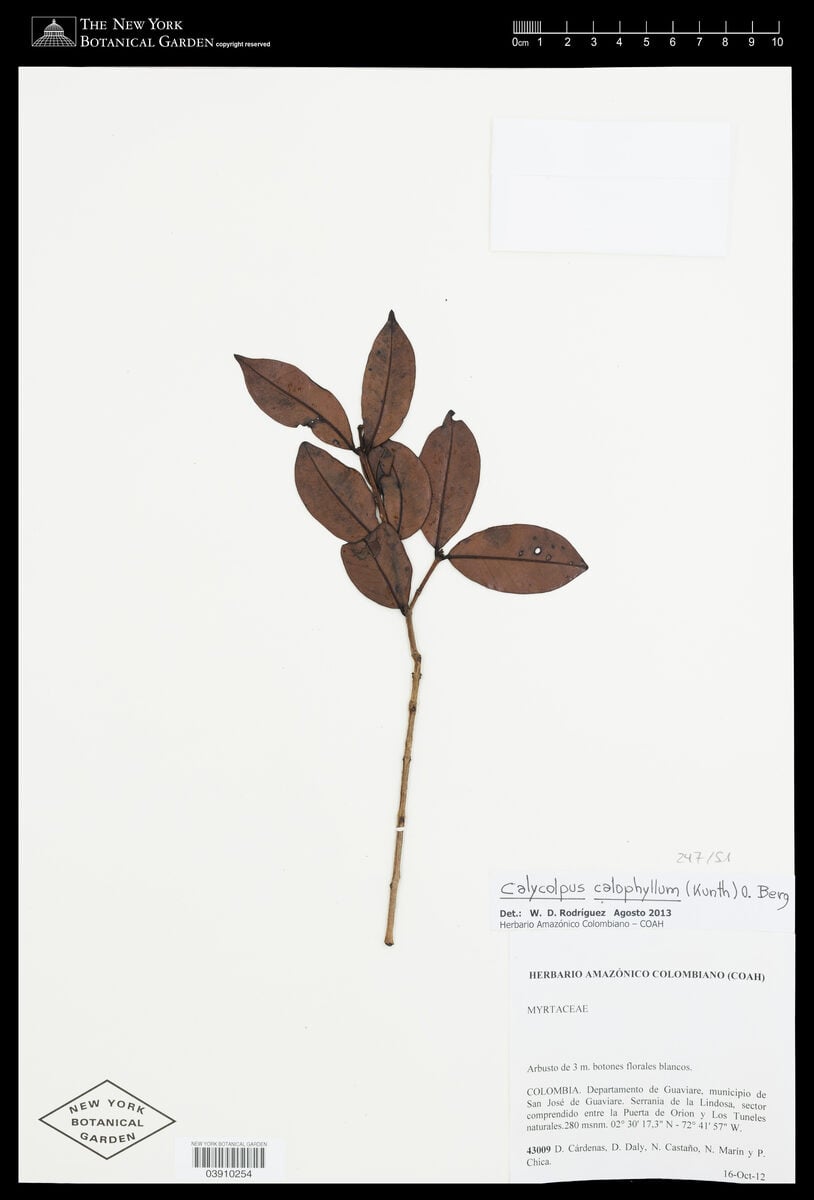
Syzygium smithii
(Poir.) Nied.
Lilly Pilly tree, Creek Lillypilly
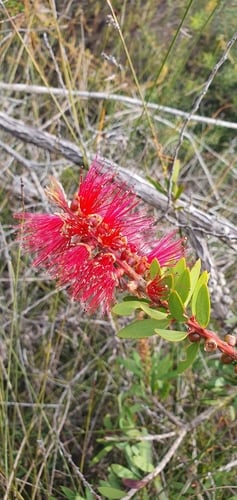
iNaturalist· cc-by-nc
(c) maxwell_167, some rights reserved (CC BY-NC)
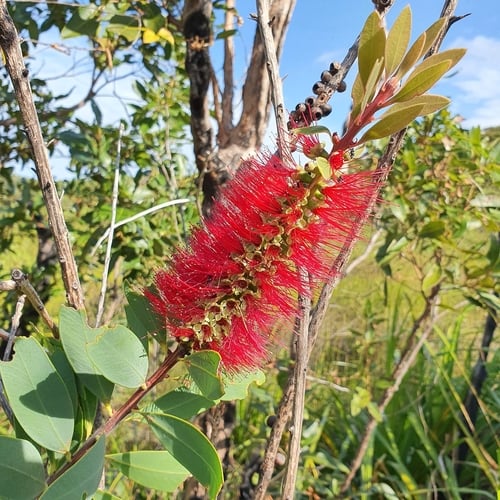
iNaturalist· cc-by-nc
(c) truffletheguineapig, some rights reserved (CC BY-NC), uploaded by truffletheguineapig
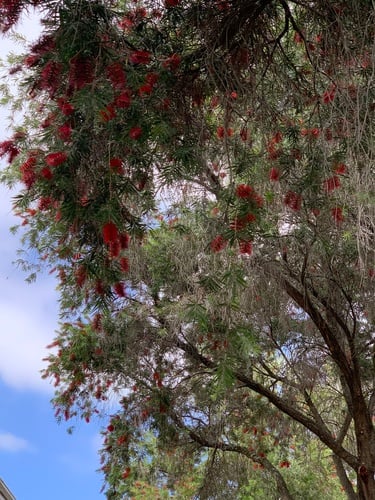
iNaturalist· cc-by
(c) Guy Taseski, some rights reserved (CC BY), uploaded by Guy Taseski
Summary
Source: WikipediaSyzygium smithii (formerly Acmena smithii) is a summer-flowering, winter-fruiting evergreen tree, native to Australia and belonging to the myrtle family Myrtaceae. It shares the common name "lilly pilly" with several other plants. It is planted as shrubs or hedgerows, and features: rough, woody bark; cream and green smooth, waxy leaves; flushes of pink new growth; and white to maroon edible berries. Unpruned, it will grow about 3–5 m (9.8–16.4 ft) tall in the garden.
Description
A small tree. It grows 10-20 m high and spreads 5-15 m across. The bark is brown and scaly. The younger twigs are square in cross section. Leaf shape and size vary. The leaves are 2-17 cm long by 1-3 cm wide. They are oval shaped and dark green and shiny. They are drawn out to a long point. Flushes of young growth are often pinkish. The flowers are small and greenish. They occur on a much branched flower stalk at the ends of small branches. There are many flowers and these flowers occur all over the tree. The fruit berry is 1-1.5 cm across. It is white or pink and fleshy. The fruit has a characteristic depressed disk at the tip. The fruit have an aroma. There is one seed inside. The seed is 0.9-1.3 mm across. The fruit are edible.
Edible Uses
The fleshy fruit is eaten raw and can be processed into jams and jellies. The fruit is rich in folates.
Traditional Uses
The flesh of the fruit is eaten raw. They can also be used for jams and jellies.
This uses section is brief — help expand it
Medicinal Uses
No medicinal uses recorded.
Distribution
It can grow from the tropics to temperate regions. Trees in the tropics are larger. It can tolerate a wide range of soil types. It can grow in shade or full sunlight. It can grow in clay soils but will not tolerate water-logging. It responds to watering in the dry season. It suits hardiness zones 9-12. In Hobart Botanical gardens. Arboretum Tasmania.
Where It Grows
Australia*, Brazil, South America, Tasmania,
Cultivation
Selected types can be maintained by vegetative propagation. This is done by taking semi-hardwood stem cuttings. Using bottom heat and mist helps the cuttings to form roots and strike. Cuttings can be grafted onto seedlings. Plants can be grown from seed. It must be sown while fresh. Seeds germinate in 3-8 weeks.
Propagation
Seed - it has a short viability and so should be sown as soon as it is ripe. Germination can be slow and erratic. Fresh, unpeeled seeds germinate quickly and reliably. Cuttings of firm, current season's growth. Fairly easy to root.
Other Uses
The heartwood is white to light-brown or pale-straw coloured; the sapwood is pale. The wood is close-grained, moderately strong and durable in the weather but not in the ground. It is used for general building construction and seasoned for use in internal fittings and frames. The plant responds well to trimming and can be grown as a tall hedge.
Production
Fruit ripen May to August. (May to October) The quality of fruit varies considerably and selection needs to be used to improve them.
Notes
There are 15 Acmena species. They occur in tropical Asia and Australia. It is rich in folates.
Nutrition
| Part | Moisture | kJ | kcal | Protein | Vit A | Vit C | Iron | Zinc |
|---|---|---|---|---|---|---|---|---|
| Fruit | 93.4 | 89 | 21 | 0.3 | — | 2 | 0.1 | 0.1 |
Synonyms
Also Known As
Acmena, Jambinho-rosa
References (46)
- Alice, L. & O'Quinn, T., Australian Bush Superfoods. Explore Australia p 98
- Blomberry, A.M., 1979, Australian Native Plants. Angus and Robertson p 139
- Bodkin, F., 1991, Encyclopedia Botanica. Cornstalk publishing, p 45, 459
- Boland, D. J. et al, , 2006, Forest Trees of Australia. CSIRO p 196 (As Acmena smithii)
- Bonney, N., 1997, Economic Native Trees and Shrubs for South Australia. Greening Australia (SA) inc. Campbelltown SA 5074 p 168
Show all 46 references Hide references
- Brickell, C. (Ed.), 1999, The Royal Horticultural Society A-Z Encyclopedia of Garden Plants. Convent Garden Books. p 74
- Caton, J.M. & Hardwick, R. J., 2016, Field Guide to Useful Native Plants from Temperate Australia. Harbour Publishing House. p 186
- Cherikoff V. & Isaacs, J., The Bush Food Handbook. How to gather, grow, process and cook Australian Wild Foods. Ti Tree Press, Australia p 50, 194
- Cooper, W. & Cooper, W. T., 1994, Fruits of the Rain Forest. RD Press p 16
- Cooper, W. and Cooper, W., 2004, Fruits of the Australian Tropical Rainforest. Nokomis Editions, Victoria, Australia. p 340
- Cronin, L., 1989, The Concise Australian Flora. Reed. p 146
- Cundall, P., (ed.), 2004, Gardening Australia: flora: the gardener's bible. ABC Books. p 93
- Elliot, W.R., & Jones, D.L., 1982, Encyclopedia of Australian Plants suitable for cultivation. Vol 2. Lothian. p 139
- Etherington, K., & Imwold, D., (Eds), 2001, Botanica's Trees & Shrubs. The illustrated A-Z of over 8500 trees and shrubs. Random House, Australia. p 74
- Facciola, S., 1998, Cornucopia 2: a Source Book of Edible Plants. Kampong Publications, p 157 (As Eugenia smithii)
- Greig, D., 1996, Flowering Natives for Home Gardens. Angus & Robertson. p 16, 42
- Grieg, D., 2002, A photographic guide to Wildflowers of South-eastern Australia. New Holland. p 74
- Hall, N. et al, 1972, The Use of Trees and Shrubs in the Dry Country of Australia, AGPS, Canberra. p 202
- Hardwick, R.J., 2000, Nature's Larder. A Field Guide to the Native Food Plants of the NSW South Coast. Homosapien Books. p 75
- Haslam, S., 2004, Noosa's Native Plants. Noosa Integrated Catchment Assn. Inc. p 320
- Isaacs, J., 1987, Bush Food, Aboriginal Food and Herbal Medicine. Weldons. p 76
- Jackes, B.R., 2001, Plants of the Tropics. Rainforest to Heath. An Identification Guide. James Cook University. p 68
- Jones D, L, 1986, Ornamental Rainforest Plants in Australia, Reed Books, p 59
- Lazarides, M. & Hince, B., 1993, Handbook of Economic Plants of Australia, CSIRO. p 8
- Lord, E.E., & Willis, J.H., 1999, Shrubs and Trees for Australian gardens. Lothian. p11
- Lorenzi, H., Bacher, L., Lacerda, M. & Sartori, S., 2006, Brazilian Fruits & Cultivated Exotics. Sao Paulo, Instituto Plantarum de Estuados da Flora Ltda. p 454
- Low, T., 1991, Wild Food Plants of Australia. Australian Nature FieldGuide, Angus & Robertson. p 75
- Low, T., 1992, Bush Tucker. Australia’s Wild Food Harvest. Angus & Robertson. p 63
- McKerney, M. & White, H., 2011, Bush Tucker, Boomerangs & Bandages. Border River-Gwyder Catchment Management Authority p 73 (As Acmena)
- Melzer, R. & Plumb, J., 2011, Plants of Capricornia. Belgamba, Rockhampton. p 267
- Nicholson, N & H., 1996, Australian Rainforest Plants, Terania Rainforest Publishing. NSW. p 6
- Nicholson, N & H., 1994, Australian Rainforest Plants 4, Terania Rainforest Publishing. NSW. p 6
- Queensland Forest Service, 1991, Trees and Shrubs. Department of Primary Industries. p 63
- Recher, P, 2001, Fruit Spirit Botanical Gardens Plant Index. www.nrg.com.au/~recher/ seedlist.html p 4
- Ryan, M. (Ed.), 2003, Wild Plants of Greater Brisbane. Queensland Museum. p 239
- Smith, K., 1998. Growing Uncommon Fruits and Vegetables. New Holland. p 97
- Smith, K & I., 1999, Grow your own bushfoods. New Holland. Australia. p 48
- Stanley, T. D. & Ross, E. M., 1986, Flora of south-eastern Queensland Volume 2. Queensland Government p 213 (As Acmena smithii)
- Striegel, L., et al, 2019, Promising Tropical Fruits High in Folates. Foods 2019, 8, 363; doi:10.3390/foods8090363. www.mdpi.com/journal/foods (As Acmena smithii)
- Low, T., 1992, Bush Tucker. Australia’s Wild Food Harvest. Angus & Robertson. p (Contents)
- Townsend, K., 1994, Across the Top. Gardening with Australian Plants in the tropics. Society for Growing Australian Plants, Townsville Branch Inc. p 69
- White, G., 2008, The Bush Tucker Survival Guide. https://www.survival.org.au (As Acmena smithii)
- Williams, J.B., Harden, G.J., and McDonald, W.J.F., 1984, Trees and shrubs in rainforests of New South Wales and Southern Queensland. Univ. of New England, Armidale. p 109, 112
- Young, J., (Ed.), 2001, Botanica's Pocket Trees and Shrubs. Random House. p 66
- www.ceres.org/au/bushfood catalogue
- Zola, N., & Gott, B., 1992, Koorie Plants Koorie People. Koorie Heritage Trust. p 34