Tristemma mauritianum
J. F. Gmel.
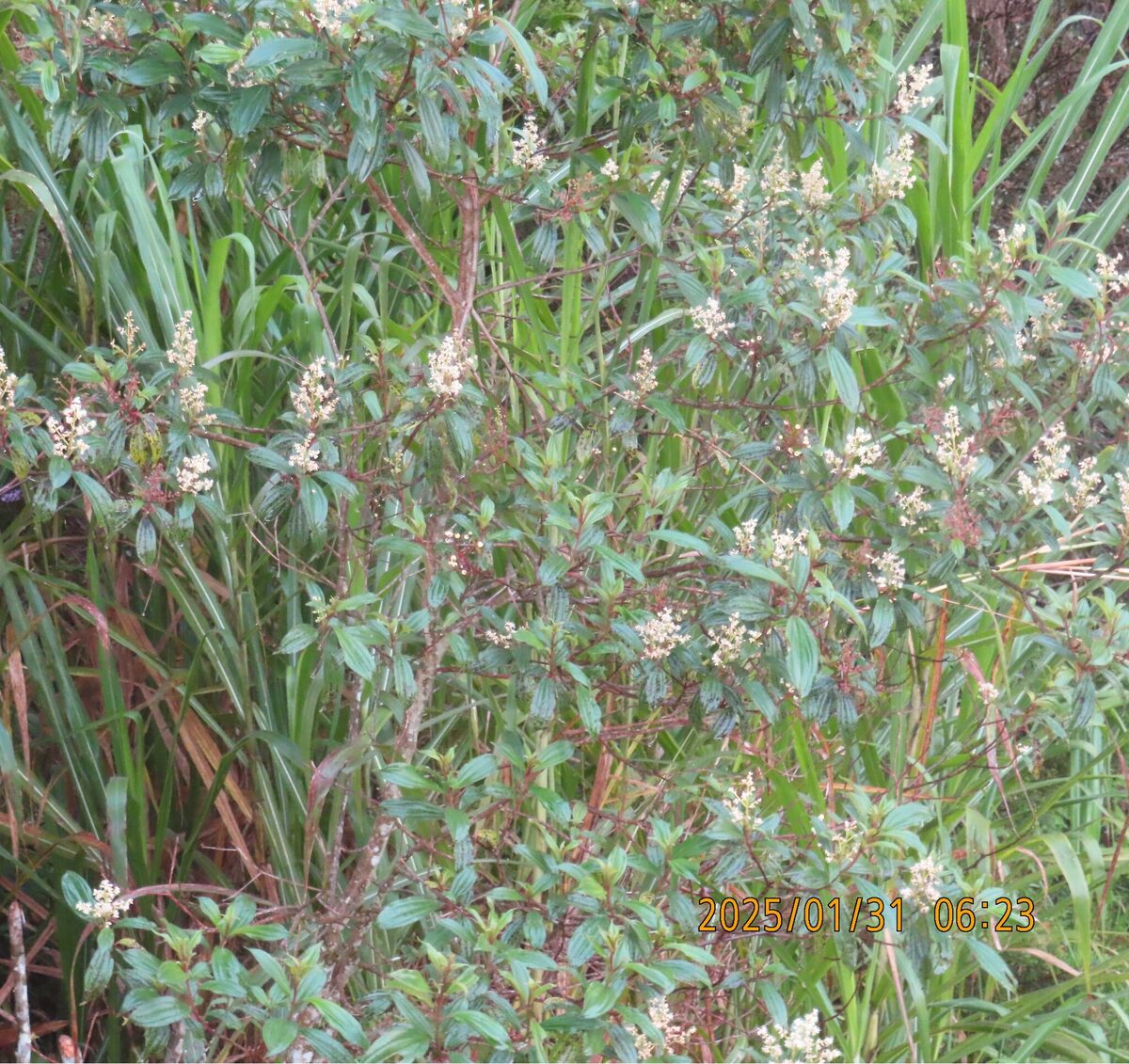
iNaturalist· cc-by-nc
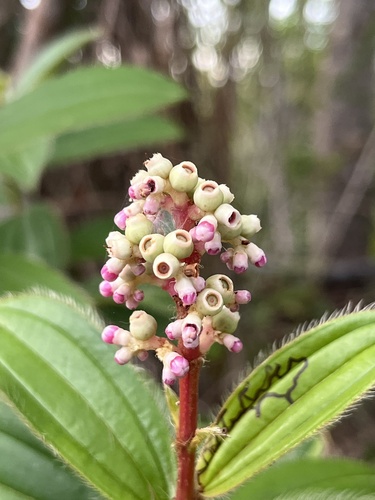
(c) CORDENOS Thierry, some rights reserved (CC BY-NC), uploaded by CORDENOS Thierry
iNaturalist· cc-by-nc
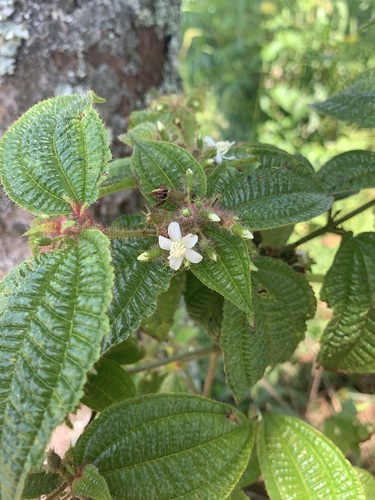
(c) David Rabehevitra, some rights reserved (CC BY-NC), uploaded by David Rabehevitra
iNaturalist· cc-by-nc
(c) merindaw, some rights reserved (CC BY-NC), uploaded by merindaw
Description
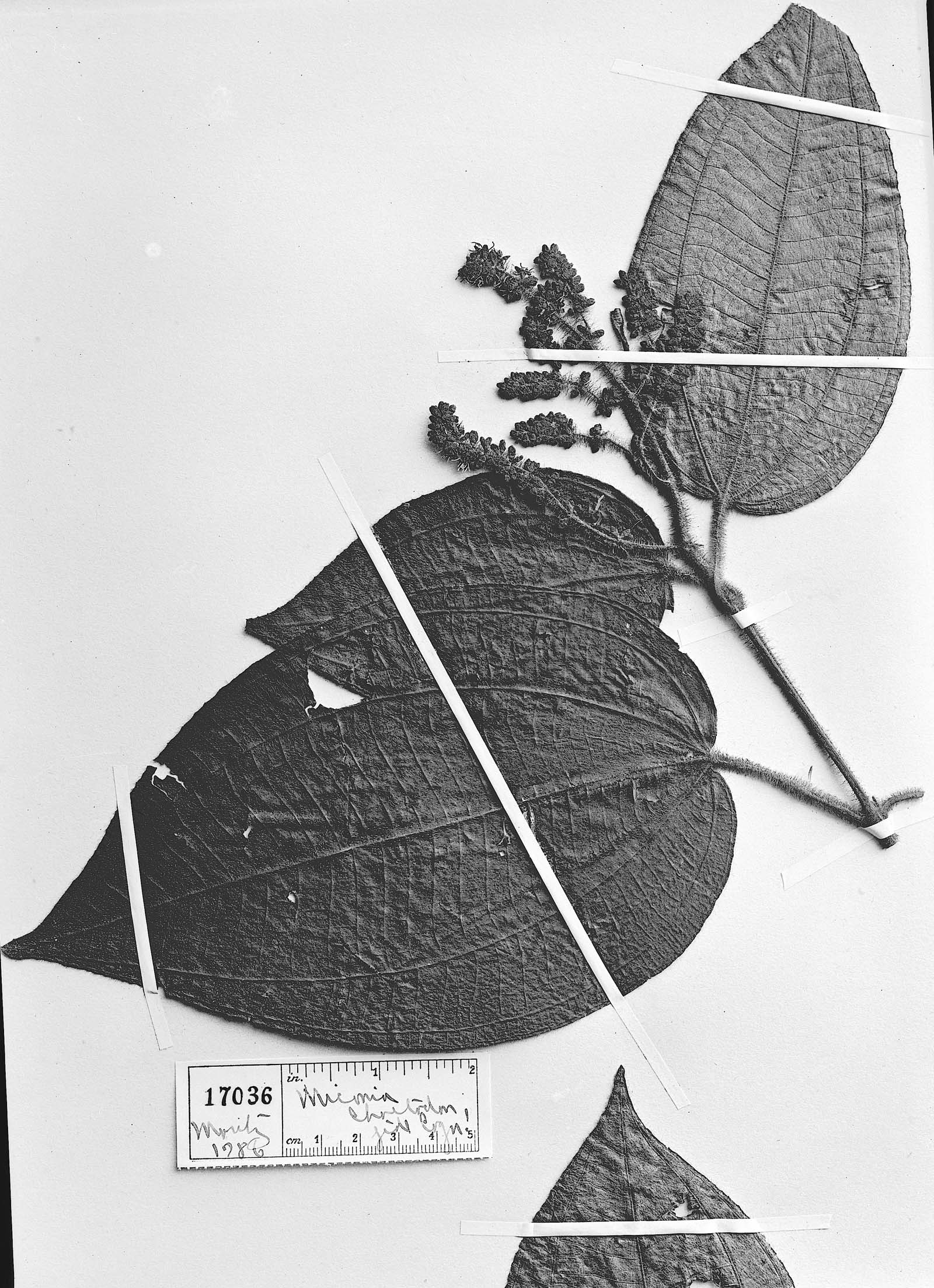
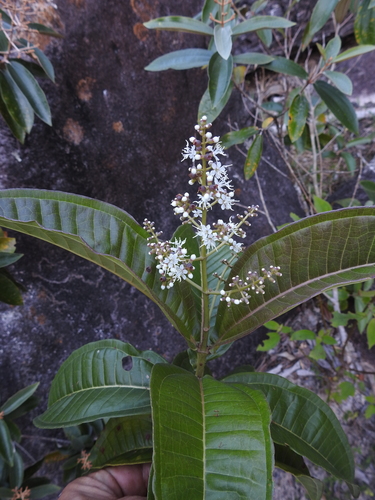
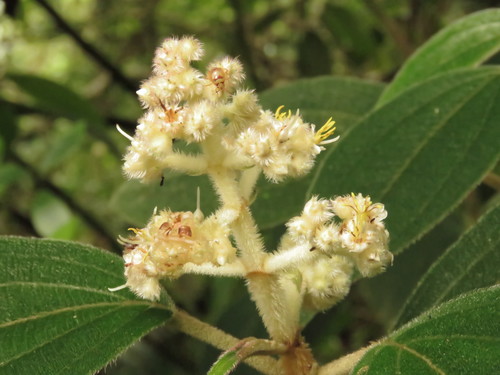
A herb or small shrub. It grows 2 m tall. The stems are thick and square. They are covered with bristles. The leaf stalks are 1-4 cm long. The leaves are opposite and 5-15 cm long by 3-7 cm wide. They are hairy. The flower petals are 6-10 mm long. They are white. The fruit are 10 mm long by 6 mm wide. Fruit contain soft white sections. The seeds are in a white pulp. The seeds are small and 0.6 mm long.
Edible Uses
The ripe fruit are eaten raw, particularly by children, and the seeds are also eaten.
Traditional Uses
The ripe fruit are eaten raw. The seeds are also eaten.
This uses section is brief — help expand it
Distribution
It is a tropical plant. It grows in damp places. In Queensland Australia it grows from sea level to 550 m above sea level.
Where It Grows
Africa, Angola, Australia, Burkina Faso, Central Africa, Central African Republic, CAR, Congo DR, East Africa, Ethiopia, Madagascar, Mauritius, Senegal, Sudan, Uganda,
Production
Fruiting occurs throughout the year. The young leaves and fruit are plucked off the plant.
Other Information
The fruit are especially eaten by children.
Synonyms
Also Known As
Akasiolea, Bosolia, Ekba, Etele, Gashgano, Limbodidi, Lituma lilokonda, Oburo bw'enkombe, Okama, Tonga-tondjo, Voatrotroka
References (17)
- Agea, J. G., et al 2011, Wild and Semi-wild Food Plants of Bunyoro-Kitara Kingdom of Uganda: etc. Environmental Research Journal 5(2) 74-86
- Cooper W & Cooper W T, 1994, Fruits of the Rain Forest. RD Press p 292
- Duguma, H. T., 2020, Wild Edible Plant Nutritional Contribution and Consumer Perception in Ethiopia. Hindawi International Journal of Food Science Volume 2020, Article ID 2958623, 16 pages
- Gallagher, D. E., 2010, Farming beyond the escarpment: Society, Environment, and Mobility in Precolonial Southeastern Burkina Faso. PhD University of Michigan.
- Godfrey, J. et al, 2013, Harvesting, preparation and preservation of commonly consumed wild and semi-wild food plants in Bunyoro-Kitara Kingdom, Uganda. Int. J. Med. Arom. Plants. Vol.3 No.2 pp 262-282
Show all 17 references Hide references
- Gohre, A., et al, 2016, Plants from disturbed savannah vegetation and their usage by Bakongo tribes in Uíge, Northern Angola. Journal of Ethnobiology and Ethnomedicine (2016) 12:42
- Jardin, C., 1970, List of Foods Used In Africa, FAO Nutrition Information Document Series No 2.p 107 (As Tristemma grandifolium var. congolanum) (Also as Tristemma virusanum)
- Latham, P & Mbuta, A., 2017, Useful Plants of Central Province, Democratic Republic of Congo. Volume 2. Salvation Army p 221
- Liengola, I. B., 2001, A contribution to the study of native edible plants by the Turumbu and Lokele of the Tshopo District, Province Orientale, D. R. Congo. Syst. Geogr. Pl. 71:687-698
- Lulekal, E., et al, 2011, Wild edible plants in Ethiopia: a review on their potential to combat food insecurity. Afrika Focus - Vol. 24, No 2. pp 71-121
- Martin, F.W. & Ruberte, R.M., 1979, Edible Leaves of the Tropics. Antillian College Press, Mayaguez, Puerto Rico. p 205 (As Tristemma grandifolium var. congolanum)
- Mosango, M., Szafranski, F., 1985, Plantes sauvages à fruits comestibles dans les environs de Kisangani (Zaïre). In: Journal d'agriculture traditionnelle et de botanique appliquée, 32e année, pp. 177-190
- Musinguzi, E., et al, 2006, Utilization of Indigenous Food Plants in Uganda: A Case Study of South-Western Uganda. AJFAND Vol. 6(2):
- Styger, E., et al, 1999, Indigenous fruit trees of Madagascar: potential components of agroforestry systems to improve human nutrition and restore biological diversity. Agroforestry Systems 46: 289-310 (As Tristemma virusanum)
- Termote, C., et al, 2011, Eating from the wild: Turumbu, Mbole and Bali traditional knowledge of non-cultivated edible plants, District Tshopo, DRCongo, Gen Resourc Crop Evol. 58:585-618
- von Katja Rembold, 2011, Conservation status of the vascular plants in East African rain forests. Dissertation Universitat Koblenz-Landau p 185
- World Checklist of Useful Plant Species 2020. Royal Botanic Gardens, Kew