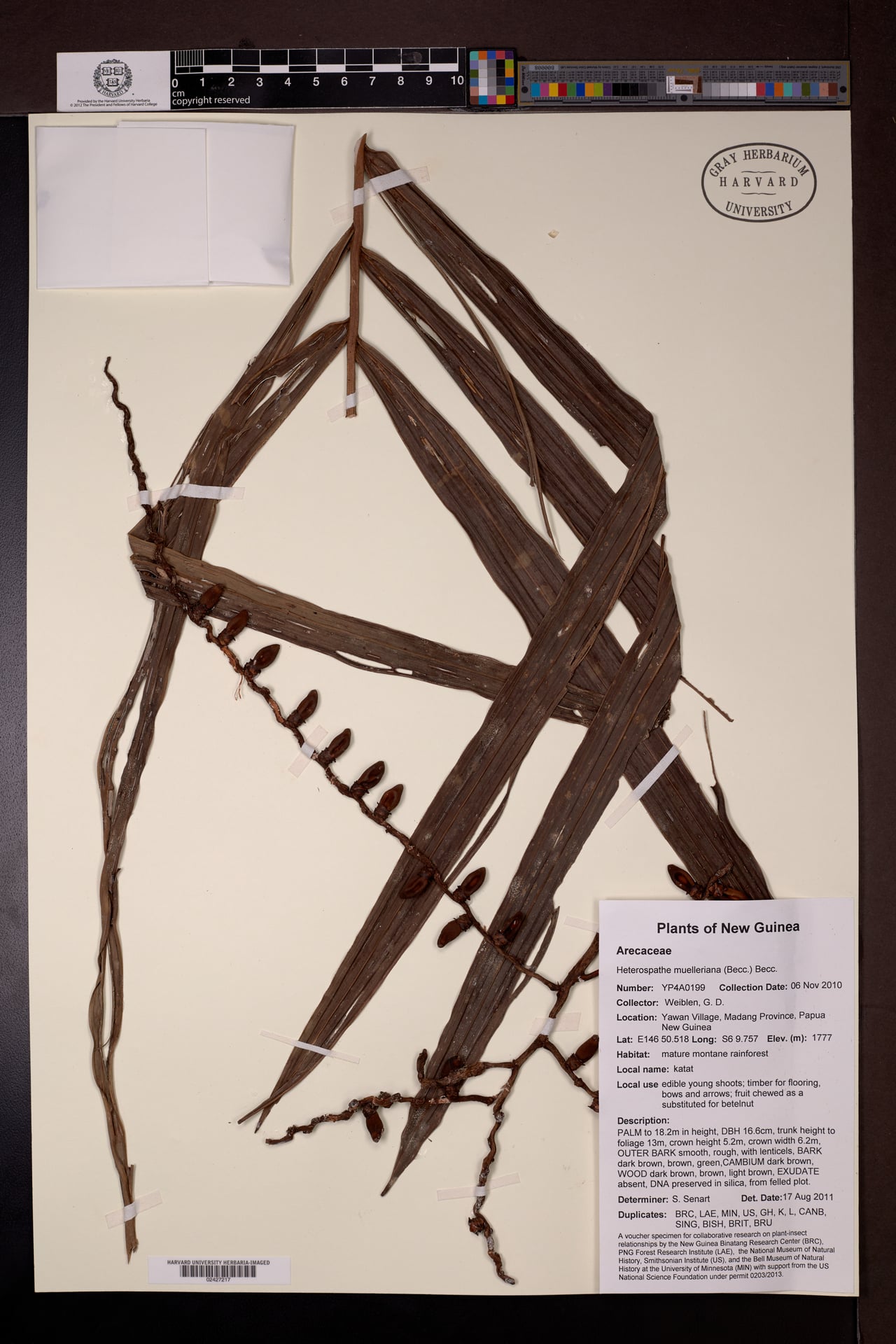
Raphia sese
De Wild.
Arecaceae Edible: Fruit, Sap
gbif· cc-by
Royal Botanic Gardens, Kew
gbif· cc-by
Royal Botanic Gardens, Kew
gbif· cc-by
Royal Botanic Gardens, Kew
Description
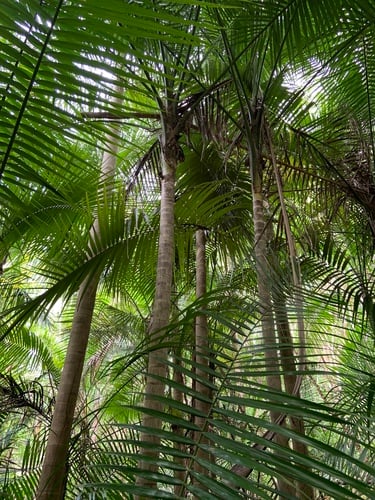
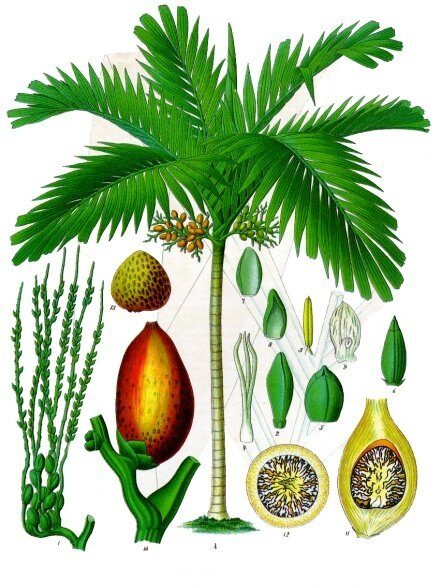
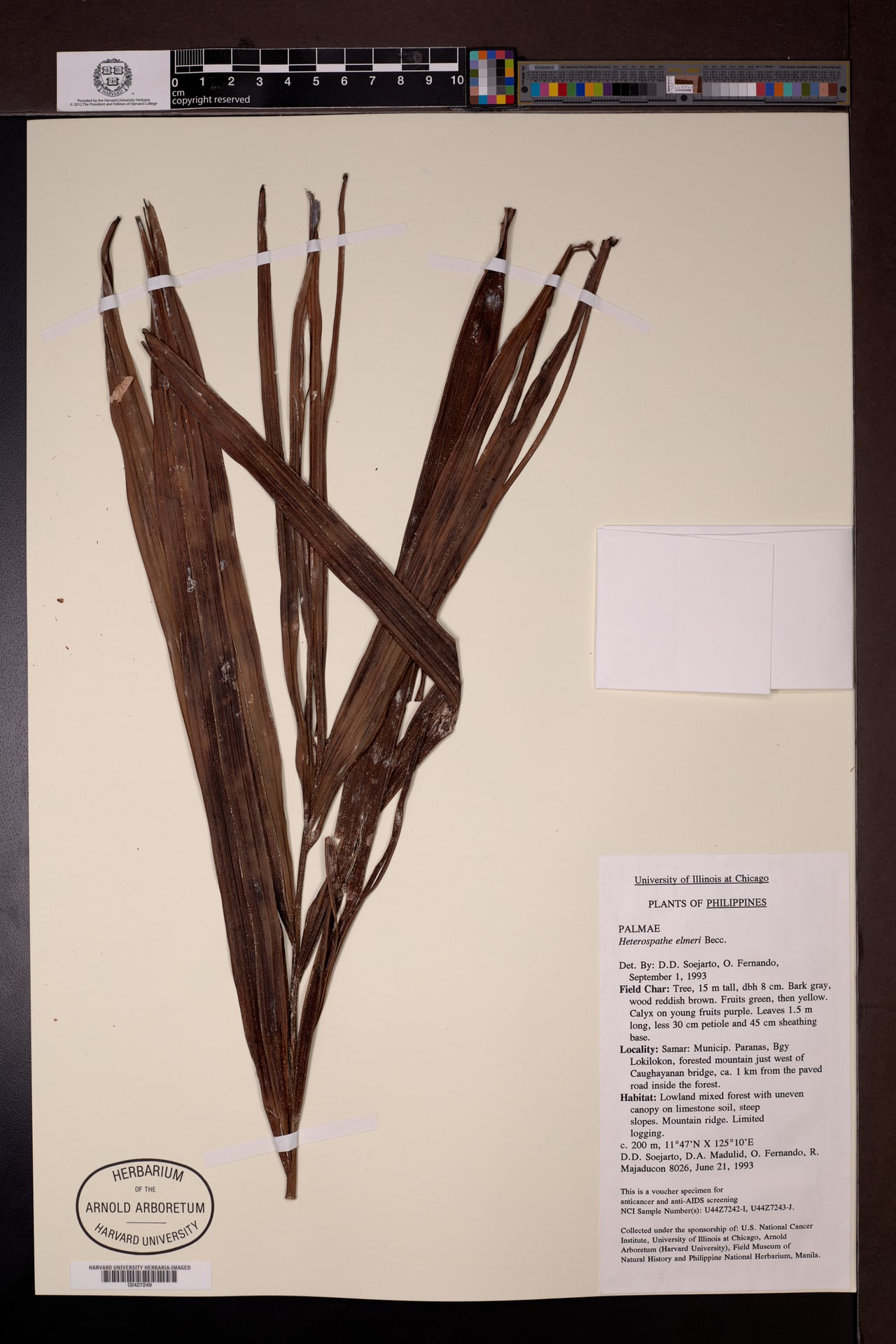
A tropical palm tree in the Arecaceae family.
This description is brief — help expand it
Edible Uses
The fruit pulp is cooked and eaten; fruits are traditionally piled and covered with foliage until mature, then the scales are removed and the flesh used as a flavoring. The stem sap is fermented for wine production.
Traditional Uses
The fruit pulp is cooked and eaten. The fruit are piled up and covered with foliage until mature then the scales removed and the flesh eaten as a flavouring. The nuts are not eaten. The stem sap is used for wine.
Distribution
It is a tropical plant.
Where It Grows
Africa, Central Africa, Congo DR,
Also Known As
Ba di magangu, Fande, Ikolo, Lihokolo
References (5)
- Koni, J. & Bostoen, K., 2008, Noms et usages des plantes utiles chez les Nsong. (RD Congo, Bandundu, bantu B85F). University of Gothenburg
- Latham, P & Mbuta, A., 2017, Useful Plants of Central Province, Democratic Republic of Congo. Volume 2. Salvation Army p 131
- Liengola, I. B., 2001, A contribution to the study of native edible plants by the Turumbu and Lokele of the Tshopo District, Province Orientale, D. R. Congo. Syst. Geogr. Pl. 71:687-698
- Termote, C., et al, 2011, Eating from the wild: Turumbu, Mbole and Bali traditional knowledge of non-cultivated edible plants, District Tshopo, DRCongo, Gen Resourc Crop Evol. 58:585-618
- Termote, C., 2012, Wild edible plant use in Tshopo District, Democratic Republic of Congo. Universiteit Gent. p 70