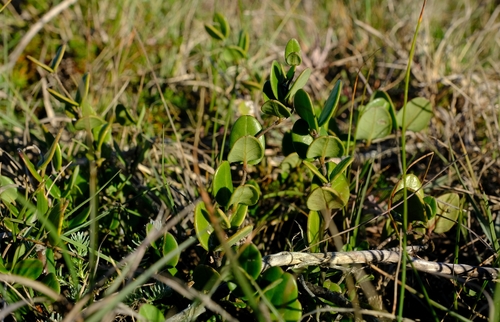
Picralima nitida
(Stapf) T. Durand et H. Durand
iNaturalist· cc-by-nc
(c) Carel Jongkind, some rights reserved (CC BY-NC), uploaded by Carel Jongkind
iNaturalist· cc-by-nc
(c) Carel Jongkind, some rights reserved (CC BY-NC), uploaded by Carel Jongkind
iNaturalist· cc-by-nc
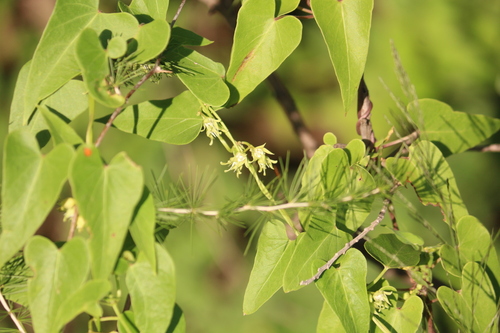
(c) mwintirew, some rights reserved (CC BY-NC)
Description
A tropical tree growing to 20 m tall, native to forest environments in Nigeria and other tropical regions.
This description is brief — help expand it
Edible Uses
The fruit is chewed as a famine food. The bark can be made into tea, and the seeds are also eaten.
Traditional Uses
The fruit is chewed as a famine food.
This uses section is brief — help expand it
Medicinal Uses
The seeds have medicinal properties.
Known Hazards
The seed contains alkaloids. It is used medicinally in parts of Africa, but considered toxic in other areas. The crushed seeds, roots or fruit pulp are ingredients for arrow poison. The immature fruits are pounded and thrown in the water as a fish poison.
Distribution
It is a tropical plant. It grows in the forest. In Nigeria it has been recorded at 230 m above sea level.
Where It Grows
Africa, Benin, Cameroon, Central Africa, Central African Republic, CAR, Congo DR, Côte d'Ivoire, East Africa, Gabon, Ivory Coast, Nigeria, Togo, Uganda, West Africa,
Cultivation
The plant can flower and produce fruit all year round.
Other Uses
Small dippers and spoons are made from the shell of the fruit. The pale yellow wood is hard, elastic, fine-grained and takes a high polish. It is used traditionally to make a range of mainly small items such as incense holders, combs, spoons, walking-sticks, arrows, weaver's shuttles, dolls, plane-blocks and handles for tools.
Production
In Central African Republic it flowers in April and June.
Notes
The seeds have medicinal properties.
Synonyms
Also Known As
Agbodu, Akuamma Obero, Quinqueliba
References (8)
- Assogbadjo, A. E. et al, 2013, Specific Richness and Cultural Importance of Wild Edible Trees in Benin. Acta Hort. 979, ISHS 2013
- Atato, A., et al, 2010, Diversity of Edible Wild Fruit Tree Species of Togo. Global Science Books.
- Dibong, S. D., et al, 2011, Inventory and Biodiversity of species edible wild fruits sold in the markets of Douala, Cameroon. International Journal of Applied Biology and Pharmaceutical Technology. 2(3).
- Harris, D. J., 2002, The vascular plants of the Dzanga-Sangha Reserve, Central African Republic. National Botanic Garden of Belgium, 2002. – 274 pages p 52
- Latham, P & Mbuta, A., 2017, Useful Plants of Central Province, Democratic Republic of Congo. Volume 2. Salvation Army p 106
Show all 8 references Hide references
- Termote, C., et al, 2011, Eating from the wild: Turumbu, Mbole and Bali traditional knowledge of non-cultivated edible plants, District Tshopo, DRCongo, Gen Resourc Crop Evol. 58:585-618
- von Katja Rembold, 2011, Conservation status of the vascular plants in East African rain forests. Dissertation Universitat Koblenz-Landau p 177
- World Checklist of Useful Plant Species 2020. Royal Botanic Gardens, Kew