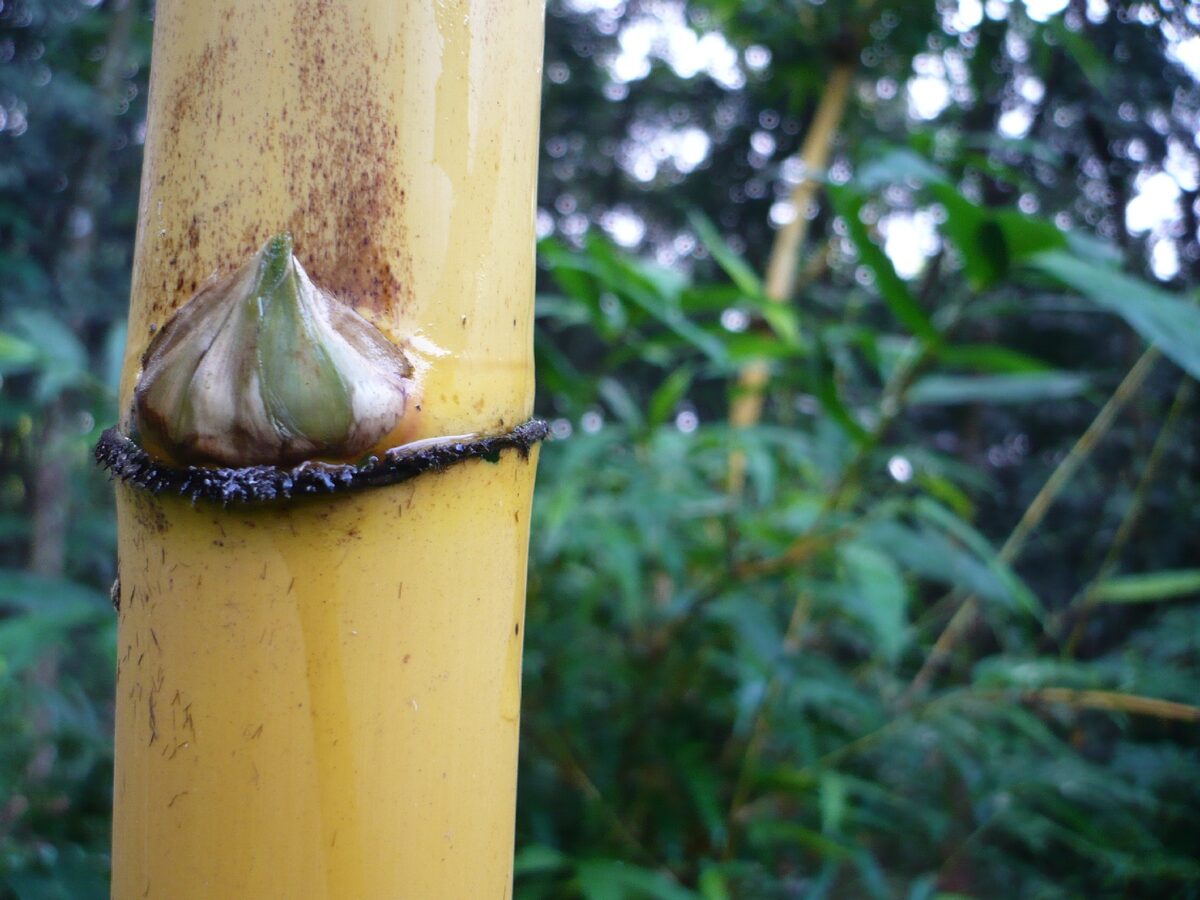
Dendrocalamus longispathus
Kurz
Waya
iNaturalist· cc-by-nc
(c) lordworm_cryptopsy, some rights reserved (CC BY-NC)
iNaturalist· cc-by-nc
(c) lordworm_cryptopsy, some rights reserved (CC BY-NC)
Summary
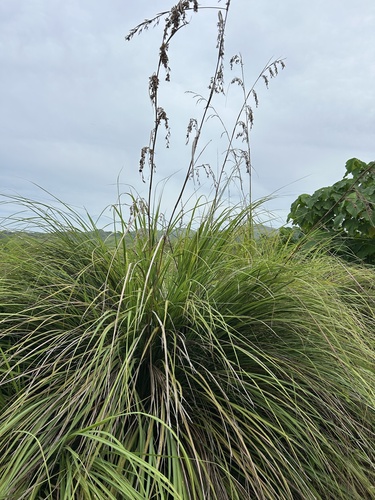
Source: WikipediaDendrocalamus longispathus, the long-sheath bamboo, is a species of bamboo in the family Poaceae. It grows up to 20 m tall. It is native to Bangladesh, Myanmar, and Thailand. It has now become an exotic species all over the South Asia.
Description
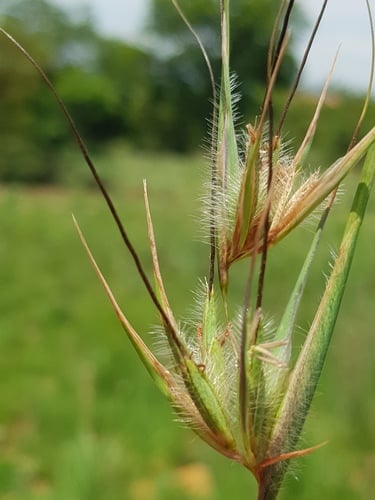
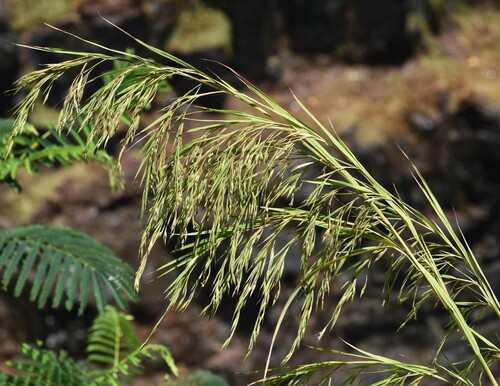
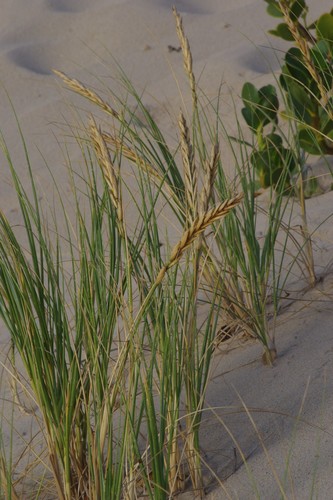
A bamboo. The stem is 20 m tall. It is 8-12 cm across. The internodes are 25-60 cm long. The nodes are slightly swollen. There are aerial roots. The leaf sheath has dark brown hairs on the back. The leaf blade is sword shaped and curves back. It is 20-30 cm long by 203 cm wide. The flowering stalks are branched and with spike like flowers 6 cm long.
Edible Uses
The young shoots are eaten.
Traditional Uses
The shoots are eaten.
This uses section is brief — help expand it
Distribution
It is a tropical plant.
Where It Grows
Asia, Bangladesh, India, Indochina, Laos, Malaysia, Myanmar, Northeastern India, SE Asia, Thailand,
Cultivation
It can be grown by cuttings of the stem.
Propagation
Seed - many, if not all, members of this genus have a short viability and should be sown within 2 - 3 months of harvest. Sow in containers in a lightly shaded position and only just cover. Germination rates of 33 - 50% have been achieved in trials, with the seed starting to sprout within 2 - 8 days. Prick out into individual pots as soon as the plants are large enough to handle. Plant out into permanent positions when 20cm tall. Plants may remain in their low-growing juvenile state for several years - cutting the culms to the ground level can stimulate taller adult growth. Rhizome, culm and branch cuttings. The propagules are raised in the nursery and after they have produced roots they are planted out in the field before or during the first half of the rainy season. Culm cuttings, taken with two nodes.
Other Uses
The culms are used for making temporary constructions, baskets, furniture, mats and containers. This species is generally used as a source of pulp for the manufacture of paper. The culms have been found to be an ideal material for the manufacture of good quality tooth picks. Harvesting may start 3 - 4 years after a clump has begun to produce culms of maximum size. Only culms older than 3 years are harvestable and harvesting should never be done during the growing season. It is recommended to cut the culms lower than 30cm above the ground level, but not below the 2nd node. Debris and cut branches should always be removed completely.
Other Information
It is cultivated.
Synonyms
Also Known As
Dujangpai, Gothi, Mai-hokdam, Phai-lammalok, Rupai, Tabindaing-wa, Talagu, Unan, Wanet
References (5)
- Balkrishna, A., et al, 2022, Indigenous Uses of Plants among Forest-dependent Communities of Seijosa, Arunachal Pradesh. International Journal of Economic Plants 2022, 9(1):064-080
- Deb, D., et al, 2013, Wild Edible Plants and Their Utilization in Traditional Recipes of Tripura, Northeast India. Advances in Biological Research 7(5):203-211
- Premlata, T., et al, 2020, Edible bamboo resources of Manipur: consumption pattern of young shoots, processing techniques and their commercial status in the local market. Indian Journal of Traditional Knowledge Vol. 19(1) pp 73-82
- PROSEA (Plant Resources of South East Asia) handbook, Volume 7, 1995, Bamboos.
- Zeven, A. C. & de West, J. M. J., 1982, Dictionary of cultivated plants and their regions of diversity. Wageningen. p 73