Eragrostis tremula
(Lam.) Hochst ex Steud.
iNaturalist· cc-by-nc
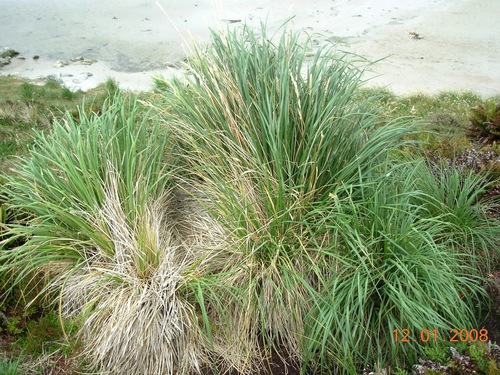
(c) bilyaminusirajo, some rights reserved (CC BY-NC), uploaded by bilyaminusirajo
iNaturalist· cc-by-nc
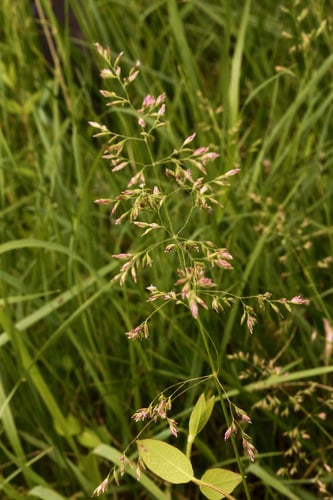
(c) SONU KUMAR, some rights reserved (CC BY-NC)
Summary
Source: WikipediaEragrostis tremula is an annual grass that is native to tropical Africa, India and Myanmar. It is found in sandy soils and abandoned cultivation.
Description
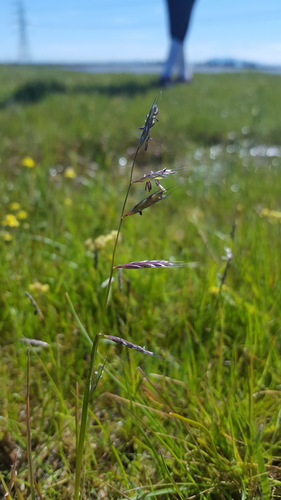
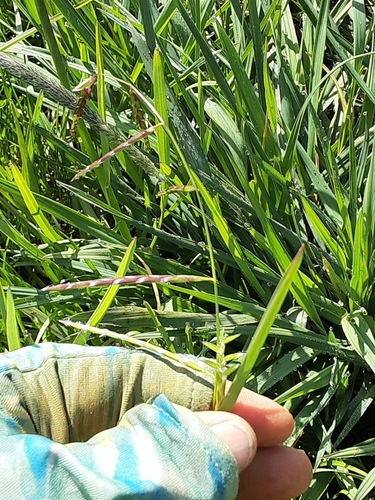
A herb. It is an annual grass that forms loose tufts. It grows 30-100 cm high. The leaf blades are flat and 20 cm long by 5 mm wide. The flower panicles are oval and 7-30 cm long. They are very loose and open. The spikelets tremble on long fine stalks. The spikelets have 10-60 flowers. These are narrow and 5-25 mm long. The seed is about 0.5 mm long.
Edible Uses
Seed - eaten as a cereal. The seed is small and fiddly to utilize - it is most commonly seen as a famine food, used when nothing better is available.
Traditional Uses
The seeds are eaten when food is short. It is used in kreb a grain mixture eaten in Chad.
This uses section is brief — help expand it
Distribution
A tropical plant. It grows on sandy soils. It grows in the savannah zone in West Africa. It grows in areas with an annual rainfall between 200-950 mm. It grows from sea level to 1,500 m above sea level. It can grow in arid places.
Where It Grows
Afghanistan, Africa, Algeria, Angola, Asia, Benin, Burkina Faso, Burundi, Cameroon, Cape Verde, Central Africa, Central African Republic, CAR, Chad, Congo, Côte d'Ivoire, East Africa, Egypt, Ethiopia, Gambia, Ghana, Guinea, Guinée, Guinea-Bissau, Himalayas, India, Ivory Coast, Kenya, Malawi, Mali, Mauritania, Middle East, Mozambique, Myanmar, Nepal, Niger, Nigeria, North Africa, Pakistan, Rwanda, Sahel, Saudi Arabia, SE Asia, Senegal, Sierra Leone, Sudan, Tanzania, Togo, Uganda, West Africa, Zambia, Zimbabwe,
Cultivation
It is grown from seeds. Seeds are hard and germinate better with seed treatment.
Propagation
Seed - sow in situ, only just covering the seed. Germination is usually very quick and free.
Other Uses
The culms, bundled together, are used as hand-brooms for indoor use. The culms may also be used for thatching, and are woven together to make mats and cordage.
Production
Plants grow quickly. Vegetative growth lasts for 19-35 days.
Other Information
A famine food.
Notes
There are about 300 Eragrostis species.
Synonyms
Also Known As
Am dijankga, Bano, Bibirua, Buska, Chankam buti, Chiri-ka-khet, Chirka, Laki, Mama-cungoi, Sarahol, Sawarco-guerle
References (14)
- Abbiw, D.K., 1990, Useful Plants of Ghana. West African uses of wild and cultivated plants. Intermediate Technology Publications and the Royal Botanic Gardens, Kew. p 26
- Ambasta, S.P. (Ed.), 2000, The Useful Plants of India. CSIR India. p 199
- Burkill, H. M., 1985, The useful plants of west tropical Africa, Vol. 2. Kew.
- Food Composition Tables for use in Africa FAO http://www.fao.org/infoods/directory No. 40
- Flora of Pakistan. www.eFloras.org
Show all 14 references Hide references
- Gallagher, D. E., 2010, Farming beyond the escarpment: Society, Environment, and Mobility in Precolonial Southeastern Burkina Faso. PhD University of Michigan.
- Jardin, C., 1970, List of Foods Used In Africa, FAO Nutrition Information Document Series No 2.p 3
- Lulekal, E., et al, 2011, Wild edible plants in Ethiopia: a review on their potential to combat food insecurity. Afrika Focus - Vol. 24, No 2. pp 71-121
- National Research Council, 1996, Lost crops of Africa. Volume 1 grains, p 272
- Roger, D. D., et al, 2012, Nutritional properties of “Bush Meals” from North Cameroon’s Biodiversity. Advances in Applied Science Research, 2012, 3 (3):1482-1493
- Royal Botanic Gardens, Kew (1999). Survey of Economic Plants for Arid and Semi-Arid Lands (SEPASAL) database. Published on the Internet; http://www.rbgkew.org.uk/ceb/sepasal/internet [Accessed 3rd June 2011]
- Singh, H.B., Arora R.K.,1978, Wild edible Plants of India. Indian Council of Agricultural Research, New Delhi. p 84
- Syn. pl. glumac. 1:269. 1854
- World Checklist of Useful Plant Species 2020. Royal Botanic Gardens, Kew