Nuphar advena
R. Br.
Yellow pond lily
iNaturalist· cc-by
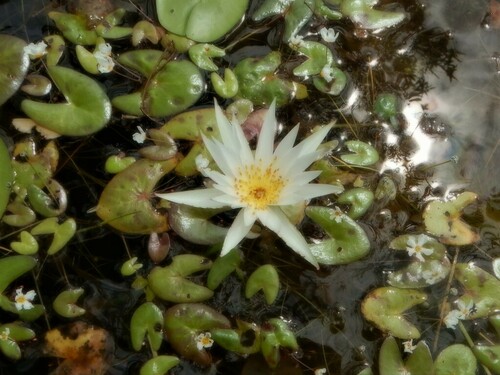
(c) mfeaver, some rights reserved (CC BY), uploaded by mfeaver
iNaturalist· cc-by-nc
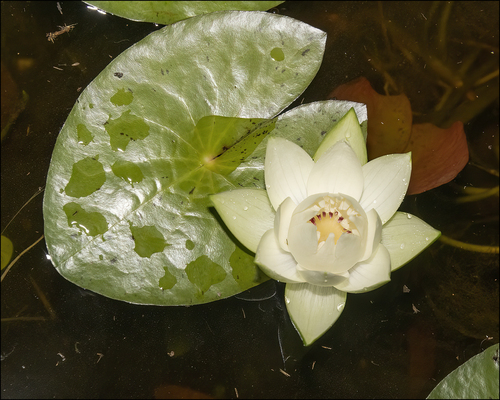
(c) K.C. Bergdoll, some rights reserved (CC BY-NC), uploaded by K.C. Bergdoll
iNaturalist· cc-by-nc
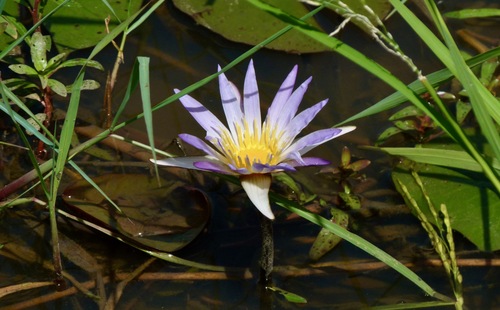
(c) randytoad, some rights reserved (CC BY-NC), uploaded by randytoad
Summary
Source: WikipediaNuphar advena (spatterdock or cow lily or yellow pond-lily) is a species of Nuphar native throughout the eastern United States and in some parts of Canada, as well as Mexico and Cuba. It is locally naturalized in Britain.
Description
A herb that grows in water. It keeps growing from year to year and spreads over 2.5 m of the water surface. The plant is spongy. It has a creeping rhizome or underground stem and the leaves are large and heart shaped. The leaves are 35-40 cm long by 20-25 cm wide.
Edible Uses
Both the root and seed are edible. The root can be eaten raw or cooked, though soaking it in water first helps remove bitterness. After long boiling it develops a flavour resembling sheep's liver. The dried root can be ground into a powder and used as a soup thickener or blended with cereal flours for bread and cakes. The seed is also edible raw or cooked — it can be roasted and ground into a powder for eating as-is or for thickening soups, and it can be toasted like popcorn.
Traditional Uses
The rhizome can be boiled or roasted and eaten with meat. The seeds can be eaten and used to thicken soup. They are ground.
This uses section is brief — help expand it
Medicinal Uses
The fresh root is anodyne, astringent, and demulcent. Pulverized dried rhizomes have been used to arrest bleeding. A tea made from the roots is used to treat dysentery and diarrhoea. A poultice prepared from the roots is applied to swellings, boils, tumours, and inflamed skin.
Distribution
It grows in ponds and ditches and slow flowing streams. It grows in shallow water but can be found in water 2 m deep.
Where It Grows
Canada, Cuba, Europe, Japan, Mexico, North America, USA, West Indies,
Cultivation
Plants can be grown by seeds.
Propagation
Sow seed as soon as it is ripe in a greenhouse, in pots submerged under 25mm of water. Prick out into individual pots as soon as the first true leaf appears, and grow on in water in a greenhouse for at least two years before planting out in late spring. Collect seed by wrapping the developing seed head in a muslin bag to prevent loss, harvesting 10 days after it sinks below the soil surface or as soon as it reappears. Divide in May, ensuring each portion has at least one eye. Submerge divisions in pots in shallow water until established.
Other Uses
None known
Notes
Nuphar advena R. Br. is a species and Nuphar advena (Ait.) Ait. f is a synonym of Nuphar lutea subsp. advena.
Synonyms
Also Known As
Common spatterdock
References (4)
- Ecocrop
- Esperanca, M. J., 1988. Surviving in the wild. A glance at the wild plants and their uses. Vol. 2. p 364
- Kermath, B. M., et al, 2014, Food Plants in the Americas: A survey of the domesticated, cultivated and wild plants used for Human food in North, Central and South America and the Caribbean. On line draft. p 571
- Lim, T. K., 2015, Edible Medicinal and Non Medicinal Plants. Volume 9, Modified Stems, Roots, Bulbs. Springer p 58