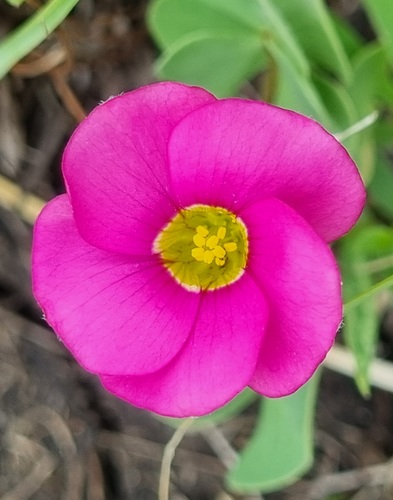
Oxalis purpurascens
T. M. Salter
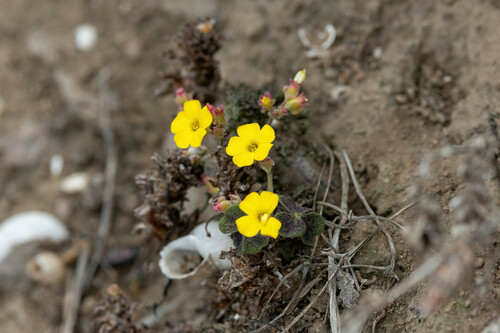
iNaturalist· cc-by-nc
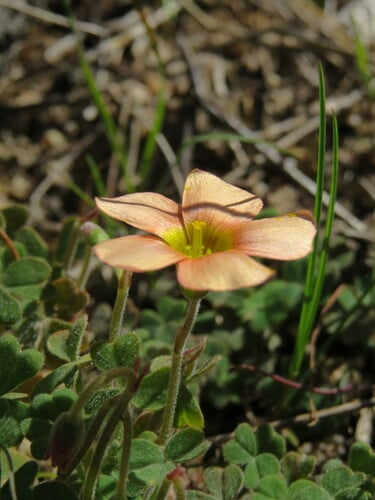
(c) jokbrocks, some rights reserved (CC BY-NC)
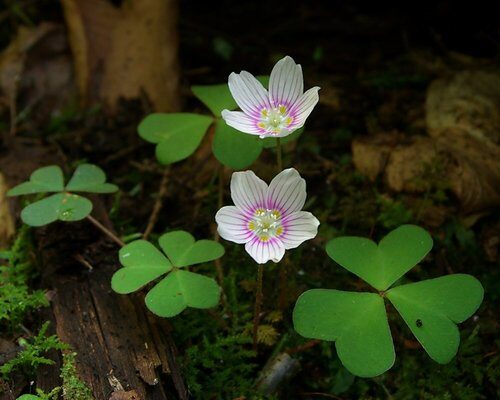
iNaturalist· cc-by-nc
(c) Nick Helme, some rights reserved (CC BY-NC), uploaded by Nick Helme
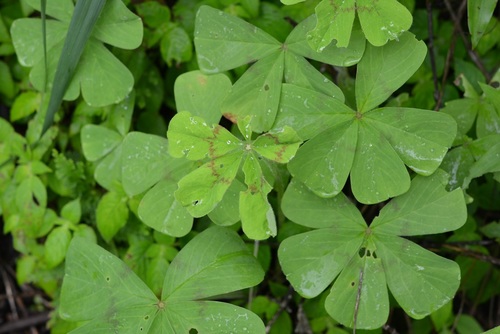
iNaturalist· cc-by-nc
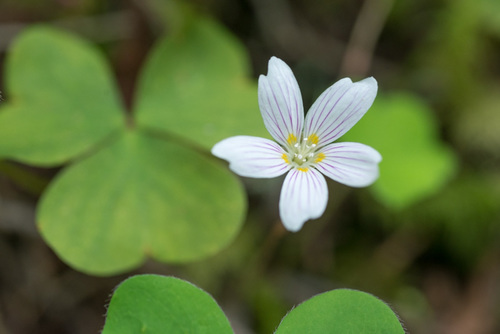
(c) Silke Rugheimer, some rights reserved (CC BY-NC), uploaded by Silke Rugheimer
Description
A perennial herb with a bulb, growing to 20 cm high, found in subtropical arid regions with marked dry seasons at elevations between 935-2,479 m.
This description is brief — help expand it
Edible Uses
The leaves are eaten raw and in vegetable dishes. The root bulbs are eaten raw and in vegetable dishes.
Traditional Uses
The leaves are eaten raw and also in vegetable dishes. The root bulbs are eaten raw and in vegetable dishes. CAUTION: The leaves contain oxalates and can affect calcium absorption. They probably damage kidneys. They should not be eaten in large amounts.
Known Hazards
The leaves contain oxalates and can affect calcium absorption. They probably damage kidneys and should not be eaten in large amounts.
Distribution
It is a subtropical plant. It grows in hot arid places with a marked dry season. The dry season can be 6-11 months. It grows between 935-2,479 m above sea level. It can grow in arid places.
Where It Grows
Africa, Botswana, Namibia, South Africa, Southern Africa,
Nutrition
| Part | Moisture | kJ | kcal | Protein | Vit A | Vit C | Iron | Zinc |
|---|---|---|---|---|---|---|---|---|
| Bulb | 69 | 478 | 114 | 1.4 | — | — | 2.6 | 0.8 |
Also Known As
Orunarunue, Suring
References (4)
- Royal Botanic Gardens, Kew (1999). Survey of Economic Plants for Arid and Semi-Arid Lands (SEPASAL) database. Published on the Internet; http://www.rbgkew.org.uk/ceb/sepasal/internet [Accessed 5th May 2011]
- Ruiters-Welcome, A. K., 2019, Food plants of southern Africa. Ph.D. thesis. Univ. of Johannesburg p 84
- Wehmeyer, A. S, 1986, Edible Wild Plants of Southern Africa. Data on the Nutrient Contents of over 300 species
- Welcome, A. K. & Van Wyk, B.-E., 2019, An inventory and analysis of the food plants of southern Africa. South African Journal of Botany 122 (2019) 136–179