Plicosepalus kalachariensis
(Schinz) Danser
Acacia mistletoe
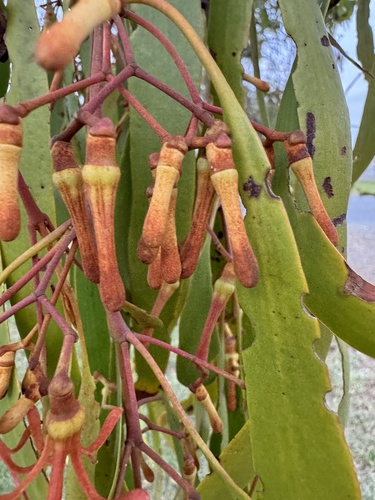
iNaturalist· cc-by-nc
(c) Tony Benn, some rights reserved (CC BY-NC), uploaded by Tony Benn
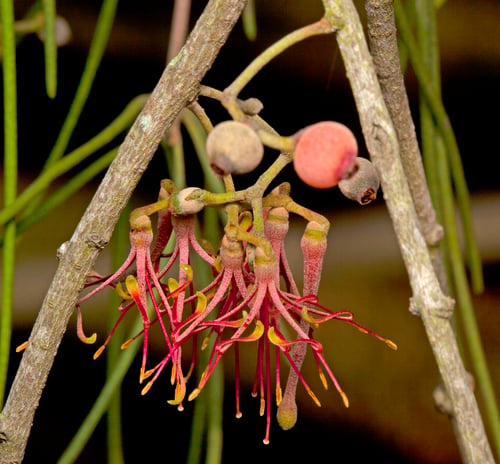
iNaturalist· cc-by-nc
(c) Tony Benn, some rights reserved (CC BY-NC), uploaded by Tony Benn
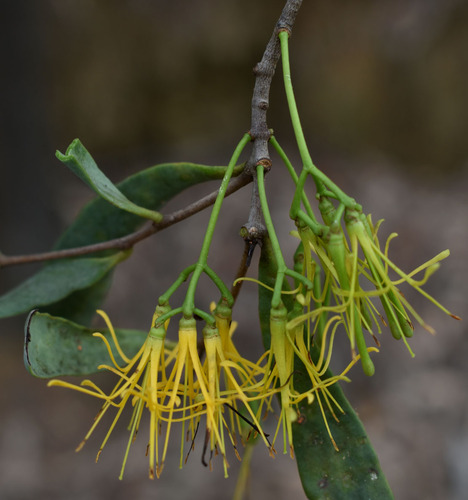
iNaturalist· cc-by-sa
(c) Dave U, some rights reserved (CC BY-SA), uploaded by Dave U
Description
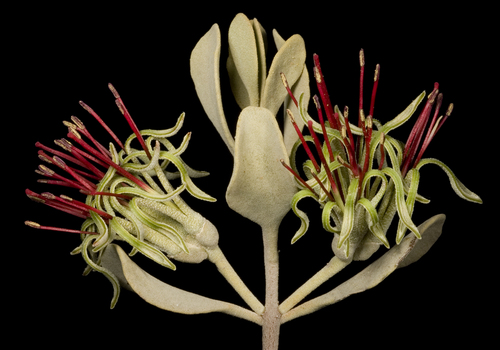
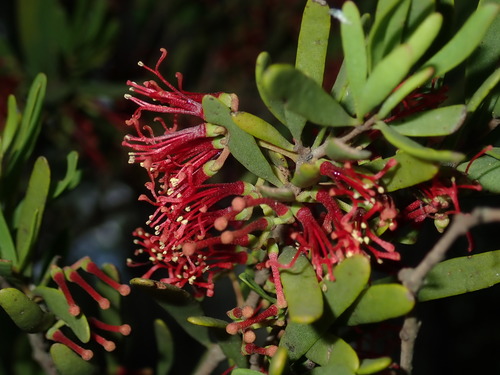
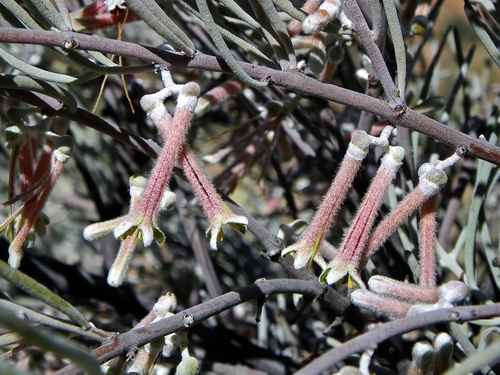
A shrub that grows attached to other plants. It grows 2.5 m high. The leaves are narrowly oval but vary in shape. They are 4-6 cm long. They are blue-green. The flowers are in flat topped groups of 2-6 flowers. They are pink to red. The fruit are red berries.
Edible Uses
The stems are dried, pounded, and cooked with sugar and milk to make a drink. The nectar from the flowers is sucked fresh.
Traditional Uses
The stems are dried, pounded, cooked and sugar and milk are added to make a drink. The nectar of the flowers is sucked.
This uses section is brief — help expand it
Medicinal Uses
The stems are prepared as a medicinal drink.
Distribution
It is a subtropical plant. It grows in hot arid areas with a marked dry season. It grows in areas with a dry season of 6-11 months. It grows between 50-1,740 m above sea level. It can grow in arid places.
Where It Grows
Africa, Botswana, East Africa, Eswatini, Malawi, Mozambique, Namibia, South Africa, Southern Africa, Swaziland, Tanzania, Zambia, Zimbabwe,
Synonyms
Also Known As
Tsi'itsi'i
References (2)
- Royal Botanic Gardens, Kew (1999). Survey of Economic Plants for Arid and Semi-Arid Lands (SEPASAL) database. Published on the Internet; http://www.rbgkew.org.uk/ceb/sepasal/internet [Accessed 1st May 2011]
- World Checklist of Useful Plant Species 2020. Royal Botanic Gardens, Kew