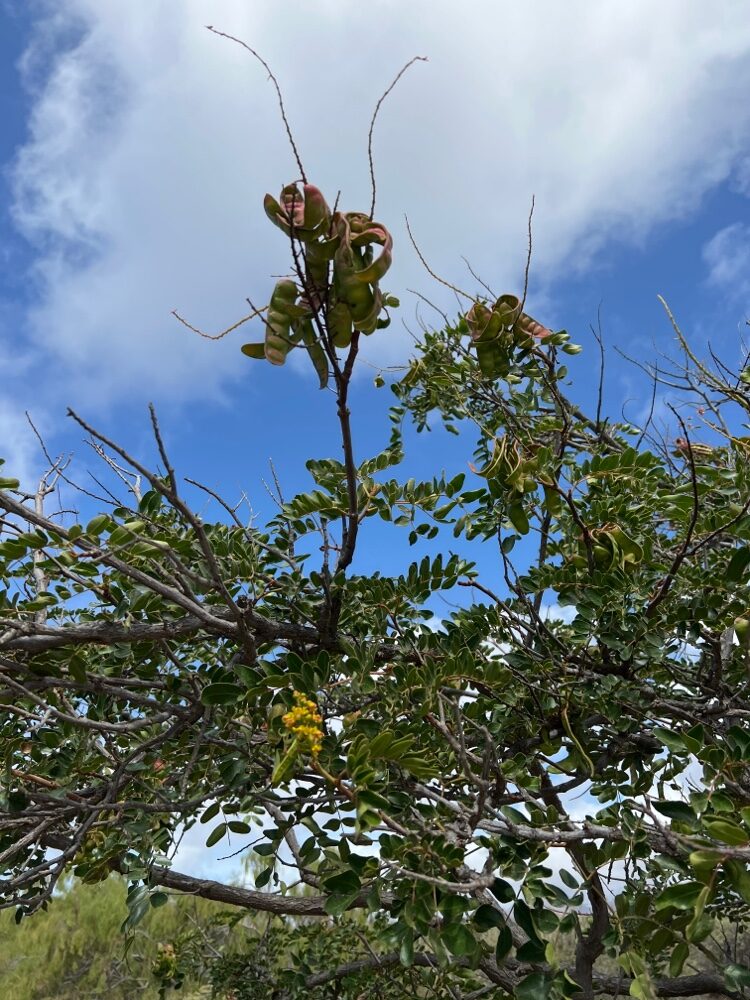
Senna septemtrionalis
(Viv.) H. S. Irwin & Barneby
Showy cassia, Smooth senna
iNaturalist· cc-by-nc
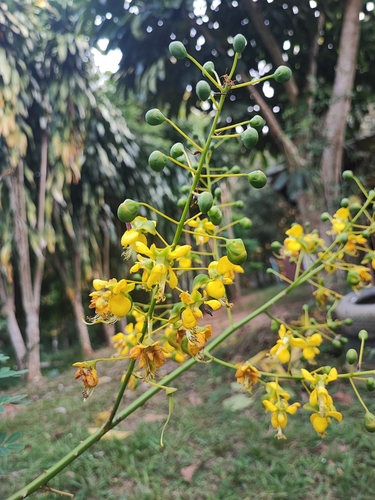
(c) David Valdez, some rights reserved (CC BY-NC), uploaded by David Valdez
iNaturalist· cc-by
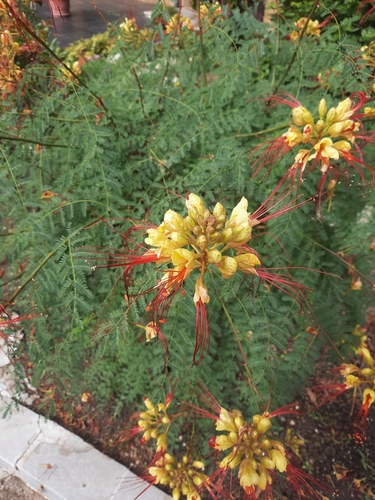
(c) naturewatchwidow, some rights reserved (CC BY), uploaded by naturewatchwidow
iNaturalist· cc-by
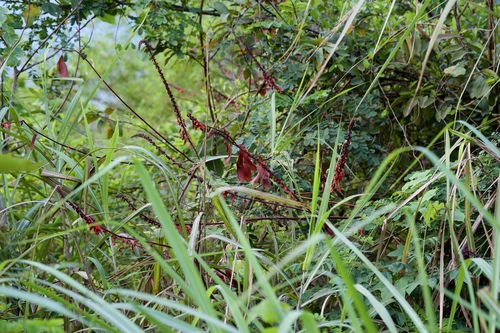
(c) Eduardo Chacón Madrigal, some rights reserved (CC BY), uploaded by Eduardo Chacón Madrigal
Summary
Source: WikipediaSenna septemtrionalis, commonly known as arsenic bush, is a species of flowering plant in the family Fabaceae and is native to Central America, the southern United States and Mexico, but is naturalised in many other countries. It is an erect shrub with pinnate leaves, with four or five pairs of egg-shaped leaflets, and yellow flowers arranged in groups of five to eight, usually with seven fertile stamens and four staminodes in each flower.
Description
An erect shrub or tree. It grows 5 m high. The leaflet blades are narrowly oval and taper to the tip. The leaflet blades are 5-10 cm long by 2-3 cm wide. The pair of leaflets at the end are the largest. The flowers are yellow and the petals are 13 mm long. The fruit is a pod 7-8 m long by 1.5 cm wide. The seeds are shiny and olive green. They are 5 mm long by 3 mm wide.
Edible Uses
Young leaves and shoots are steamed and eaten with rice. Soft half-ripe seeds are cooked or roasted. Seeds are also dried and used as a coffee substitute.
Traditional Uses
The young leaves and shoots are steamed and eaten with rice. The soft half ripe seeds are cooked or roasted. The seeds are also used for coffee.
This uses section is brief — help expand it
Medicinal Uses
Traditional uses recorded for this plant.
Distribution
It is a tropical plant. It grows in dry soils. It grows on the edges of forests. In northern Australia it grows between 700-1,100 m above sea level. In Java it grows between 500-2,000 m above sea level.
Where It Grows
Africa, Angola, Asia, Australia, Barbados, Brazil, Central America*, China, Colombia, Costa Rica, Dominican Republic, East Africa, Eswatini, Fiji, Guatemala, Hawaii, Honduras, India, Indonesia, Jamaica, Malawi, Martinique, Mexico, Mozambique, Nicaragua, North America, Pacific, Panama, Peru, Puerto Rico, SE Asia, Sierra Leone, South Africa, Southern Africa, South America, Sri Lanka, Swaziland, Tanzania, West Africa, West Indies, Zambia, Zimbabwe,
Cultivation
Prefers a deep, well-drained, moderately fertile sandy loam and a position in full sun. Often grown as an ornamental, the plant has escaped from cultivation and become a weed in some areas. There are conflicting reports on whether or not this tree has a symbiotic relationship with certain soil bacteria, so it is unclear as to whether this tree fixes atmospheric nitrogen.
Propagation
Seed - pre-soaking for 12 hours in warm water, or abrading the seed with sand can improve germination rates and reduce germination time.
Other Uses
The plant is grown as a hedge.
Notes
Also as Caesalpinaceae.
Synonyms
Also Known As
Frijolillo, Kasingat, Keetjandoong, Malulu, Mkundekunde, Senting, Tarad, Tarod, Tayoomas, Tremblon
References (7)
- Blake, S. F., Native Names and Uses of some Plants of Eastern Guatemala and Honduras. Contributions from the National Herbarium. p 90 (As Cassia laevigata)
- Lautenschläger, T., et al, 2018, First large-scale ethnobotanical survey in the province of Uíge, northern Angola. Journal of Ethnobiology and Ethnomedicine (2018) 14:51
- Msuya, T. S., et al, 2010, Availability, Preference and Consumption of Indigenous Foods in the Eastern Arc Mountains, Tanzania, Ecology of Food and Nutrition, 49:3, 208-227
- Ochse, J.J. et al, 1931, Vegetables of the Dutch East Indies. Asher reprint. p 376 (As Cassia laevigata)
- Pandey, K. C. & Pande, N., 2016, Ethnobotanical Documentation of Wild Edible Plants used by Gujjar Community of Tarai West Forest Division Ramnagar, Nainital, India, Current World Environment. Vol. 11(3), 808-818
Show all 7 references Hide references
- Roa, J. A. G. & Boada, D. S. G., 2018, Fundación para el Fortalecimiento de la Fruticultura y Plantas Alimenticias no Convencionales en Colombia.
- World Checklist of Useful Plant Species 2020. Royal Botanic Gardens, Kew