Brachystelma cupulatum
R. A. Dyer
gbif· cc-by
Royal Botanic Gardens, Kew
gbif· cc-by
Royal Botanic Gardens, Kew
gbif· cc-by
Royal Botanic Gardens, Kew
Description
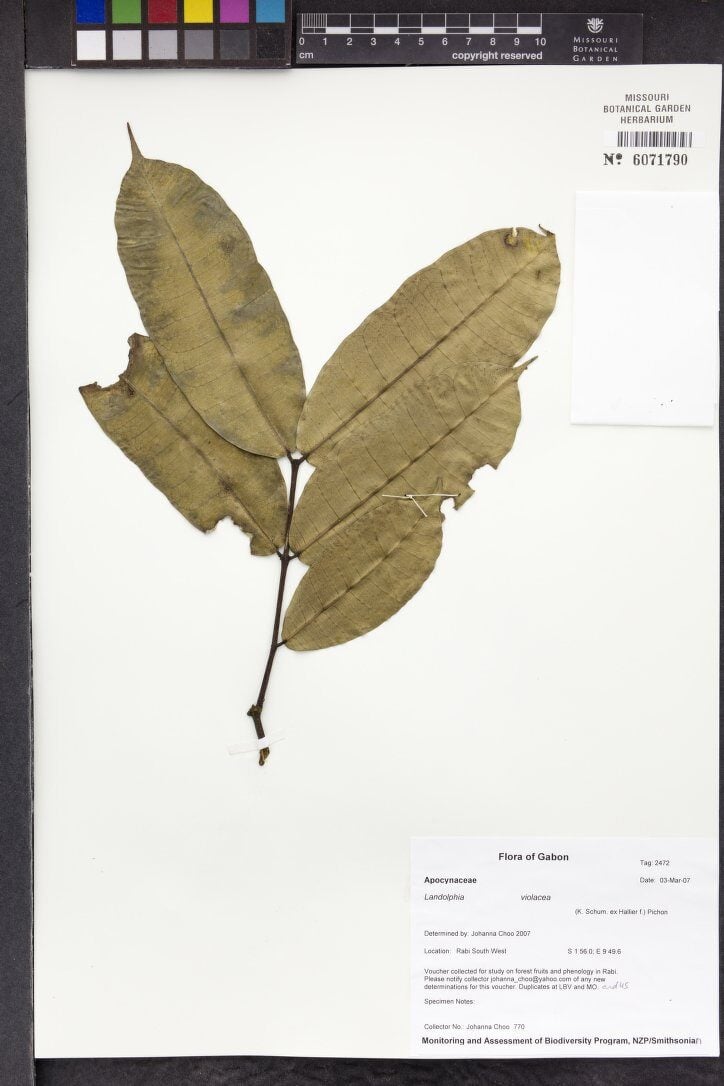
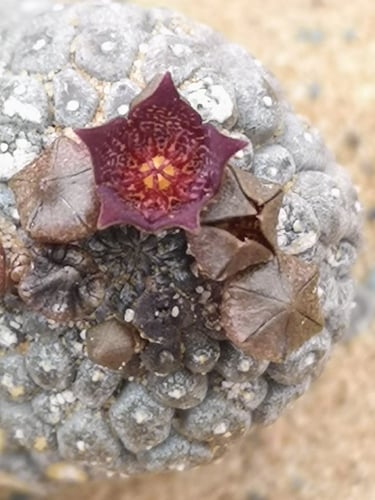
A herb. It has underground stems or rhizomes. It is succulent and keeps growing from year to year. It grows 15 cm high. The leaves are oval or sword shaped. They are narrow and 3-8 cm long by 0.4-1.5 cm wide. There are short hairs on both surfaces. The flowers occur as one or two together. The tubers are 10 cm across.
Edible Uses
Root - raw or cooked. The skin is bitter and is usually removed before the tuber is eaten. The tuber can be up to 10cm in diameter. Found just a few centimetres below the surface of the soil, it is easily dug out.
Traditional Uses
The tubers are eaten raw or roasted in the ashes.
This uses section is brief — help expand it
Distribution
It is a subtropical plant that grows in hot arid places. It grows in areas with a marked dry season. In Southern Africa it grows between 900-1,600 m above sea level. It can grow in arid places.
Where It Grows
Africa, Botswana, Namibia, South Africa, Southern Africa,
Cultivation
A plant of semi-arid areas in the tropics and subtropics, where it can be found at elevations from 900 - 1,600 metres. Requires a sunny position. Prefers a moist but well-drained soil.
References (3)
- Royal Botanic Gardens, Kew (1999). Survey of Economic Plants for Arid and Semi-Arid Lands (SEPASAL) database. Published on the Internet; http://www.rbgkew.org.uk/ceb/sepasal/internet [Accessed 28th March 2011]
- Ruiters-Welcome, A. K., 2019, Food plants of southern Africa. Ph.D. thesis. Univ. of Johannesburg p 22
- Welcome, A. K. & Van Wyk, B.-E., 2019, An inventory and analysis of the food plants of southern Africa. South African Journal of Botany 122 (2019) 136–179