Cardamine pratensis
L.
Cuckoo Bittercress
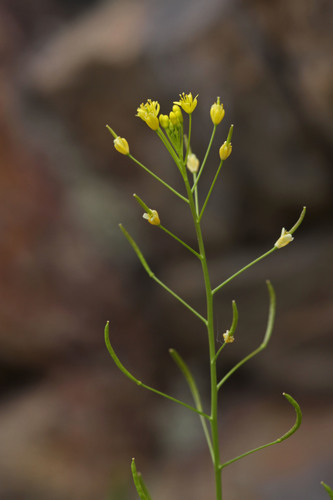
iNaturalist· cc-by-nc
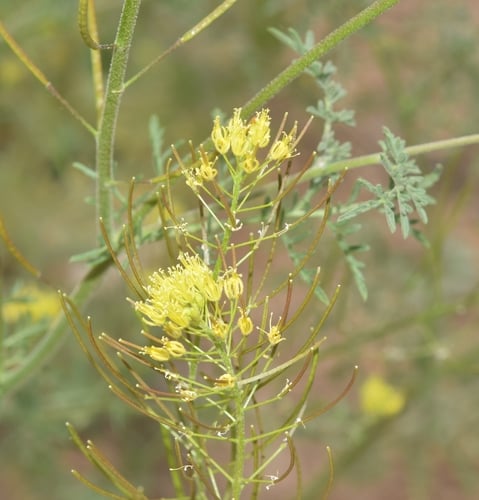
(c) Karen Andrea Boehme, some rights reserved (CC BY-NC), uploaded by Karen Andrea Boehme
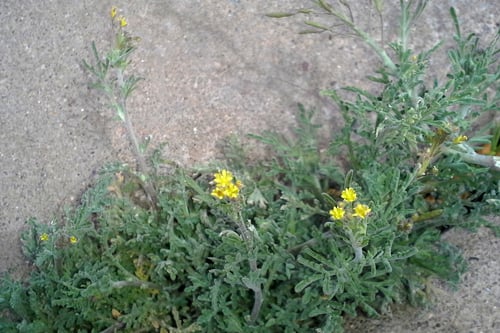
iNaturalist· cc-by-nc
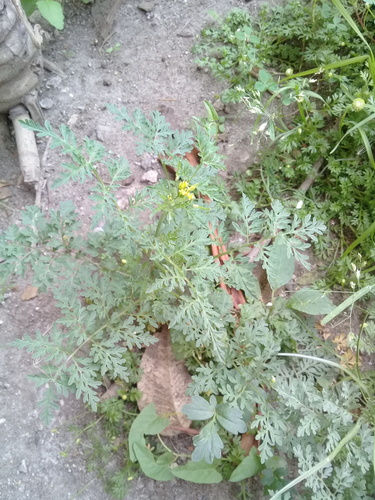
(c) matejba, some rights reserved (CC BY-NC)
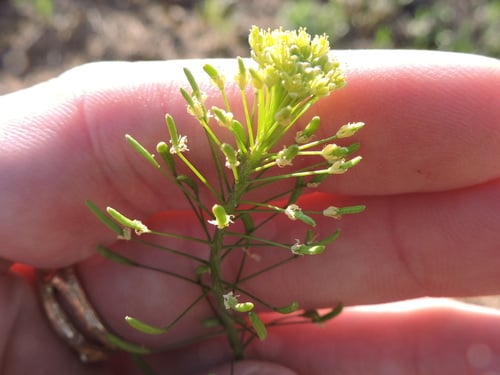
iNaturalist· cc-by-sa
(c) Peter O, some rights reserved (CC BY-SA)
Summary
Source: WikipediaCardamine pratensis, the cuckoo flower, lady's smock, mayflower, or milkmaids, is a flowering plant in the family Brassicaceae. It is a perennial herb native to Eurasia.
Description
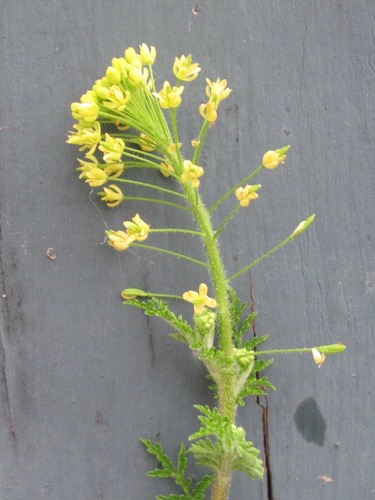
A cabbage family herb that keeps growing from year to year. It grows up to 55 cm tall. It is like Common bittercress but larger. The stems are smooth, straight and hollow. The leaves are cress like. They are compound and occur in rings near the base. The leaves at the base have long leaf stalks. The leaves on the stem have sort stalks and are more narrow. The flowers are pink and white. They are 1.2-2 cm wide. They have 4 petals. They are in dense clusters at the top of the plant. The fruit are long pods. They open by spirally coiled valves.
Edible Uses
Leaves and young shoots can be eaten raw or cooked. They are rich in vitamins and minerals, especially vitamin C, though they have a bitter, pungent flavour. Harvested in spring, they taste much like watercress, and in small quantities make a very acceptable addition to salads. The flowers and flower buds are eaten raw and have a pungent, cress-like flavour — the white flowers are attractive, pleasant to nibble, and add a delicious note to salads.
Traditional Uses
Young leaves are cooked and eaten. They have the taste of watercress. The flowers can be eaten as a salad ingredient.
This uses section is brief — help expand it
Medicinal Uses
Cuckoo flower is seldom used in herbalism, though an infusion of the leaves has been used to treat indigestion and promote appetite. The leaves and the flowering plant are antirheumatic, antiscorbutic, antispasmodic, carminative, digestive, diuretic, and stimulant. They are used internally for chronic skin complaints, asthma, and hysteria. The plant is harvested in spring and early summer and is best used fresh.
Distribution
It is a temperate plant. It grows in damp locations near stream banks. It is often in a partly shaded position. It is a temperate plant. It is resistant to frost but sensitive to drought. It suits hardiness zones 4-9.
Where It Grows
Alaska, Australia, Balkans, Bosnia, Britain, Bulgaria, Canada, Central Asia, China, Czech Republic, Denmark, Estonia, Faroe Islands, Europe*, Germany, Hungary, Iceland, India, Ireland, Japan, Kazakhstan, Korea, Luxembourg, Mongolia, New Zealand, North America*, Norway, Russia, Scandinavia, Siberia, Slovenia, Spain, Sweden, Switzerland, Tasmania, Tibet, Turkey, Türkiye, USA,
Cultivation
Succeeds in most soils so long as they are moist or wet. Prefers a cool damp soil. Succeeds in full sun or partial shade. Cuckoo flower was at one time much used as a spring salad plant and was often sold in local markets. It has, however, fallen out of favour and is scarcely used at present. A polymorphic species. A very ornamental plant, non-invasive and well suited to the wild garden though it may require protection from wood pigeons who eat out the young buds in spring. It grows well in the spring meadow. A food plant for the orange tip butterfly. There is at least one named variety, selected for its ornamental value. 'Flore Pleno' is a double flowered form.
Propagation
Sow seed outdoors in a shady seedbed in April, then plant out in autumn or spring. Divide in spring or autumn. The plant produces young plantlets at the base of its leaflets; once large enough, these can be separated from the main plant and grown on individually.
Other Uses
Attracts wildlife.
Other Information
It is a commercially cultivated vegetable. It is also foraged and supplied to restaurants in Sweden.
Notes
There are about 160 Cardamine species. They are mostly in damp places in temperate regions.
Also Known As
Apple Pie, Berro de prado, Cao dian sui mi qi, Cuckoo Flower, Divlji hren, Engkarse, Lady’s Smock, Lividna gorva, Meadow cress, Travniška penuša
References (39)
- Abbet, C., et al, 2014, Ethnobotanical survey on wild alpine food plants in Lower and Central Valais (Switzerland). Journal of Ethnopharmacology 151 (2014) 624–634
- Ambasta S.P. (Ed.), 2000, The Useful Plants of India. CSIR India. p 104
- Bircher, A. G. & Bircher, W. H., 2000, Encyclopedia of Fruit Trees and Edible Flowering Plants in Egypt and the Subtropics. AUC Press. p 82
- Bodkin, F., 1991, Encyclopedia Botanica. Cornstalk publishing, p 213
- Bremness, L., 1994, Herbs. Collins Eyewitness Handbooks. Harper Collins. p 157
Show all 39 references Hide references
- Brickell, C. (Ed.), 1999, The Royal Horticultural Society A-Z Encyclopedia of Garden Plants. Convent Garden Books. p 227
- Brown, D., 2002, The Royal Horticultural Society encyclopedia of Herbs and their uses. DK Books. p 155
- Cerne, M., 1992, Wild Plants from Slovenia used as Vegetables. Acta Horticulturae 318
- Crowe, A., 1997, A Field Guide to the Native Edible Plants of New Zealand. Penguin. p 71
- Cundall, P., (ed.), 2004, Gardening Australia: flora: the gardener's bible. ABC Books. p 328
- Denes, A., et al, 2012, Wild plants used for food by Hungarian ethnic groups living in the Carpathian Basin. Acta Societatis Botanicorum Poloniae 81 (4): 381-396
- Duke, J.A., 1992, Handbook of Edible Weeds. CRC Press. p 58
- Esperanca, M. J., 1988. Surviving in the wild. A glance at the wild plants and their uses. Vol. 2. p 43
- Facciola, S., 1998, Cornucopia 2: a Source Book of Edible Plants. Kampong Publications, p 57
- Flora of China @ efloras.org Volume 8
- Girard, N. J., 2020, Sustainable Foraging of Wild Edible Plants in Norway. A Biocultural Approach. M. Sc. thesis Norwegian University. p 129
- Hedrick, U.P., 1919, (Ed.), Sturtevant's edible plants of the world. p 161
- Hermandez Bermejo, J.E., and Leon, J. (Eds.), 1994, Neglected Crops. 1492 from a different perspective. FAO Plant Production and Protection Series No 26. FAO, Rome. p 263
- Hibbert, M., 2002, The Aussie Plant Finder 2002, Florilegium. p 60
- Irving, M., 2009, The Forager Handbook, A Guide to the Edible Plants of Britain. Ebury Press p 87
- Jackes, D. A., Edible Forest Gardens
- Kalle, R. & Soukand, R., 2012, Historical ethnobotanical review of wild edible plants of Estonia (1770s-1960s) Acta Societatis Botanicorum Poloniae 81(4):271-281
- Kays, S. J., and Dias, J. C. S., 1995, Common Names of Commercially Cultivated Vegetables of the World in 15 languages. Economic Botany, Vol. 49, No. 2, pp. 115-152
- Kiple, K.F. & Ornelas, K.C., (eds), 2000, The Cambridge World History of Food. CUP p 433, 1798
- Low, T., 1991, Wild Herbs of Australia and New Zealand. Angus & Robertson. p 59
- Mabey, R., 1973, Food for Free. A Guide to the edible wild plants of Britain, Collins. p 77
- Michael, P., 2007, Edible Wild Plants and Herbs. Grub Street. London. p 134
- Nedelcheva A., 2013, An ethnobotanical study of wild edible plants in Bulgaria. EurAsian Journal of BioSciences 7, 77-94
- Plants for a Future database, The Field, Penpol, Lostwithiel, Cornwall, PL22 0NG, UK. http://www.scs.leeds.ac.uk/pfaf/
- Redzic, S. J., 2006, Wild Edible Plants and their Traditional Use in the Human Nutrition in Bosnia-Herzegovina. Ecology of Food and Nutrition, 45:189-232
- Seidemann J., 2005, World Spice Plants. Economic Usage, Botany, Taxonomy. Springer. p 84
- Slocum, P.D. & Robinson, P., 1999, Water Gardening. Water Lilies and Lotuses. Timber Press. p 112
- Svanberg, I., et al, 2012, Edible wild plant use in the Faroe Islands and Iceland. Acta Societatis Botanicorum Poloniae 81(4): 233-238
- Tardio, J., et al, 2006, Ethnobotanical review of wild edible plants in Spain. Botanical J. Linnean Soc. 152, 27-71
- Tozer, F., 2007, The Uses of Wild Plants. Green Man Publishing. p 55
- Urgamal, M., Oyuntsetseg, B., Nyambayar, D. & Dulamsuren, Ch. 2014. Conspectus of the vascular plants of Mongolia. (Editors: Sanchir, Ch. & Jamsran, Ts.). Ulaanbaatar, Mongolia. “Admon“ Press. 334pp. (p. 79-90).
- Wild edible plants of Himachal Pradesh
- World Checklist of Useful Plant Species 2020. Royal Botanic Gardens, Kew
- Zhou Taiyan, Lu Lianli, Yang Guang; Ihsan A. Al-Shehbaz, BRASSICACEAE (CRUCIFERAE), Flora of China.