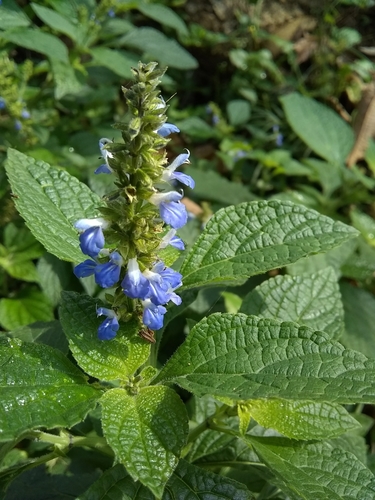
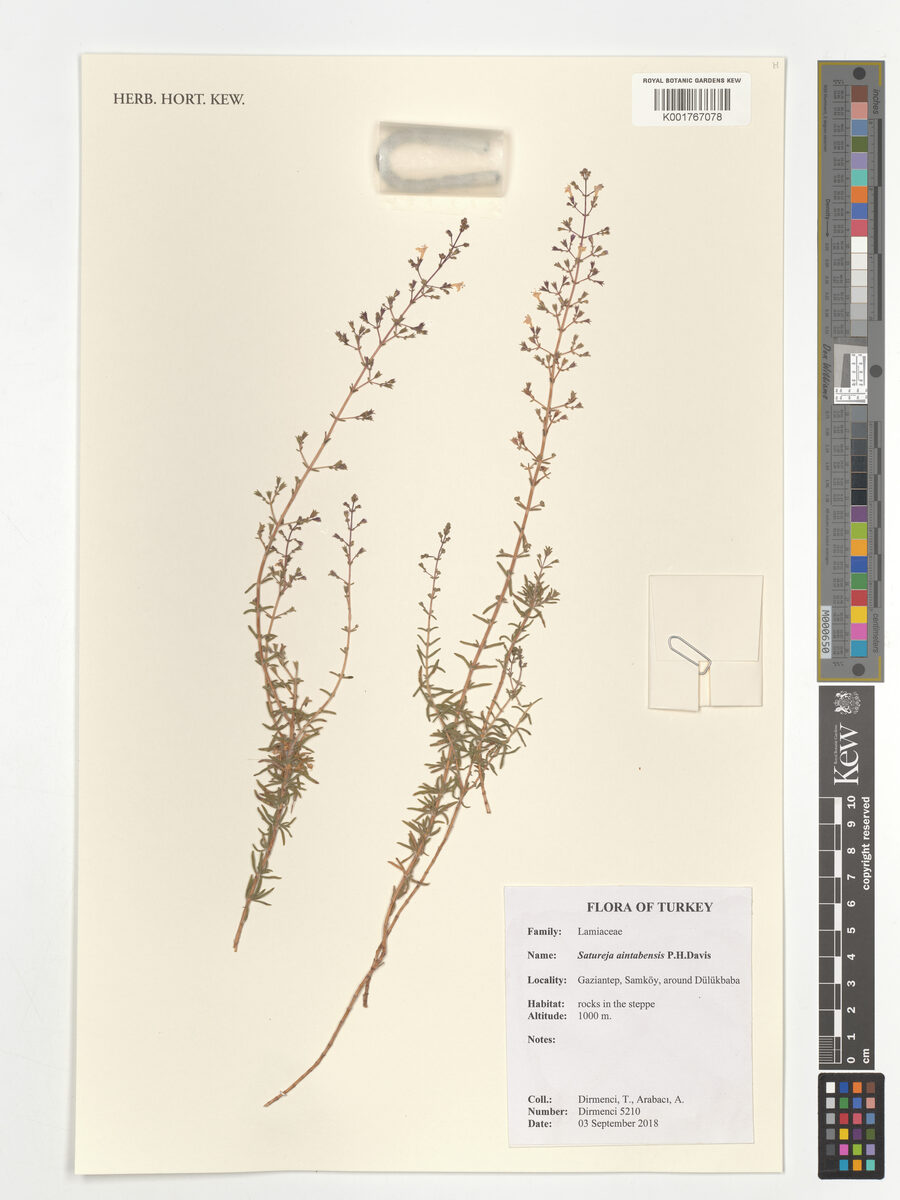
Acinos arvensis
(Lam.) Dandy
Basil thyme, Mother of thyme
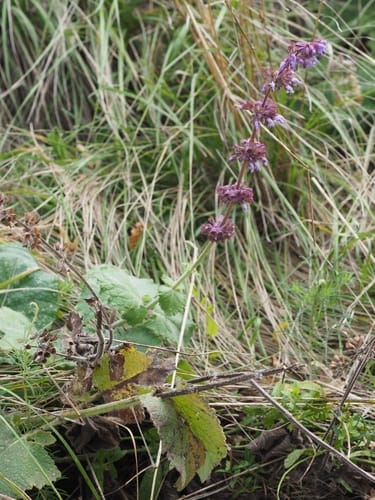
iNaturalist· cc-by-nc
(c) Alexander Iosipenko, some rights reserved (CC BY-NC)
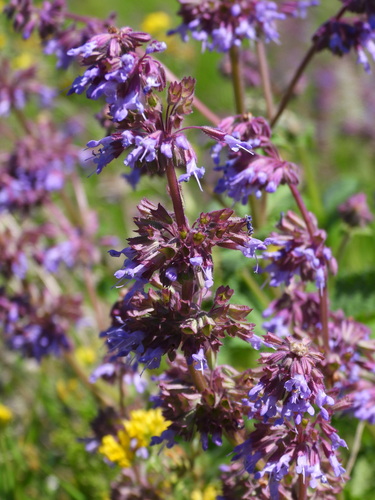
iNaturalist· cc-by-nc
(c) Alexander Iosipenko, some rights reserved (CC BY-NC)
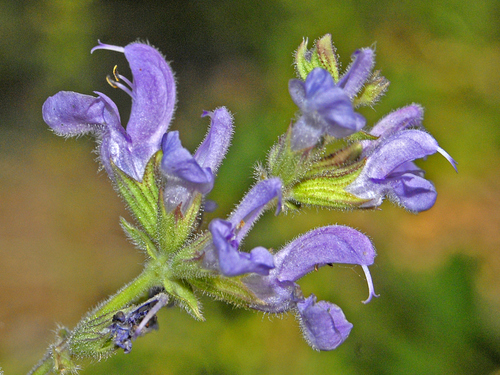
iNaturalist· cc-by-nc
(c) Alexander Iosipenko, some rights reserved (CC BY-NC)
Summary
Source: WikipediaAn annual to perennial herb growing 0.2 m tall and 0.3 m wide. Hardy to UK zone 4. Flowers July to August with seeds maturing August to September. Hermaphroditic, bee-pollinated, and self-fertile. Prefers light sandy and medium loamy soils that are well-drained and nutrient-poor. Tolerates mildly acid, neutral, and basic soils including very alkaline conditions. Requires full sun and adapts to dry or moist soil.
Description
A shrub or small tree. It grows 5 m tall. There are prickles along the stem. The leaves are twice divided and there are 8-18 pairs of pinnae. There are up to 50 pairs of pinnules on each pinnae. The flowers are yellow. They are in large clusters at the ends of branches. The pods are flattened.
Edible Uses
The flowering tops can be used as a flavouring and added to salads. The scent is said to resemble thyme but is milder and more pleasant. However, the plant is only faintly aromatic and does not serve as a particularly good thyme substitute.
Traditional Uses
The flowering tops are used for flavouring and in salads. It only has a very mild flavour. They are used to flavour meat.
This uses section is brief — help expand it
Medicinal Uses
Once a favourite among ancient herbalists, basil thyme is little used medicinally today. The herb is diuretic, odontalgic, rubefacient, and stomachic. Its essential oil can be applied externally as a rubefacient, and a single drop placed into a decayed tooth is said to relieve pain. The plant has also been added to bathwater, particularly for children, where it is reputed to strengthen and soothe the nerves. The flowering plant is harvested in summer and is typically used fresh in infusions.
Distribution
It is a cool temperate plant. It does best in light well drained soil. Sandy soils and alkaline conditions suit it. It is very hardy and can tolerate temperatures down to -15°C. It suits plant hardiness zone 4.
Where It Grows
Asia, Britain, Caucasus, Europe, France, Greece, Iran, Italy, Luxembourg, Mediterranean, Middle East, North America, Norway, Scandinavia, Spain, Turkey, Türkiye,
Cultivation
It can be grown from seed. These should be put in a nursery then transplanted. It can also be grown from division of the plant and from cuttings.
Propagation
Sow seed in a cold frame in early spring. With sufficient seed, an outdoor sowing in situ during April or May is also possible. Germination typically occurs within a month. Prick seedlings out into individual pots when large enough to handle and plant out during summer. Can also be propagated by division in spring or by basal cuttings in late spring — both are very straightforward.
Other Uses
The plant works well as a ground cover.
Notes
There are 10 Acinos species.
Synonyms
Also Known As
Aconis, Bakkemynte
References (8)
- Blamey, M and Grey-Wilson, C., 2005, Wild flowers of the Mediterranean. A & C Black London. p 396
- Brown, D., 2002, The Royal Horticultural Society encyclopedia of Herbs and their uses. DK Books. p 100
- Facciola, S., 1998, Cornucopia 2: a Source Book of Edible Plants. Kampong Publications, p 124
- Girard, N. J., 2020, Sustainable Foraging of Wild Edible Plants in Norway. A Biocultural Approach. M. Sc. thesis Norwegian University. p 132
- J. Ecol. 33:326. 1946
Show all 8 references Hide references
- Lawton, B.P., 2002, Mints. A Family of Herbs and Ornamentals. Timber Press, Portland, Oregon. p 116
- Plants for a Future database, The Field, Penpol, Lostwithiel, Cornwall, PL22 0NG, UK. http://www.scs.leeds.ac.uk/pfaf/
- Seidemann J., 2005, World Spice Plants. Economic Usage, Botany, Taxonomy. Springer. p 4