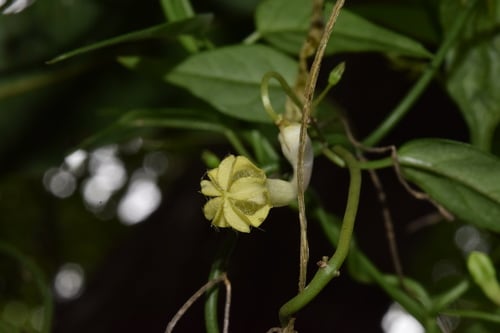
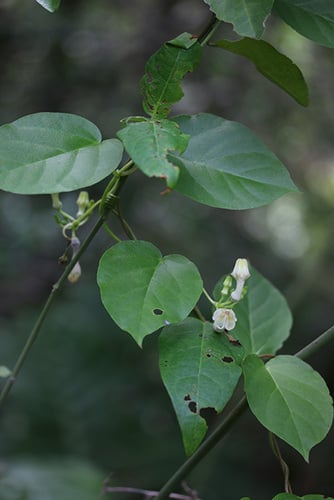
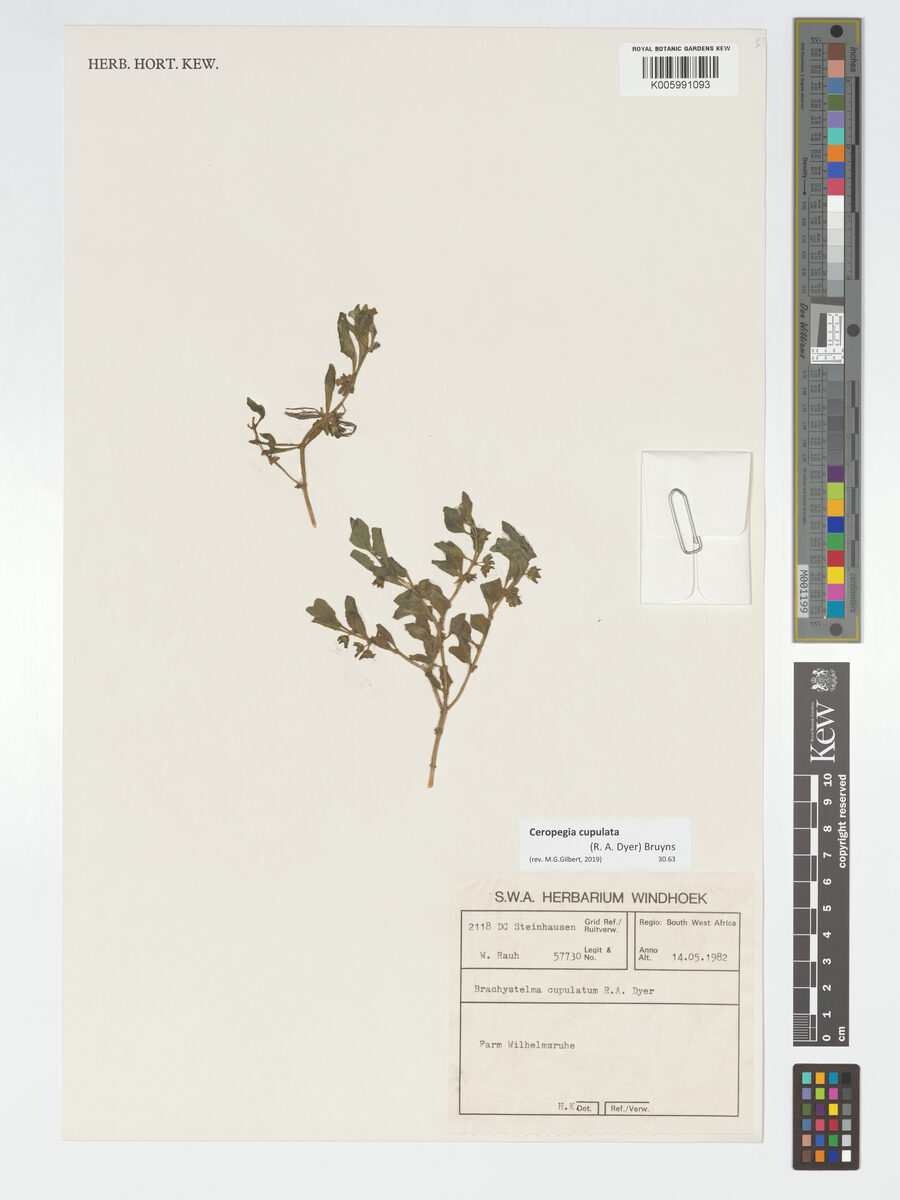
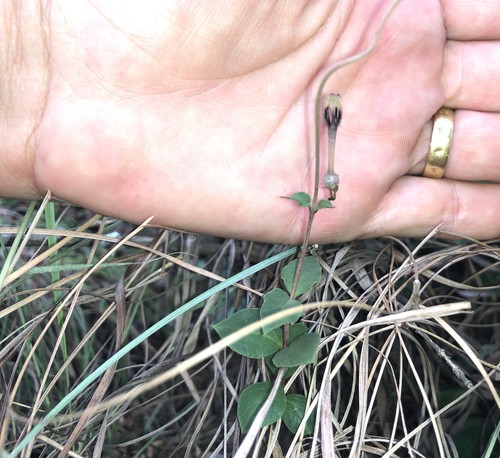
Caralluma adscendens
R. Br.
iNaturalist· cc-by-nc
(c) shivaprakash, some rights reserved (CC BY-NC)
iNaturalist· cc0
no rights reserved
iNaturalist· cc-by
(c) Swarochi Tathagath, some rights reserved (CC BY)
Summary
Source: WikipediaCaralluma adscendens is a succulent plant in the family Apocynaceae. Its distribution ranges from India and Sri Lanka through the Arabian peninsula to North Africa and the Sahel.
Description
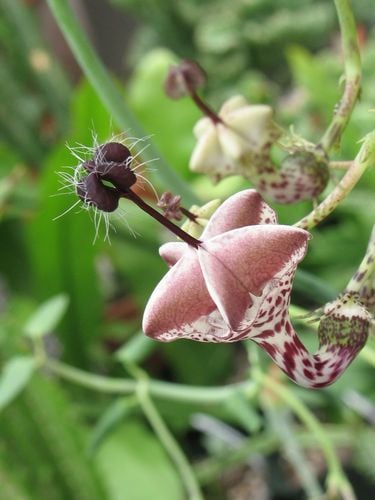
A clump forming succulent shrub. It is trailing at the base and then upright. It grows 30-60 cm tall. The stem are the base can be 2 cm across. It is 4 angled. The leaves are small and simple. The flowers are in groups of 1-2. The fruit are a pair of follicles 10-15 cm long by 1 cm wide. The seeds are oblong.
Edible Uses
Caralluma adscendens (Chong) has been eaten in rural India for centuries, raw, as a vegetable with spices, or preserved in chutneys and pickles, and is often found as a roadside shrub or boundary marker.
Traditional Uses
The tender young shoots are used as a vegetable. They are used to make chutney.
This uses section is brief — help expand it
Medicinal Uses
The latex obtained from heated stems is used as ear drops to treat ear infections and is applied to the teeth to treat caries. It is also applied to wounds as well as the bites and stings of venomous animals, including spiders, ants, scorpions and snakes, in order to disinfect and heal them. The crushed aerial parts, combined with the leaves of Ozoroa insignis, are used in the treatment of children's coughs. The stems are crushed and eaten raw as a tonic against faintness due to fasting and are also used to treat chest and cardiac problems. A decoction of the stems is given to stop vomiting and to treat epilepsy. The dried plants, or an extract of the plants, has received a lot of attention on the internet as a hunger suppressant to reduce weight. The plant contains a bitter principle. The aerial parts of the plants contain a number of pregnane glycosides that have moderate to high cytotoxicity. The flavonoid luteolin-4’-O-neohesperidoside, found in the aerial parts of the plant, has shown significant anti-inflammatory activity and was more potent than ibuprofen. Its antinociceptive activity was less pronounced when compared with its anti-inflammatory activity. A butanol extract of the plant has shown statistically significant and considerable antihyperglycaemic activity. The effect of an extract of the aerial parts was assessed by a double-blind, placebo-controlled, randomized clinical trial on 50 adult overweight men and women. At the end of the trial, waist circumference and hunger levels showed a significant decline in the experimental group when compared to the placebo group, but differences in body weight, body mass index, hip circumference, body fat and energy intake were not significant. Ethylacetate and butanol extracts from the stem have shown significant antifungal activity against Aspergillus niger and Candida albicans in vitro as well as good anthelmintic activity against Pheretima posthuma in vitro.
Known Hazards
The Moors people of the western Sahara are said to make a strong poison by macerating the crushed stems in sheep urine.
Distribution
A tropical plant. It grows near Chennai. It grows on bare rocky hillsides.
Where It Grows
Africa, Asia, Burkina Faso, India, Mali, Middle East, Saudi Arabia, Senegal, Somalia, Sri Lanka, West Africa, Yemen,
Cultivation
A plant of lowland areas in the drier tropics where it is found at elevations up to 1,000 metres. It tolerates high temperatures and an annual rainfall as low as 400mm.
Propagation
Seed - Cuttings.
Notes
There are about 56-100 Caralluma species. These are sometimes put in the Asclepiadaceae.
Nutrition
| Part | Moisture | kJ | kcal | Protein | Vit A | Vit C | Iron | Zinc |
|---|---|---|---|---|---|---|---|---|
| Leaves | — | — | 3 | — | — | — | — | — |
Also Known As
Hada-sinkula, Karallamu, Kullee mooliayan, Kundaetikommulu, Makaadsing, Periyasirumankeerai, Shindamakad, Taviti chettu
References (12)
- Ambasta S.P. (Ed.), 2000, The Useful Plants of India. CSIR India. p 104
- Anderson, M., 2002, The World Encyclopedia of Cacti and Succulents. Hermes House, New York. p 139 (Genus)
- Khayde, M. S., et al, 2009, Wild Edible Plants Used by the tribes of Akole Tahasil of Ahmednagar District (MS), India. Ethnobotanical Leaflets 13:1328-36
- Misra, S., 2018, Ethno Botany and Nutritional Status of Some Edible Plants of South Odisha, India. International Journal of Advances in Agricultural Science and Technology, Vol.5 Issue.2, February- 2018, pg. 21-32
- Misra, S., 2020, Survey of edible plants for human consumption in south Odisha, India. Journal of Emerging Technologies and Innovative Research (JETIR) Vol. 7, Issue 12 p 278
Show all 12 references Hide references
- Rahangdale, D.R. & Rahangdale, S.S., 2014, Potential Wild Edible Plant Resources from Maharashtra Future Prospects for their Conservation and Improvement. Life Science Leaflets. http://lifesciencesleaflets.ning.com
- Reddy, K. N. et al, 2007, Traditional knowledge on wild food plants in Andhra Pradesh. Indian Journal of Traditional Knowledge. Vol. 6(1): 223-229
- Sarvalingam, A., et al, 2014, Wild edible plant resources used by the Irulas of the Maruthamalai Hills, Southern Western Ghats, Coimbatore, Tamil Nadu. Indian Journal of Natural Products and Resources 5(2):198-201
- Singh, H.B., Arora R.K.,1978, Wild edible Plants of India. Indian Council of Agricultural Research, New Delhi. p18
- SHORTT
- WATT
- World Checklist of Useful Plant Species 2020. Royal Botanic Gardens, Kew