Canthium spinosum
(Klotzsch ex Eckl. & Zeyh.) Kuntze
Spiny canthium, Coastal canthium
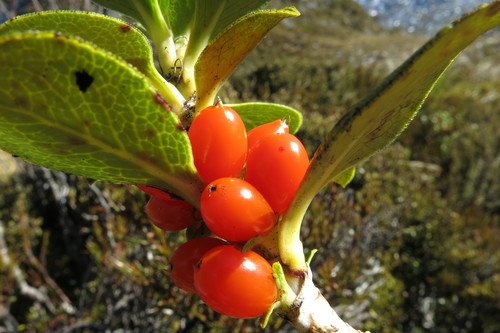
iNaturalist· cc-by-nc
(c) Craig Peter, some rights reserved (CC BY-NC), uploaded by Craig Peter
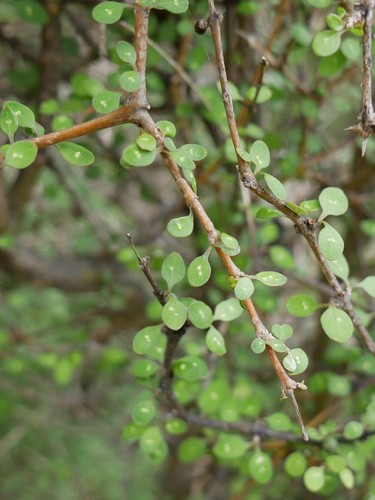
iNaturalist· cc-by-nc
(c) Craig Peter, some rights reserved (CC BY-NC), uploaded by Craig Peter
iNaturalist· cc-by-nc
(c) Craig Peter, some rights reserved (CC BY-NC), uploaded by Craig Peter
Description
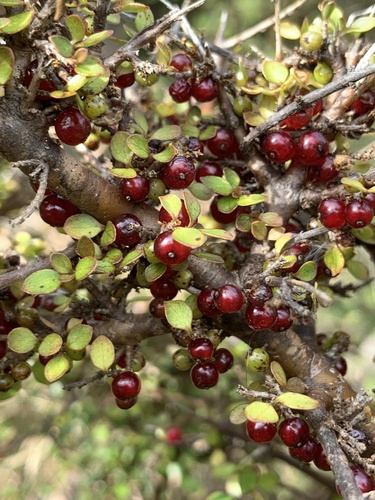
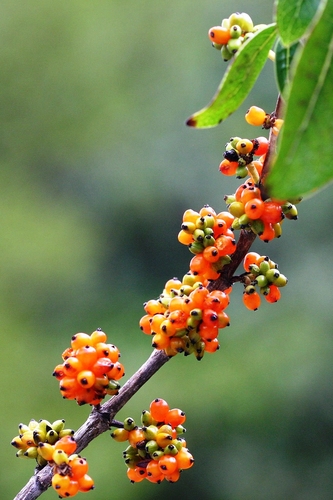
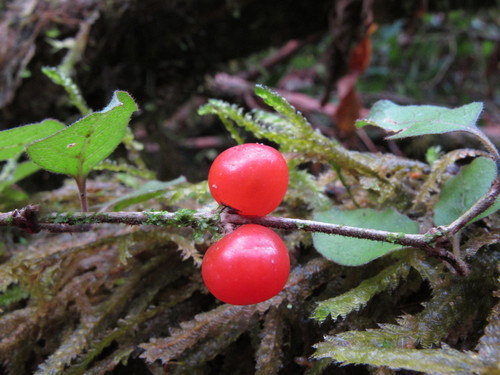
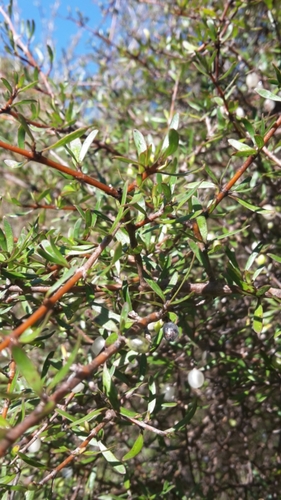
A shrub or small tree. It grows 1.5-9 m tall. It has spines up to 2.5 cm long. These occur in pairs. The leaves grow in bunches on short warty growths. The leaves are green above and lighter underneath. They are 1.3-5 cm long. The flowers are small and green. They occur in short spreading heads. These are in the axils of leaves. The fruit are often 2-lobed. Fruit are bluish-green when ripe. They are edible.
Edible Uses
The fruit are eaten raw and have a pleasant flavour.
Traditional Uses
The fruit are eaten raw. They have a pleasant flavour.
This uses section is brief — help expand it
Distribution
A tropical plant. It is usually in coastal forests. It is often on rocky hill slopes.
Where It Grows
Africa, East Africa, Mozambique, South Africa, Southern Africa,
Notes
There are about 200 Canthium species.
Synonyms
Also Known As
Coastal turkey-berry
References (8)
- Cunningham, 1985,
- Fox, F. W. & Young, M. E. N., 1982, Food from the Veld. Delta Books. p 329
- Palgrave, K.C., 1996, Trees of Southern Africa. Struik Publishers. p 886
- Palmer, E and Pitman, N., 1972, Trees of Southern Africa. Vol. 2. A.A. Balkema, Cape Town p 2105
- Peters, C. R., O'Brien, E. M., and Drummond, R.B., 1992, Edible Wild plants of Sub-saharan Africa. Kew. p 168
Show all 8 references Hide references
- Ruiters-Welcome, A. K., 2019, Food plants of southern Africa. Ph.D. thesis. Univ. of Johannesburg p 96
- Welcome, A. K. & Van Wyk, B.-E., 2019, An inventory and analysis of the food plants of southern Africa. South African Journal of Botany 122 (2019) 136–179
- www.theplantlist.org