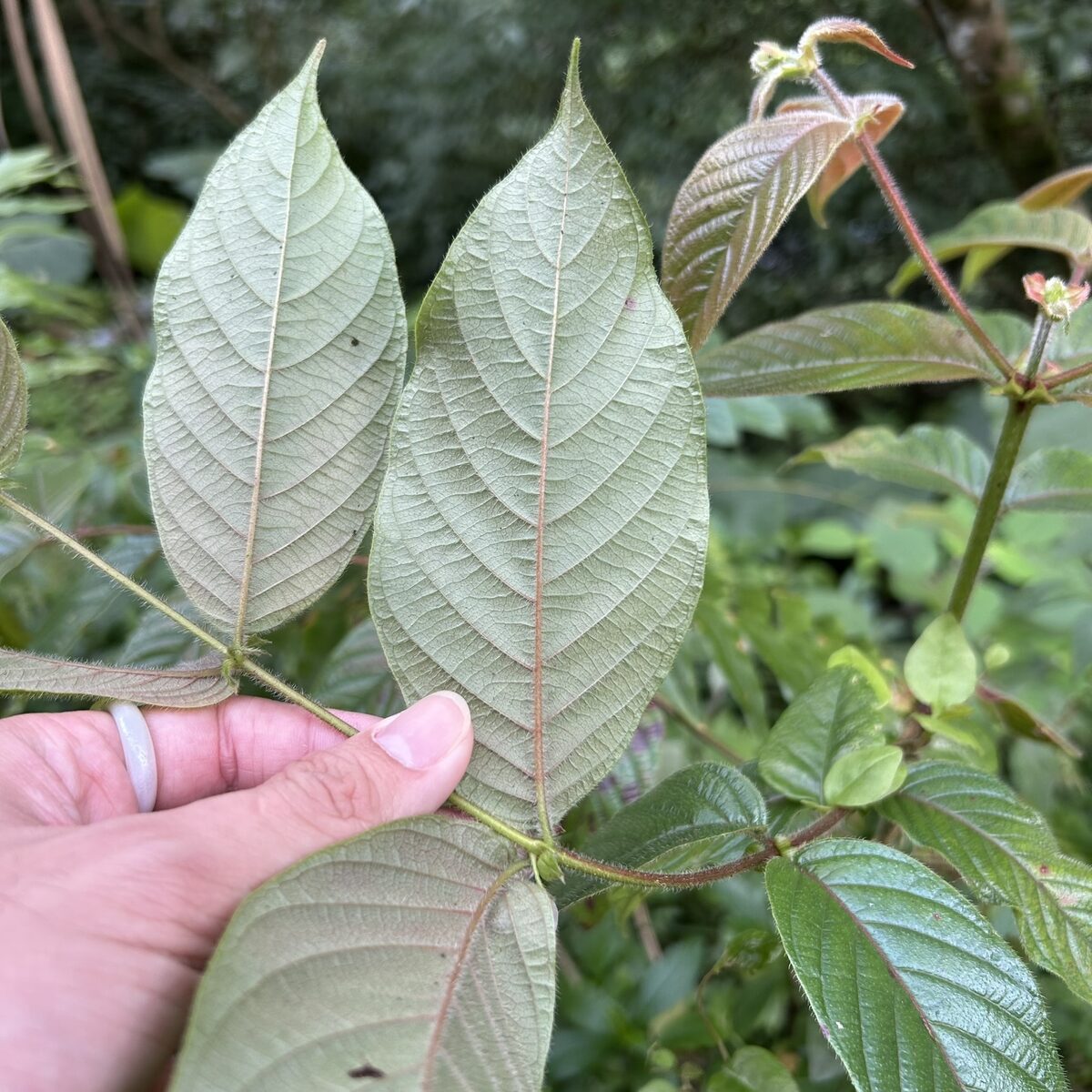
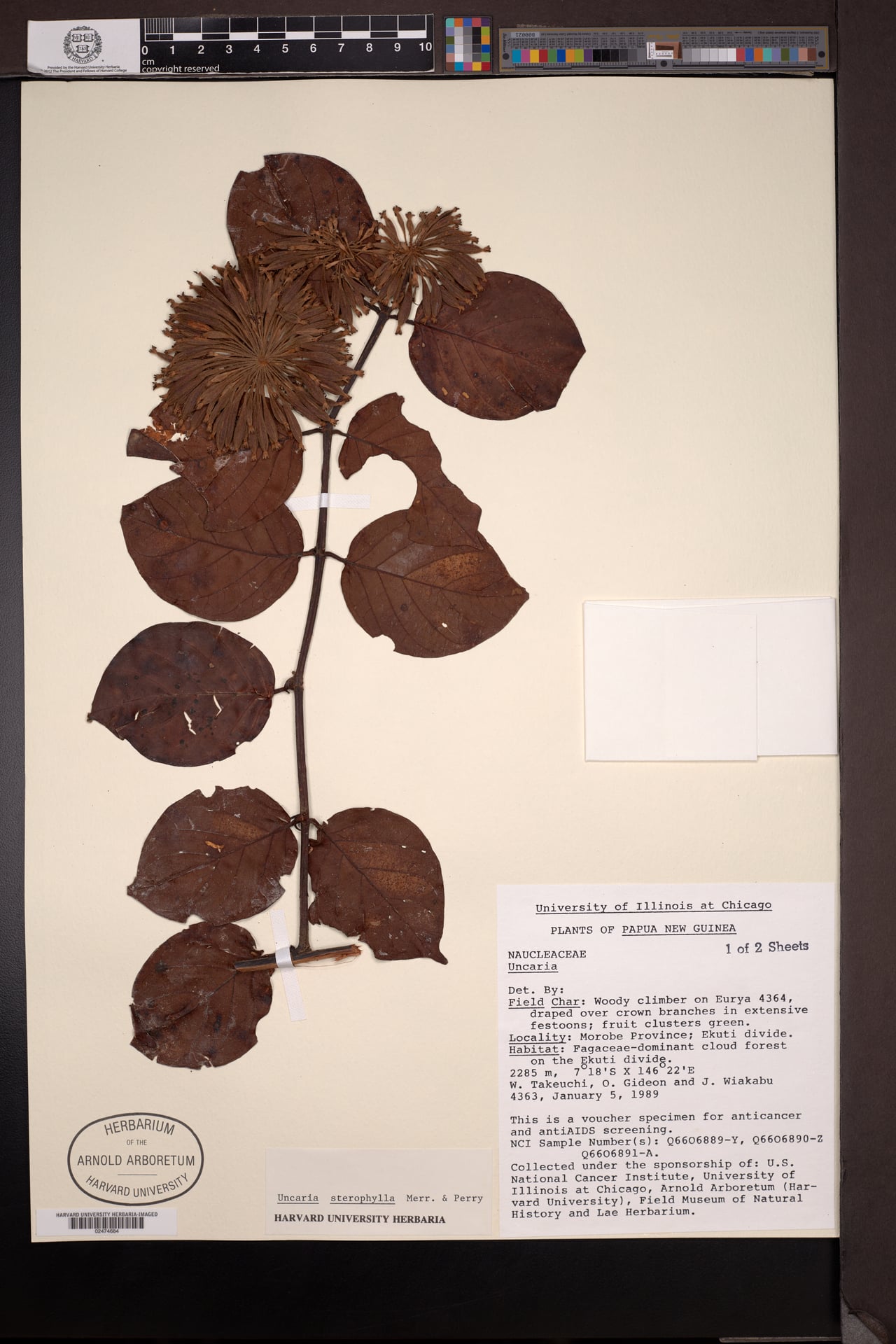
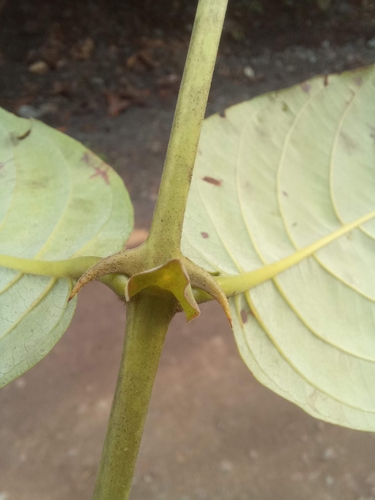
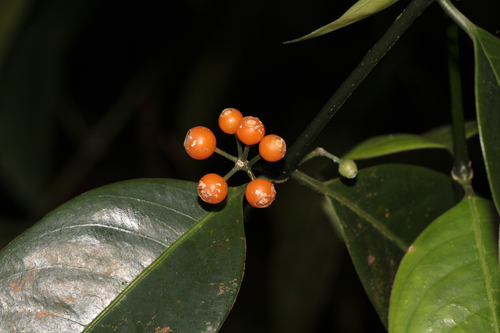
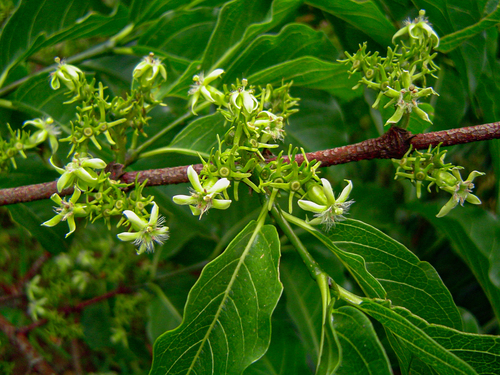
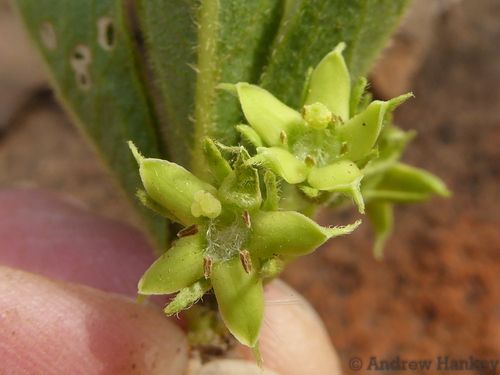
Uncaria guianensis - (Aubl.) J.F.Gmel.
(Aubl.) J.F.Gmel.
Cat's Claw
gbif· cc-by-nc
Julien Piolain
gbif· cc-by-nc
Julien Piolain
gbif· cc-by-nc
Julien Piolain
Description
Uncaria guianensis is an evergreen Climber growing to 30 m (98ft) by 0.5 m (1ft 8in) at a fast rate. See above for USDA hardiness. It is hardy to UK zone 10. Suitable for: light (sandy) and medium (loamy) soils and prefers well-drained soil. Suitable pH: mildly acid and neutral soils and can grow in very acid soils. It cannot grow in the shade. It prefers moist soil.
Edible Uses
Drink. The stems are a source of a potable sap that is used to quench thirst and as a restorative drink. A watery, astringent taste.
Medicinal Uses
Antiarthritic Antiasthmatic Antiinflammatory Antirheumatic Astringent Blood purifier Cancer Dysentery Febrifuge Kidney Mouthwash Skin Urinary. Cat's claw has a long history of traditional use, being employed in the treatment of a range of conditions including inflammations (especially rheumatism), arthritis, urinary tract infections and gastric ulcers. It has also been used as a blood purifier; to cleanse the kidneys; to recover from childbirth or treat menstrual irregularities; as a treatment for asthma Applied externally, it is used as a wash for wounds in order to promote healing, to cleanse the skin of impurities etc. The plant is widely used in modern herbal medicine, where it is primarily valued for its stimulatory effect upon the immune system. The part most commonly used is the stem bark. Cat's claw has many modern applications, which is a common trait of herbs with immune stimulatory activity, and includes: disease prevention, cancer, recovery from chemotherapy side effects, recovery from childbirth, urinary tract infections, wounds, fevers, haemorrhages, and weakness. Applications for cat's claw which have had some clinical research include viral infections, pain and symptoms of Herpes infections, and for inflammatory conditions, such as Rheumatoid arthritis. Research has shown that the plant is anti-inflammatory, immune system stimulant, cytoprotective and antioxidant. The plant is astringent. An infusion of the whole plant is drunk to remedy dysentery. The plant is burned and powdered, then used on wounds. It is made into a gargle to remedy mouth ulcers. The leaves are used in the treatment of tuberculosis, coughs and colds. The plant contains tannins.
Distribution
S. America - Paraguay, Brazil, Bolivia, Peru, Ecuador, Colombia, Venezuela, the Guyanas; north to Tr
Where It Grows
SOUTHERN AMERICA: French Guiana, Guyana, Suriname, Venezuela, Brazil, Bolivia, Colombia, Ecuador, Peru, Paraguay
Cultivation
A plant of mainly low elevations in the tropics, where it can be found at elevations up to 1,000 metres. Succeeds in fairly sunny positions, as on forest edges. Prefers a pH in the range 4.4 - 6.2. The stems are only large enough to harvest when they are 8 years or elder. Generally, it is recommended that the vine is cut at 20 - 100cm above the ground and left to regenerate.
Propagation
Seed - it has a very short viability and needs to be sown as soon as it is ripe. Stem cuttings about 20cm long. If the soil of the forest is moist enough, the cuttings are said to be easy to reproduce by directly inserting them into the forest floor. If the conditions are right, the roots develop soon after transplanting.
Other Uses
Furniture Wood Other Uses: The wood is a pale pinkish-brown; straight-grained; coarse-textured; light in weight. The stems are used in making furniture.
Synonyms
Also Known As
cat's-claw, uña de gato, uña de gato blanca.