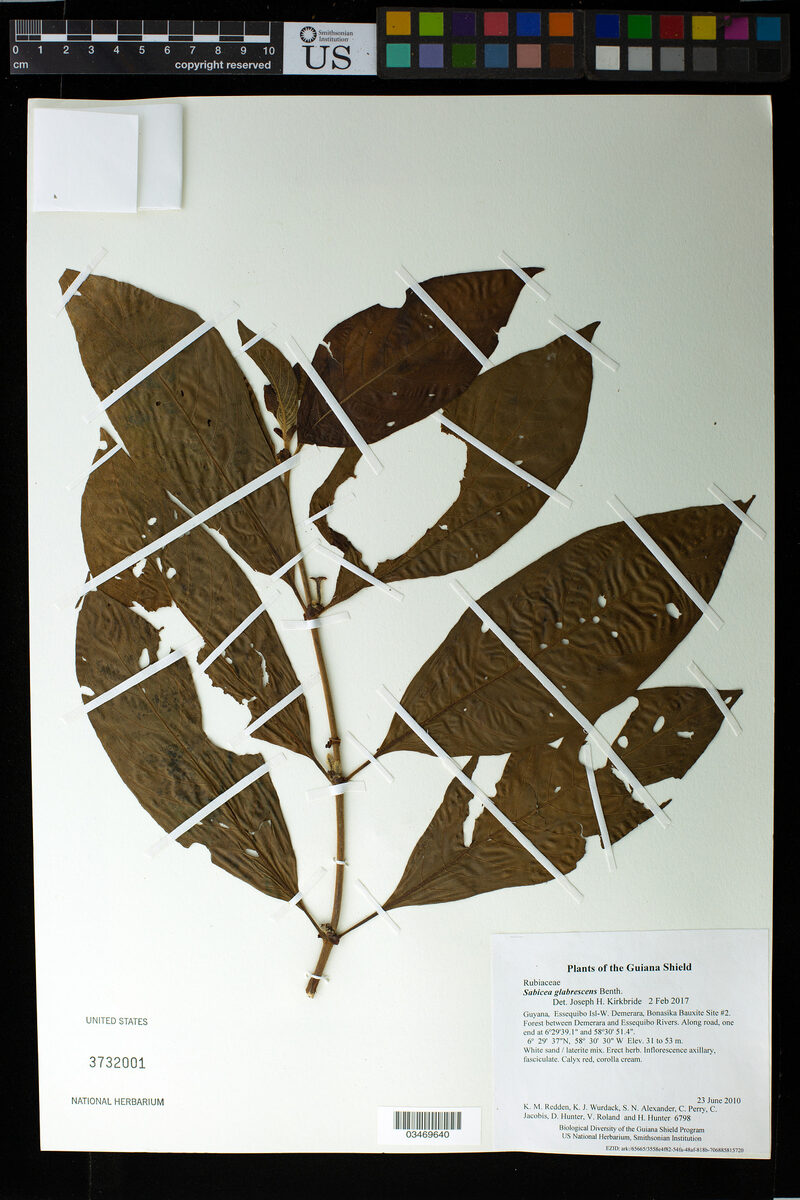
Uncaria gambir
(W. Hunter) Roxb.
Gambir, Pale catechu
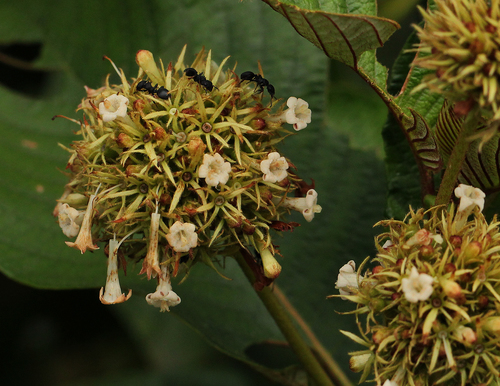
iNaturalist· cc-by-nc
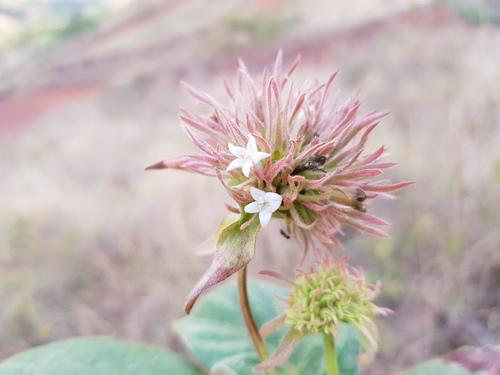
(c) Rizki Bio, some rights reserved (CC BY-NC), uploaded by Rizki Bio
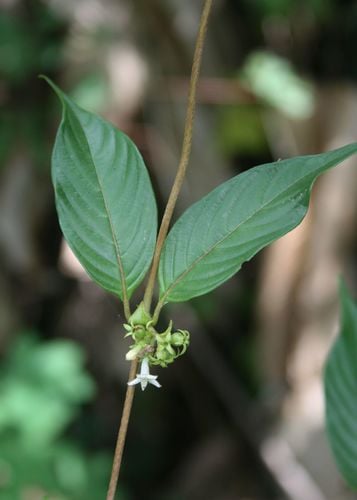
iNaturalist· cc-by-nc
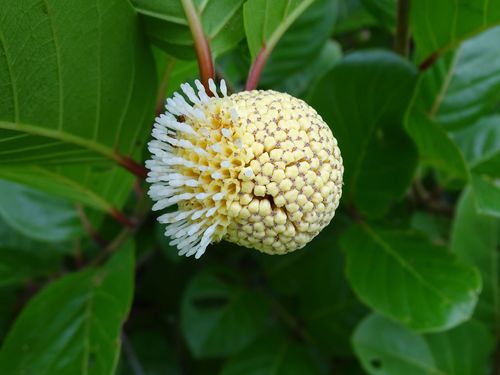
(c) coqwallon, some rights reserved (CC BY-NC), uploaded by coqwallon
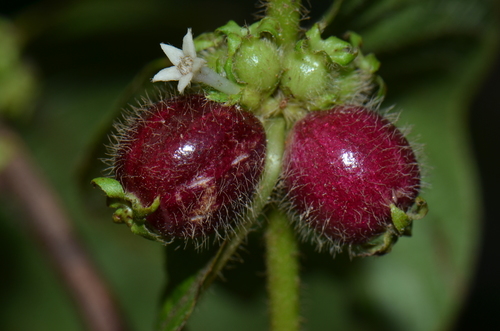
iNaturalist· cc-by
(c) pbsg, some rights reserved (CC BY)
Summary
Source: WikipediaUncaria gambir, the gambier or gambir, is a species of plant in the genus Uncaria found in Southeast Asia, mainly Malaysia and Indonesia.
Description
A woody climber. The young stems are square. The main stem has horizontal branches. The leaves are entire and oval. They are 6-15 cm long.
This description is brief — help expand it
Edible Uses
The leaves are boiled, evaporated to produce gambir, and chewed with betel nut. Dried ripe fruit are chewed with betel quid.
Traditional Uses
It is chewed with betel leaf, betel nut and lime. The leaves are boiled and evaporated and the remaining gambir is chewed with betel nut. The dried ripe fruit are chewed with betel quid.
Medicinal Uses
Gambier is used as an astringent and styptic. An infusion of the fresh leaves is given as a treatment against diarrhoea and dysentery. This infusion is also used as a gargle for sore throats and inflamed gums. It is applied externally in lotions for burns and in a paste for scurf. External application against sciatica and lumbago is reported from Borneo. The maximum yield of crude gambier is 6.5% of the leaf weight. When used alone in tanning, gambier produces a rather spongy leather. However, it is very suitable for both light and heavy leathers if mixed or blended with other tanning materials such as wattle (Acacia spp.) extract or myrobalans (Terminalia spp.). Gambier is also suitable for preserving fishing nets. The tannin has algicidal properties, as well as antibacterial and antifungal activity. Antiherpetic activity has also been reported. Several indole alkaloids, some unidentified, have been extracted from leaf materials. These may have a narcotic effect. Gambier is used for 'soga batik' dyeing, but the brownish colour only develops if a diazonium salt is added.
Distribution
A tropical plant. In Indonesia it grows between 650-800 m above sea level. It needs continually wet conditions.
Where It Grows
Asia, India, Indochina, Indonesia, Malaysia, SE Asia, Singapore, Vietnam, West Papua,
Cultivation
A plant of the lowland wet tropics, where it is found at elevations up to 200 metres, but has been successfully cultivated up to 1,000 metres. It grows best in areas where annual daytime temperatures are within the range 25 - 32°c, but can tolerate 20 - 36°c. The plant can survive temperatures down to about 10°c. It prefers a mean annual rainfall in the range 2,200 - 2,400mm, but tolerates 2,000 - 2,600mm. Gambier succeeds in full sun to light shade. It has no special soil requirements, but it is usually cultivated on soils with a rich humus layer, or containing much clay. Requires a well-drained soil. Prefers a pH in the range 6 - 7, tolerating 5.5 - 8. Planting distance is usually 2 x 3 metres or 3 x 3 metres. The seedlings are usually planted in the edge of a hole, and the hole is not filled with soil. No special practices are necessary except weeding during the first year. Fertilizers are usually not applied. Although gambier is a natural climber, no support is needed for cultivated plants when the crop is managed properly. Recently a plant from Sumatra with denser foliage, called 'Uncaria payakumbuh', has been mentioned as a gambier source. The catechin content of this plant is somewhat less than that of 'true' gambier.
Propagation
Seed - the very small and light seeds rapidly lose their viability and so should be sown as soon as they are ripe in a nursery seed-bed. To achieve a uniform dispersal, the seeds are often blown into seed-beds and, on slopes, the vertical walls of terraces can be used as the seed-beds. The seed takes about 2 weeks to germinate and can usually be transplanted into the field 2 - 7 months after germination. Cuttings. Layering Vegetative methods of propagation usually result in an advanced first harvest. However, these plants are recorded to contain less tannin at harvest.
Other Uses
Used as a clearing agent for beer, and as a remover of scale from boilers. The resinous substance extracted from the leaves and young branches of gambier is crystallized and traded in small cubes or blocks. This is a rich source of tannins and can be used for preserving ropes and nets, and as a dye in the traditional batik industry and for dyeing silk black. The leaves contain two main forms of tannin:- catechin, which is poorly soluble in cold water but readily soluble in hot water; and catechu-tannic acid, which is soluble in cold water. Catechu-tannic acid is not desirable in gambier used for chewing with betel and can be removed. Consequently gambier is manufactured in different ways; the final product is either suitable for tanning purposes or for betel chewing. Gambier can be intercropped as a cash crop in rubber and oil palm plantations.
Production
It takes 12-18 months before first harvest. It can continue growing for 60 years.
Other Information
It is cultivated as a medicine.
Synonyms
Also Known As
Akar kelait, Ankudukurra, Chaku, Chinai katha, Gambier, Gambir, Kachuk, Kath-kutha, Khayer, Sanakachu
References (14)
- Ambasta, S.P. (Ed.), 2000, The Useful Plants of India. CSIR India. p 660
- Burkill, I.H., 1966, A Dictionary of the Economic Products of the Malay Peninsula. Ministry of Agriculture and Cooperatives, Kuala Lumpur, Malaysia. Vol 2 (I-Z) p 2238
- Chai, P. P. K. (Ed), et al, 2000, A checklist of Flora, Fauna, Food and Medicinal Plants. Lanjak Entimau Wildlife Sanctuary, Sarawak. Forestry Malaysia & ITTO. p 164
- Ecocrop. ecocrop.fao.org
- Fl. ind. 2:126. 1824 [As gambir]
Show all 14 references Hide references
- Hariyadi, B., 2008, The Entwined Tree: Traditional Natural Resource Management of Serampas, Jambi, Indonesia. Ph. D thesis. Univ. or Hawaii. p 403, 427
- Hedrick, U.P., 1919, (Ed.), Sturtevant's edible plants of the world. p 664
- Ong, H. C., Mojiun, P. F. J., & Milow, P., 2011, Traditional knowledge of edible plants among the Temuan villagers in Kampung Guntor, Negeri Sembilan, Malaysia. African Journal of Agricultural Research Vol. 6(8), pp. 1962-1965, 18 April, 2011
- Purseglove, J.W., 1968, Tropical Crops Dicotyledons, Longmans. p 451
- Smith, P.M., 1979, Gambier, in Simmonds, N.W., (ed), Crop Plant Evolution. Longmans. London. p 320
- Wahyudi, 2017, Non-timber Forest Product (NTFP) Commodities Harvested and Marketed by Local People at the Local Markets in Manokwari - West Papua. Indonesian Journal of Forestry Research Vol. 4, No. 1, 27-35
- Wiersema, J. H. & Leon, B., 2013, World Economic Plants. A Standard Reference CRC Press. 2nd Ed. p 705
- Williams, C.N., Chew, W.Y., and Rajaratnam, J.A., 1989, Tree and Field Crops of the Wetter Regions of the Tropics. Longman, p 179
- Zeven, A. C. & de West, J. M. J., 1982, Dictionary of cultivated plants and their regions of diversity. Wageningen. p 62