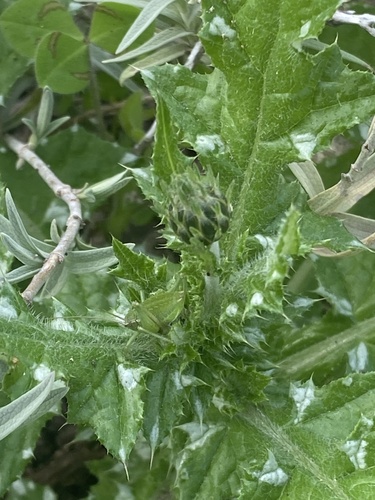
Achillea millefolium
L.
Yarrow, Angel Flower
iNaturalist· cc-by-nc
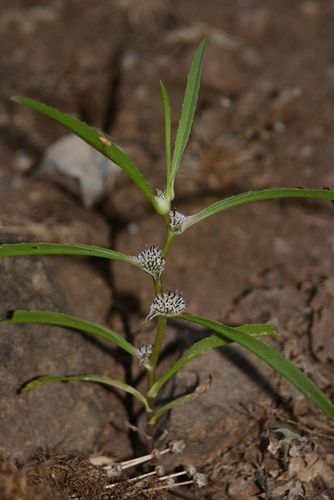
(c) philmb, some rights reserved (CC BY-NC), uploaded by philmb
iNaturalist· cc-by-nc
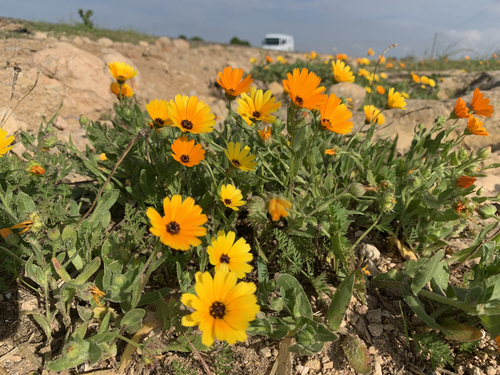
(c) Полина Яковлевна Нехаева (Лихачева), some rights reserved (CC BY-NC), uploaded by Полина Яковлевна Нехаева (Лихачева)
iNaturalist· cc-by-nc
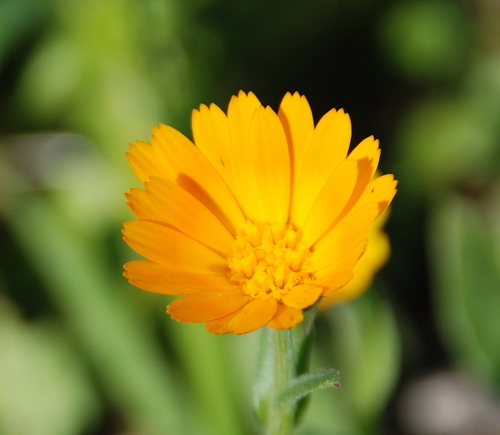
(c) ramazan_murtazaliev, some rights reserved (CC BY-NC), uploaded by ramazan_murtazaliev
Summary
Source: WikipediaAchillea millefolium, commonly known as yarrow () or common yarrow, is a flowering plant in the family Asteraceae. Growing to 1 metre (3+1⁄3 feet) tall, it is characterized by small whitish flowers, a tall stem of fernlike leaves, and a pungent odor. The plant is native to temperate regions of Eurasia and North America. It has been introduced as feed for livestock in New Zealand and Australia. It has some potential uses, including in traditional medicine.
Description
A shrub or small tree. It grows 5 m tall. There are prickles along the stem. The leaves are twice divided and there are 8-18 pairs of pinnae. There are up to 50 pairs of pinnules on each pinnae. The flowers are yellow. They are in large clusters at the ends of branches. The pods are flattened.
Edible Uses
The leaves can be eaten raw or cooked, though they have a rather bitter flavour. They make an acceptable addition to mixed salads and are best used young. The leaves are also used as a hop substitute for flavouring beer and as a preservative in brewing. An aromatic tea can be made from the flowers and leaves, and an essential oil from the flowering heads is used as a flavouring for soft drinks. Although yarrow is generally a nutritious and beneficial addition to the diet, some caution should be exercised — see notes on possible toxicity in the known hazards section.
Traditional Uses
The leaves are eaten in small quantities to make a cool somewhat bitter addition to salads. The fine leaves stripped off the stems are also boiled well then eaten. (It has a reputation as a herb in medicine). The dried leaves are also used for tea. They are also used as a hops substitute. The young leaves are cooked as a vegetable. They are also used for pickles. The flowers are used in herbal teas and lemonade. They are also fried in butter and sprinkled with sugar or orange juice. Caution: It should probably not be eaten in significant quantities nor for extended periods of time as it can cause rashes.
Medicinal Uses
Yarrow has a high reputation in herbal medicine and is widely used both internally and externally for a broad range of conditions, particularly wounds, bleeding, colds, fevers, kidney diseases, and menstrual pain. The whole plant is used fresh or dried, and is best harvested when in flower. It is antiseptic, antispasmodic, mildly aromatic, astringent, carminative, cholagogue, diaphoretic, digestive, emmenagogue, odontalgic, stimulant, bitter tonic, vasodilator, and vulnerary. It also contains the anti-inflammatory compound azulene, though levels vary even among plants growing in the same habitat. The herb combines well with elder flowers (Sambucus nigra) and peppermint (Mentha x piperita vulgaris) for treating colds and influenza. Fresh leaf can be applied directly to an aching tooth to relieve pain. Large or frequent doses taken over a long period may be potentially harmful, causing allergic rashes and increased skin sensitivity to sunlight.
Known Hazards
Large or frequent doses taken over a long period may be potentially harmful, causing allergic rashes and increased skin sensitivity to sunlight.
Distribution
A temperate plant. The plant is native to Europe. It suits most soil conditions. It is drought and frost resistant. It grows best in well drained soils. It suits hardiness zones 3-10. Hobart Botanical Gardens. Tasmania Herbarium.
Where It Grows
Africa, Alaska, Albania, Andorra, Argentina, Armenia, Asia, Australia, Austria, Balkans, Bolivia, Bosnia, Botswana, Brazil, Britain, Bulgaria, Canada, Caucasus, Central Asia, Chile, China, Croatia, Denmark, Dominican Republic, Estonia, Europe*, Falklands, Finland, France, Georgia, Germany, Greece, Greenland, Hawaii, Hungary, Iceland, India, Indonesia, Ireland, Italy, Kazakhstan, Korea, Latvia, Lithuania, Luxembourg, Macedonia, Mediterranean, Mexico, Middle East, Mongolia, Netherlands, New Zealand, North America, Norway, Pacific, Pakistan, Poland, Portugal, Romania, Russia, Scandinavia, SE Asia, Serbia, Slovenia, South America, Spain, Sweden, Switzerland, Tajikistan, Tasmania, Turkey, Türkiye, Ukraine, Uruguay, USA, Uzbekistan, Venezuela, West Indies,
Cultivation
Succeeds in most soils and situations but prefers well-drained soil in a sunny position. Shade tolerant. Plants live longer in poor soil and do well on lime. Established plants are very drought tolerant; they can show distress in very severe droughts but usually recover. It remains green after grass has turned brown in a drought. Plants succeed in maritime gardens. The plant has a very spreading root system and is usually quite invasive. A very hardy plant, tolerating temperatures to about -25°c. Yarrow is an excellent plant for growing in lawns, meadows, orchards, etc.; it is tolerant of repeated close cutting and of being walked on. It works to improve the soil fertility. A very good companion plant, it improves the health of plants growing nearby and enhances their essential oil content, thus making them more resistant to insect predation. Some named forms are selected for their ornamental value. 'Pink' (syn. 'Rosea') has aromatic foliage and deep pink flowers. Hybridizes freely with other members of this genus. A good bee plant is an important nectar source for many insects. For polyculture design and the above-ground architecture (form - tree, shrub, etc. and size shown above), information on the habit and root pattern is also useful and given here if available. Yarrow can be harvested from late spring to early summer, primarily in bloom. Yarrow typically flowers in late spring to early summer.
Propagation
Sow seed in spring or early autumn in a cold frame; it generally germinates within 1–3 months. Prick seedlings out into individual pots once large enough to handle and plant out during summer. Divide plants in spring or autumn — very straightforward, and divisions can go directly into their permanent positions at any time of year. Basal cuttings of new shoots can be taken in spring; collect shoots at around 10cm tall, pot individually, and keep in a warm but lightly shaded spot. They should root within 3 weeks and be ready to plant out by summer.
Other Uses
The growing plant repels beetles, ants, and flies, and has been burned to ward off mosquitoes. A liquid plant feed can be made by filling a container with leaves, covering with water, and leaving to soak for one to two weeks; the resulting dark liquid is then diluted approximately 10:1 with water before use. Yarrow is an essential ingredient in the 'Quick Return' herbal compost activator, a dried and powdered herbal mixture that speeds up bacterial activity in compost heaps. The fragrant seeds have been used to impart a pleasant scent indoors. An essential oil obtained from the leaves — present at 0.6 to 0.85% — is used medicinally. The leaves have also been used as a cosmetic cleanser for greasy skin. Yellow and green dyes can be obtained from the flowers. Yarrow spreads quickly via its roots and makes a good ground cover plant. It is a dynamic accumulator, drawing minerals and nutrients from the soil into a more bioavailable form for use as fertiliser or mulch.
Other Information
It is sold in local markets. Foraged plants are provided to restaurants in Sweden.
Notes
This one is used in medicine. It contains inulin that produces fructose and therefore doesn't boost blood glucose. There are about 85-100 Achillea species. They are temperate in Europe and Asia.
Synonyms
Also Known As
Ajenquillo, Akarkhara, Altamisa, Aster yaro, Biranjasif, Bunch of Daisies, Chopandiga, Civanpercemi, Falsa altamisa, Gandana, Hajdučka trava, Hazaraterevuk, Herezan, Hundred-leaved grass, Kraujazole, Lule te bardha, Milenrama, Milfoil, Milhojas, Momadnu, Navadni rman, Parsmanduk'i, Pelaski, Plumilla, Raudrohi, Rojmari, Rooamari, Ryllik, Sanguinary, Shi, Soldier’s Woundwort, Sporiš, Thousand Leaf, Tysiachelistnik, Verihein, Wodaa kwasiba
References (69)
- Abbet, C., et al, 2014, Ethnobotanical survey on wild alpine food plants in Lower and Central Valais (Switzerland). Journal of Ethnopharmacology 151 (2014) 624–634
- Ambasta S.P. (Ed.), 2000, The Useful Plants of India. CSIR India. p 10
- Bircher, A. G. & Bircher, W. H., 2000, Encyclopedia of Fruit Trees and Edible Flowering Plants in Egypt and the Subtropics. AUC Press. p 6
- Blamey, M and Grey-Wilson, C., 2005, Wild flowers of the Mediterranean. A & C Black London. p 442
- Bodkin, F., 1991, Encyclopedia Botanica. Cornstalk publishing, p 44
Show all 69 references Hide references
- Bremness, L., 1994, Herbs. Collins Eyewitness Handbooks. Harper Collins. p 136
- Brickell, C. (Ed.), 1999, The Royal Horticultural Society A-Z Encyclopedia of Garden Plants. Convent Garden Books. p 71
- Brown, D., 2002, The Royal Horticultural Society encyclopedia of Herbs and their uses. DK Books. p 99
- Burnie, G & Fenton-Smith, J., 1999, A Grower's Guide to Herbs. Murdoch Books. p 75
- Bussman, R. W., et al, 2016, A comparative ethnobotany of Khevsureti, Samtskhe-Javakheti, Tusheti, Svaneti, and Racha-Lechkhumi, Republic of Georgia (Sakartvelo), Caucasus. Journal of Ethnobiology and Ethnomedicine (2016) 12:4
- Bussman, R. W. et al, 2017, Ethnobotany of Samtskhe-Javakheti, Sakartvelo (Republic of Georgia), Caucasus. Indian Journal of Traditional Knowledge Vol. 16(1) pp 7-24
- Bussman, R. W., et al, 2021, Unity in diversity—food plants and fungi of Sakartvelo (Republic of Georgia), Caucasus. Journal of Ethnobiology and Ethnomedicine (2021) 17:72 p 6
- Cerne, M., 1992, Wild Plants from Slovenia used as Vegetables. Acta Horticulturae 318
- Christanell, A., et al, 2010, The Cultural Significance of Wild Gathered Plant Species in Kartitsch (Eastern Tyrol, Austria) and the Influence of Socioeconomic Changes on Local Gathering Practices. Chapter 3 in Ethnobotany in the New Europe. Berghahn Books.
- Cordero, S. E., Abello, L. A., & Galvez, F. L., 2017, Plantas silvestres comestibles y medicinales de Chile y otras partes del mundo. CORMA p 135
- Couture, M. D., 1978, Recent and Contemporary Foraging Practices of the Harney Valley Paiute. Thesis, Portland State University
- Cundall, P., (ed.), 2004, Gardening Australia: flora: the gardener's bible. ABC Books. p 91
- Curtis, W.M., 1963, The Students Flora of Tasmania Vol 2 p 351
- Dogan, Y., & Nedelcheva, A., 2015, Wild plants from open markets on both sides of the Bulgarian-Turkish border. Indian Journal of Traditional Knowledge. Vol. 14(3): 351-358
- Dolina, K. & Luczaj, L., 2014, Wild food plants used on the Dubrovnik coast (south-eastern Croatia) Acta Soc Bot Pol 83(3):175–181
- Facciola, S., 1998, Cornucopia 2: a Source Book of Edible Plants. Kampong Publications, p 32
- Girard, N. J., 2020, Sustainable Foraging of Wild Edible Plants in Norway. A Biocultural Approach. M. Sc. thesis Norwegian University. p 128
- Haj, F., et al, 2012, Species Diversity and Ethno Botanical Classes of the Flora of Allai Valley District Battagram Pakistan. International Journal of Plant Research 2012, 2(4): 111-123
- Hedrick, U.P., 1919, (Ed.), Sturtevant's edible plants of the world. p 23
- http://nordicfood lab/org/blog/2102/9/wild-edible-plants-an-overview
- Hussey, B.M.J., Keighery, G.J., Cousens, R.D., Dodd, J., Lloyd, S.G., 1997, Western Weeds. A guide to the weeds of Western Australia. Plant Protection Society of Western Australia. p 88
- Irving, M., 2009, The Forager Handbook, A Guide to the Edible Plants of Britain. Ebury Press p 138
- Janaćković, P. et al, 2019, Traditional knowledge on plant use from Negotin Krajina (Eastern Serbia): An ethnobotanical study. Indian Journal of Traditional Knowledge Vol 18 (1), pp 25-33
- Kiple, K.F. & Ornelas, K.C., (eds), 2000, The Cambridge World History of Food. CUP p 433, 1884
- Kolosova, V., et al, 2020, Foraging in Boreal Forest: Wild Food Plants of the Republic of Karelia, NW Russia. Foods 2020, 9, 1015; p 8
- Lamp, C & Collet F., 1989, Field Guide to Weeds in Australia. Inkata Press. p 4
- Lazarides, M. & Hince, B., 1993, Handbook of Economic Plants of Australia, CSIRO. p 8
- Loughmiller, C & L., 1985, Texas Wildflowers. A Field Guide. University of Texas, Austin. p 46
- Low, T., 1991, Wild Herbs of Australia and New Zealand. Angus & Robertson. p 77 (Drawing)
- Luczaj, L. et al, 2012, Wild food plant use in 21st century Europe: the disappearance of old traditions and the search for new cuisines involving wild edibles. Acta Soc Bot Pol 81(4):359–370
- Luczaj, L., et al, 2015, Wild food plants and fungi used by Ukrainians in the western part of the Maramureş region in Romania. Acta Soc Bot Pol 84(3):339–346
- Mabey, R., 1973, Food for Free. A Guide to the edible wild plants of Britain, Collins. p 87
- MacKinnon, A., et al, 2009, Edible & Medicinal Plants of Canada. Lone Pine. p 357
- Malezas Comestibles del Cono Sur, INTA, 2009, Buernos Aires
- Mattalia, G., et al, 2012, Traditional uses of wild food and medicinal plants among Brigasc, Kye ́, and Provenc ̧al communities on the Western Italian Alps. Genet Resour Crop Evol. Springer
- Michael, P., 2007, Edible Wild Plants and Herbs. Grub Street. London. p 250
- Nanagulyan, S., et al, 2020, Wild plants and fungi sold in the markets of Yerevan (Armenia). Journal of Ethnobiology and Ethnomedicine 16:26
- Paczkowska, G. & Chapman, A.R., 2000, The Western Australian Flora. A Descriptive Catalogue. Western Australian Herbarium. p 154
- Pardo-de-Santayana, M., et al, 2007, Traditional knowledge of wild edible plants used in the northwest of the Iberian Peninsula (Spain and Portugal): a comparative study. Journal of Ethnobiology and Ethnomedicine 2007, 3:27
- Pieroni, A., 2017, Traditional uses of wild food plants, medicinal plants, and domestic remedies in Albanian, Aromanian and Macedonian villages in South-Eastern Albania. Journal of Herbal Medicine 9 (2017) 81–90
- Pieroni, A. & Soukand, R., 2018, Forest as Stronghold of Local Ecological Practice: Currently Used Wild Food Plants in Polesia, Northern Ukraine. Economic Botany, XX(X) pp. 1-21
- Plants for a Future database, The Field, Penpol, Lostwithiel, Cornwall, PL22 0NG, UK. http://www.scs.leeds.ac.uk/pfaf/
- Polat, R., et al, 2015, Survey of wild food plants for human consumption in Elazig (Turkey). Indian Journal of Traditional Knowledge. Vol. 1(1): 69-75
- Prakofjewa, J., et al, 2023, Boundaries Are Blurred: Wild Food Plant Knowledge Circulation across the Polish-Lithuanian-Belarusian Borderland. Biology 2023, 12, 571.
- PROSEA handbook Volume 13 Spices. p 273
- Pruse, B., et al, 2021, Active Wild Food Practices among Culturally Diverse Groups in the 21st Century across Latgale, Latvia. Biology 2021, 10, 551.
- Redzic, S., 2010, Use of Wild and Semi-Wild Edible Plants in Nutrition and Survival of People in 1430 Days of Siege of Sarajevo during the War in Bosnia and Herzegovina (1992–1995). Coll. Antropol 34 (2010) 2:551-570
- Rexhepi, B., et al, 2018, Ethnobotanical Study of Wild Edible Plants in Pelagonia Region (Southwestern Macedonia) International Journal of Advances in Science Engineering and Technology, Vol. 6 (1) p 57
- Schunko, C., et al, 2012, Intracultural variation of knowledge about wild plant uses in the Biosphere Reserve Grosses Walsertal (Austria). Journal or Ethnobiology and Ethnomedicine, 8:23
- Seidemann J., 2005, World Spice Plants. Economic Usage, Botany, Taxonomy. Springer. p 3
- Shikov, A. N. et al, 2017, Traditional and Current Food Use of Wild Plants Listed in the Russian Pharmacopoeia. Frontiers in Pharmacology. Vol. 8 Article 841
- Sp. pl. 2:899. 1753
- Staples, G.W. and Herbst, D.R., 2005, A tropical Garden Flora. Bishop Museum Press, Honolulu, Hawaii. p 166
- Steenbeeke, Greg as part of the Plants Directory project. List of plant species from northern NSW that may be used as food plants p 3
- Stern, G., 1986, Australian Weeds. A Source of Food and Medicine. Harper & Row. p 231
- Sukarya, D. G., (Ed.) 2013, 3,500 Plant Species of the Botanic Gardens of Indonesia. LIPI p 1052
- Upson, R., & Lewis R., 2014, Updated Vascular Plant Checklist and Atlas for the Falkland Islands. Falklands Conservation and Kew.
- Urgamal, M., Oyuntsetseg, B., Nyambayar, D. & Dulamsuren, Ch. 2014. Conspectus of the vascular plants of Mongolia. (Editors: Sanchir, Ch. & Jamsran, Ts.). Ulaanbaatar, Mongolia. “Admon“ Press. 334pp. (p. 199-230).
- Usher, G., 1974, A Dictionary of Plants Used by Man. Constable. p 16
- Vermeulen, N, 1998, The Complete Encyclopedia of Herbs. Rebo Publishers. p 20
- Wiersema, J. H. & Leon, B., 2013, World Economic Plants. A Standard Reference CRC Press. 2nd Ed. p 11
- Whitney, C. W., et al, 2012, A Survey of Wild Collection and Cultivation of Indigenous Species in Iceland. Human Ecology 40:781-787
- World Checklist of Useful Plant Species 2020. Royal Botanic Gardens, Kew
- www.ediblewildfood.com