Canavalia rosea
(Swartz) DC.
Mackenzie Bean, Fire Bean, Coastal jack bean
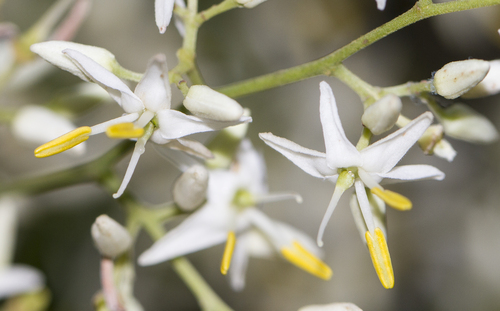
iNaturalist· cc-by-nc
(c) Kim and Peter Connolly, some rights reserved (CC BY-NC)
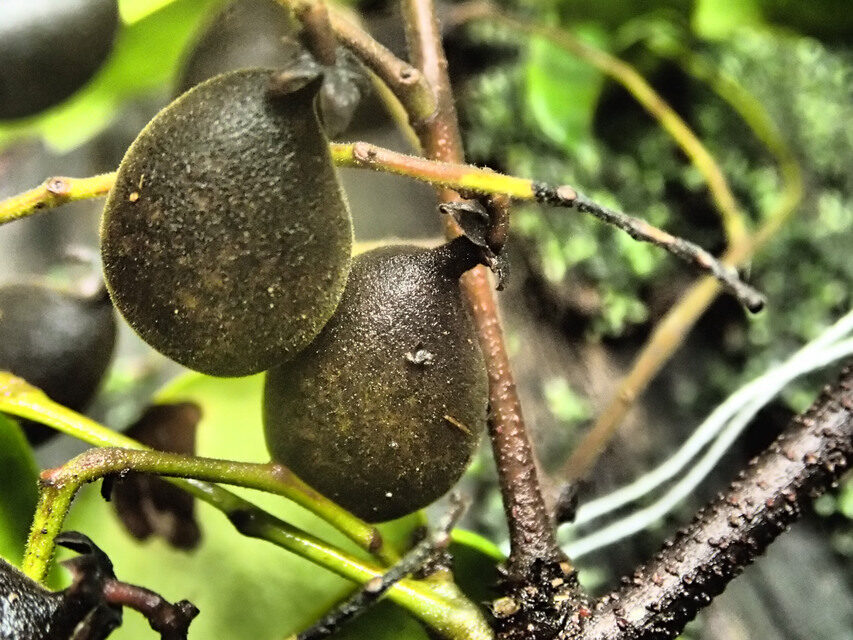
iNaturalist· cc-by-nc
(c) Kim and Peter Connolly, some rights reserved (CC BY-NC)
iNaturalist· cc-by
(c) Cheng-Tao Lin, some rights reserved (CC BY)
Summary
Source: WikipediaCanavalia rosea is a species of flowering plant of the genus Canavalia in the pea family of Fabaceae, it has a pantropical and subtropical distribution in upper beaches, cliffs, and dunes. Common names include beach bean, bay bean, sea bean, greater sea bean, seaside jack-bean, coastal jack-bean, and MacKenzie bean.
Description
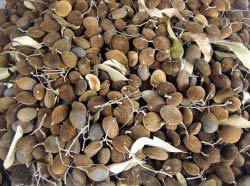
A perennial climbing or trailing legume. It can be 1.8-10 m long. The stems are silky hairy when young. Leaves have 3 leaflets and the central one is the largest. The leaves are smooth, dark green and slightly leathery. The leaflets are oval or round and often with an indent at the top and 2.5-9.5 cm long by 1.5-9 cm wide. The leaf stalk is 2-7 cm long. The flower cluster can stick upright or hang over. It is 4-18 cm long and the flower stalk is 10-21 cm long. The main rear petal is pink or purple often with a white area near the base. The fruit or pods are oblong and compressed. They are flattened and woody. They can be 11.5-15 cm long by 2.5-3 cm wide. Each section of the pod has a rib. The seeds are brown with streaks. The seeds are 1.5-2 cm long, 0.9-1.4 cm wide and 5-11 mm thick. The seed scar is 7-9 mm long.
Edible Uses
Flowers - eaten as a flavouring. Young pods. Boiled. Young seeds - cooked. Said to make a good pease porridge. The seeds serve as an important source of dietary protein in West Africa and Nigeria.
Traditional Uses
CAUTION: The seeds are poisonous raw. The seeds are edible after thorough cooking. They are also roasted ad ground and used as a coffee substitute. The flowers are eaten as a flavouring. They are used in sauces. The pods are edible when young.
Medicinal Uses
The root is diuretic. It contains a bitter and purgative principle. It is steeped in vinegar and used for gargles. An infusion of the seed is used as a purgative. The juice from the petioles is applied to puncture wounds from thorns or other sharp objects. A decoction of the leaves is used in the treatment of rheumatism. A paste of the leaves is used as a treatment for boils. The dried leaves have been used as an entheogen, a component to some ancient rituals. The seeds are ingested or smoked with the dried leaves as a marijuana substitute. There is an increasing in following for its use as a marijuana substitute.
Distribution
It is a tropical plant. It occurs throughout the tropics and into the subtropics. It is very common along sea shores. It occurs on sandy beaches at high tide mark. It can grow in arid places. They need a well drained soil and a sunny position. It suits hardiness zones 9-12.
Where It Grows
Africa, American Samoa, Angola, Anguilla, Asia, Australia, Benin, Cameroon, Central Africa, China, Colombia, Congo, Côte d'Ivoire, Dominican Republic, East Africa, East Timor, Equatorial-Guinea, Fiji, Gambia, Ghana, Guiana, Guianas, Guinea, Guinée, Guinea-Bissau, Guyana, Haiti, India, Indochina, Ivory Coast, Japan, Kenya, Liberia, Malaysia, Marquesas, Mauritania, Micronesia, Mozambique, Nauru, Nigeria, Norfolk Island, Pacific, Palau, Papua New Guinea, PNG, Puerto Rico, Rotuma, Sao Tome and Principe, SE Asia, Senegal, Sierra Leone, Somalia, South Africa, South America, Sri Lanka, Suriname, Taiwan, Tanzania, Thailand, Timor-Leste, Togo, Tonga, Vanuatu, Venezuela, Vietnam, Virgin Islands, West Africa, West Indies, Zambia,
Cultivation
Plants are grown from seed. The seeds need treatment to break the hard seed coat. They can also be grown from cuttings.
Other Uses
The plant is a spontaneous sand binder on beaches; it is occasionally cultivated as a cover crop in plantations.
Production
It takes 2 years to complete its life cycle.
Notes
There are about 50 Canavalia species.
Nutrition
| Part | Moisture | kJ | kcal | Protein | Vit A | Vit C | Iron | Zinc |
|---|---|---|---|---|---|---|---|---|
| Fruit | 10.4 | — | — | 4.3 | — | — | — | — |
| Seeds | 10.9 | — | — | 22 | — | — | — | — |
| Flowers - flavour | — | — | — | — | — | — | — | — |
Synonyms
Also Known As
Fanta, Fue fai va'a, Kachang laut, Kachang rang-rang, Kam pra, Kia tia, Lerelere, N'habo, Nhabo, Norfolk Island bean, Tagale, Tobalo-sosso, Tua-kla
References (53)
- Barrau, J., 1976, Subsistence Agriculture in Melanesia. Bernice P. Bishop Museu, Bulletin 219 Honolulu Hawaii. Kraus reprint. p 52 (As Canavalia obtusifolia)
- Bircher, A. G. & Bircher, W. H., 2000, Encyclopedia of Fruit Trees and Edible Flowering Plants in Egypt and the Subtropics. AUC Press. p 80 (As Canavalia maritima)
- Bodkin, F., 1991, Encyclopedia Botanica. Cornstalk publishing, p 210 (Also as Canavalia maritima)
- Borrell, O.W., 1989, An Annotated Checklist of the Flora of Kairiru Island, New Guinea. Marcellin College, Victoria Australia. p 89
- Brock, J., 1993, Native Plants of Northern Australia, Reed. p 113
Show all 53 references Hide references
- Burkill, H. M., 1985, The useful plants of west tropical Africa, Vol. 1. Kew.
- Burkill, I.H., 1966, A Dictionary of the Economic Products of the Malay Peninsula. Ministry of Agriculture and Cooperatives, Kuala Lumpur, Malaysia. Vol 1 (A-H) p 439
- Cherikoff V. & Isaacs, J., The Bush Food Handbook. How to gather, grow, process and cook Australian Wild Foods. Ti Tree Press, Australia p 198
- Cooper, W. and Cooper, W., 2004, Fruits of the Australian Tropical Rainforest. Nokomis Editions, Victoria, Australia. p 204
- Cribb, A.B. & J.W., 1976, Wild Food in Australia, Fontana. p 94, 176 (As Canavalia maritima)
- Cundall, P., (ed.), 2004, Gardening Australia: flora: the gardener's bible. ABC Books. p 324
- Elliot, W.R., & Jones, D.L., 1982, Encyclopedia of Australian Plants suitable for cultivation. Vol 2. Lothian. p 456
- Facciola, S., 1998, Cornucopia 2: a Source Book of Edible Plants. Kampong Publications, p 103 (As Canavalia maritima)
- Flora of Australia Volume 49, Oceanic Islands 1, Australian Government Publishing Service, Canberra. (1994) p 183
- Fowler, D. G., 2007, Zambian Plants: Their Vernacular Names and Uses. Kew. p 80
- Franklin, J., Keppel, G., & Whistler, W., 2008, The vegetation and flora of Lakeba, Nayau and Aiwa Islands, Central Lau Group, Fiji. Micronesica 40(1/2): 169–225, 2008
- Hardwick, G., 2001, Economically Useful Plants for Northern Australia: Master Species List. Crusader eBooks. (As Canavalia maritima)
- Greig, D., 1996, Flowering Natives for Home Gardens. Angus & Robertson. p 106 (As Canavalia maritima)
- Haslam, S., 2004, Noosa's Native Plants. Noosa Integrated Catchment Assn. Inc. p 18
- Hibbert, M., 2002, The Aussie Plant Finder 2002, Florilegium. p 59 (As Canavalia maritima)
- Jones, D.L. & Gray, B., 1977, Australian Climbing Plants. Reed. p 50, 60, 86 (As Canavalia maritima)
- J. Bot. Agric. 1:80. 1813 (As Canavalia maritima)
- Kenneally, K.E., Edinger, D. C., and Willing T., 1996, Broome and Beyond, Plants and People of the Dampier Peninsula, Kimberley, Western Australia. Department of Conservation and Land Management. p 153
- Lazarides, M. & Hince, B., 1993, Handbook of Economic Plants of Australia, CSIRO. p 46
- Leiper, G & Houser, J., Mutooroo. Plant Use by Australian Aboriginal People. Assembly press, Queensland. (As Canavalia maritima)
- Low, T., 1991, Wild Food Plants of Australia. Australian Nature FieldGuide, Angus & Robertson. p 32
- Low, T., 1992, Bush Tucker. Australia’s Wild Food Harvest. Angus & Robertson. p 23
- Maiden, J. H., 1889, The Useful Native Plants of Australia (including Tasmania). The Technology Museum of NSW, Sydney. p 12 (As Canavalia obtusifolia)
- Massal, E. and Barrau, J., 1973, Food Plants of the South Sea Islands. SPC Technical Paper No 94. Nounea, New Caledonia. p 30 (As Canavalia obtusifolia)
- McMakin, P.D., 2000, Flowering Plants of Thailand. A Field Guide. White Lotus. p 95
- Melzer, R. & Plumb, J., 2011, Plants of Capricornia. Belgamba, Rockhampton. p 367
- Paczkowska, G . & Chapman, A.R., 2000, The Western Australian Flora. A Descriptive Catalogue. Western Australian Herbarium. p 419
- Peduruhewa, P. S., et al, 2021, Potential of Underutilized Wild Edible Plants as the Food for the Future – A Review. Journal of Food Security, Vol. 9, No. 4, 136-147
- Peekel, P.G., 1984, (Translation E.E.Henty), Flora of the Bismarck Archipelago for Naturalists, Division of Botany, Lae, PNG. p 257, 254
- Peters, C. R., O'Brien, E. M., and Drummond, R.B., 1992, Edible Wild plants of Sub-saharan Africa. Kew. p 131
- Pham-Hoang Ho, 1999, An Illustrated Flora of Vietnam. Nha Xuat Ban Tre. p 945 (As Canavalia maritima)
- Plants of Haiti Smithsonian Institute http://botany.si.edu/antilles/West Indies
- Prodr. 2:404. 1825
- Recher, P, 2001, Fruit Spirit Botanical Gardens Plant Index. www.nrg.com.au/~recher/ seedlist.html p 5 (As Canavalia maritima)
- Reis, S. V. and Lipp, F. L., 1982, New Plant Sources for Drugs and Foods from the New York Botanical Garden herbarium. Harvard. p 130 (As Canavalia maritima)
- Roa, J. A. G. & Boada, D. S. G., 2018, Fundación para el Fortalecimiento de la Fruticultura y Plantas Alimenticias no Convencionales en Colombia.
- Royal Botanic Gardens, Kew (1999). Survey of Economic Plants for Arid and Semi-Arid Lands (SEPASAL) database. Published on the Internet; http://www.rbgkew.org.uk/ceb/sepasal/internet [Accessed 28th April 2011]
- Scarth-Johnson, V., 2000, National Treasures. Flowering Plants of Cooktown and Northern Australia. Vera Scarth-Johnson Gallery Association. Cooktown, Australia. p 128
- Seidemann J., 2005, World Spice Plants. Economic Usage, Botany, Taxonomy. Springer. p 77 (As Canavalia maritima)
- Sridhar, K. R. & Niveditha, V. R., 2014, Nutritional and bioactive potential of coastal sand dune wild legume Canavalia maritima (Aubl.) Thou. - An overview. Indian J Nat Prod Resour, June 2014 p 107 (NB Naming confused)
- Terra, G.J.A., 1973, Tropical Vegetables. Communication 54e Royal Tropical Institute, Amsterdam, p 35
- Townsend, K., 1999, Field Guide to Plants of the Dry Tropics. Society for Growing Australian Plants, Townsville Branch Inc. p 150
- Townsend, K., 1994, Across the Top. Gardening with Australian Plants in the tropics. Society for Growing Australian Plants, Townsville Branch Inc. p 118 (As Canavalia maritima)
- Verdcourt, B., 1979, Manual of New Guinea Legumes. Botany Bulletin No 11, Division of Botany, Lae, Papua New Guinea. p 475
- Wheeler, J.R.(ed.), 1992, Flora of the Kimberley Region. CALM, Western Australian Herbarium, p 376
- World Checklist of Useful Plant Species 2020. Royal Botanic Gardens, Kew
- Wrigley, J.W., & Fagg, M., 1982, Australian Native Plants. Collns. p 77 (As Canavalia maritima)
- Yuncker, T.G., 1959, Plants of Tonga, Bernice P. Bishop Museum, Hawaii, Bulletin 220. p 148 (As Canavalia maritima)