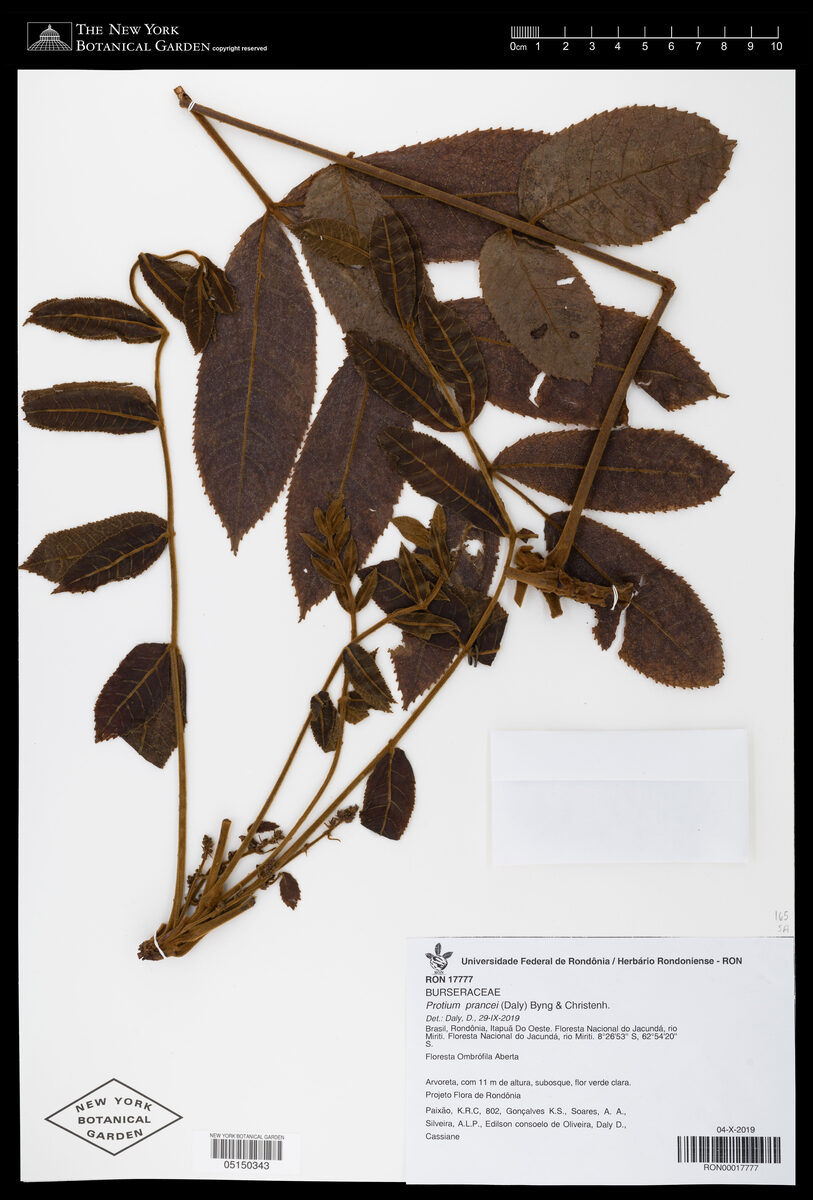
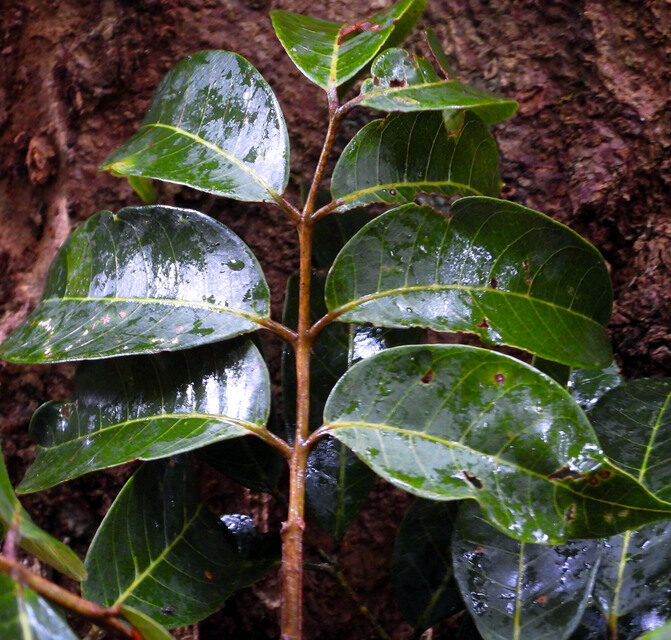
Dacryodes costata
(A. W. Benn.) H. J. Lam.
wikimedia· pd
No machine-readable author provided. Noles1984~commonswiki assumed (based on copyright claims). (via Wikimedia Commons)
Summary
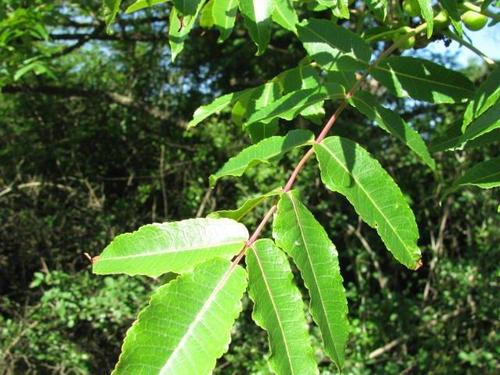
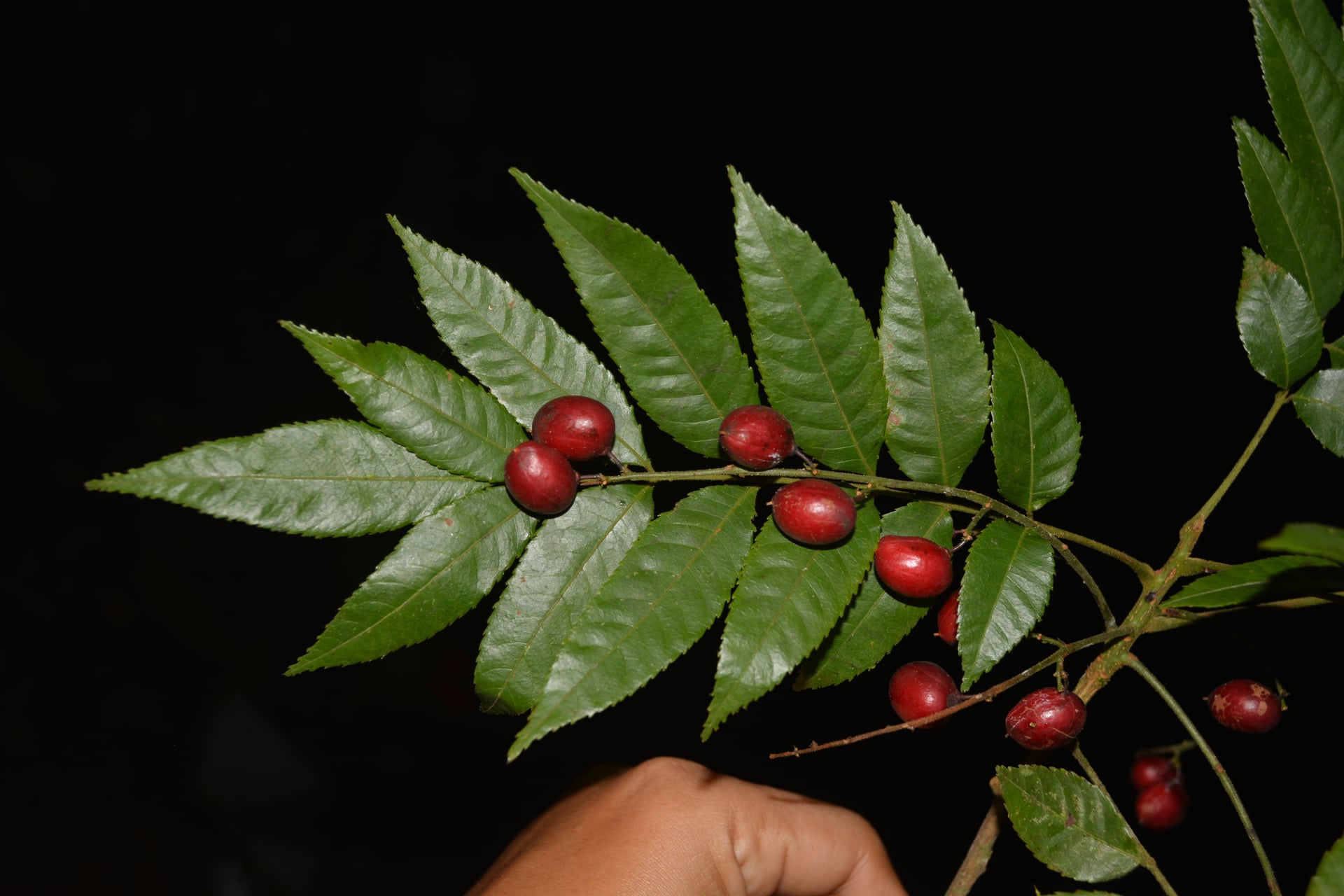
Source: WikipediaDacryodes costata is a tree in the family Burseraceae. The specific epithet costata is from the Latin meaning 'ribbed', likely referring to the prominent veins on the leaf underside.
Description
A tropical tree in the Burseraceae family.
This description is brief — help expand it
Edible Uses
We have seen no records regarding the edibility of this fruit, but most, if not all, members of the genus have a fruit with a soft, sweet flesh and are potentially edible. The fruit is a yellow-orange, fleshy drupe around 15 mm long. The flesh of the fruits in this genus usually adheres very strongly to the seed. When placed in hot (but not boiling) water at around 60 - 85°c the fruit softens and swells and all the flesh then slides easily off the seed.
Traditional Uses
The edibility of the fruit is unsure.
This uses section is brief — help expand it
Distribution
It is a tropical plant.
Where It Grows
Asia, Indonesia, Malaysia, Philippines, SE Asia, Thailand,
Cultivation
The plant can produce fruit all year round. A dioecious species, both male and female forms need to be grown if fruit and seed are required.
Other Uses
The wood is used for light construction. The trunks are used for building canoes.