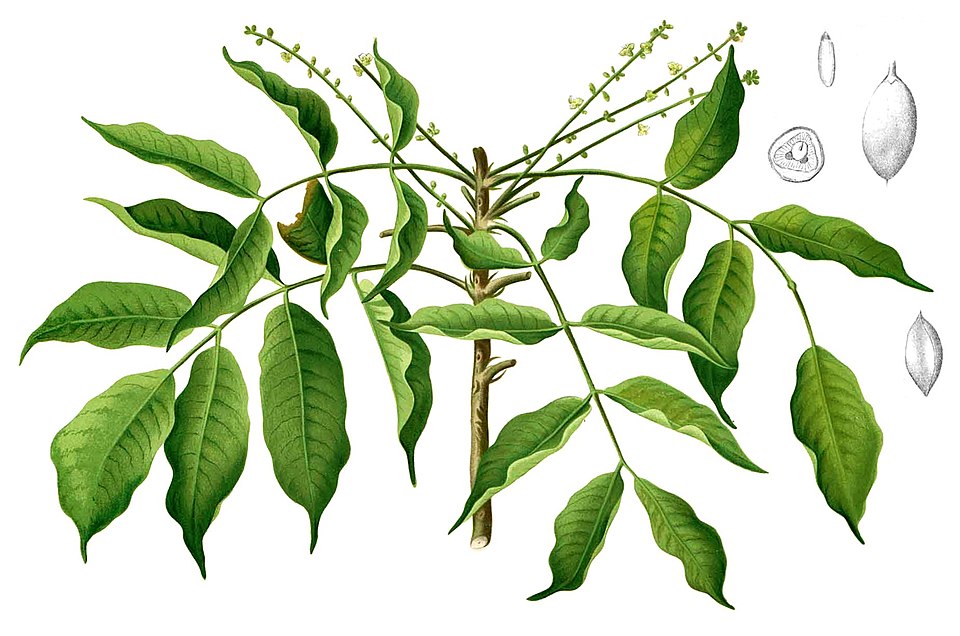
Canarium kaniense
Lauterbach
Piu, Usasi
gbif· cc0
President and Fellows of Harvard College
gbif· cc0
President and Fellows of Harvard College
gbif· cc0
President and Fellows of Harvard College
Description
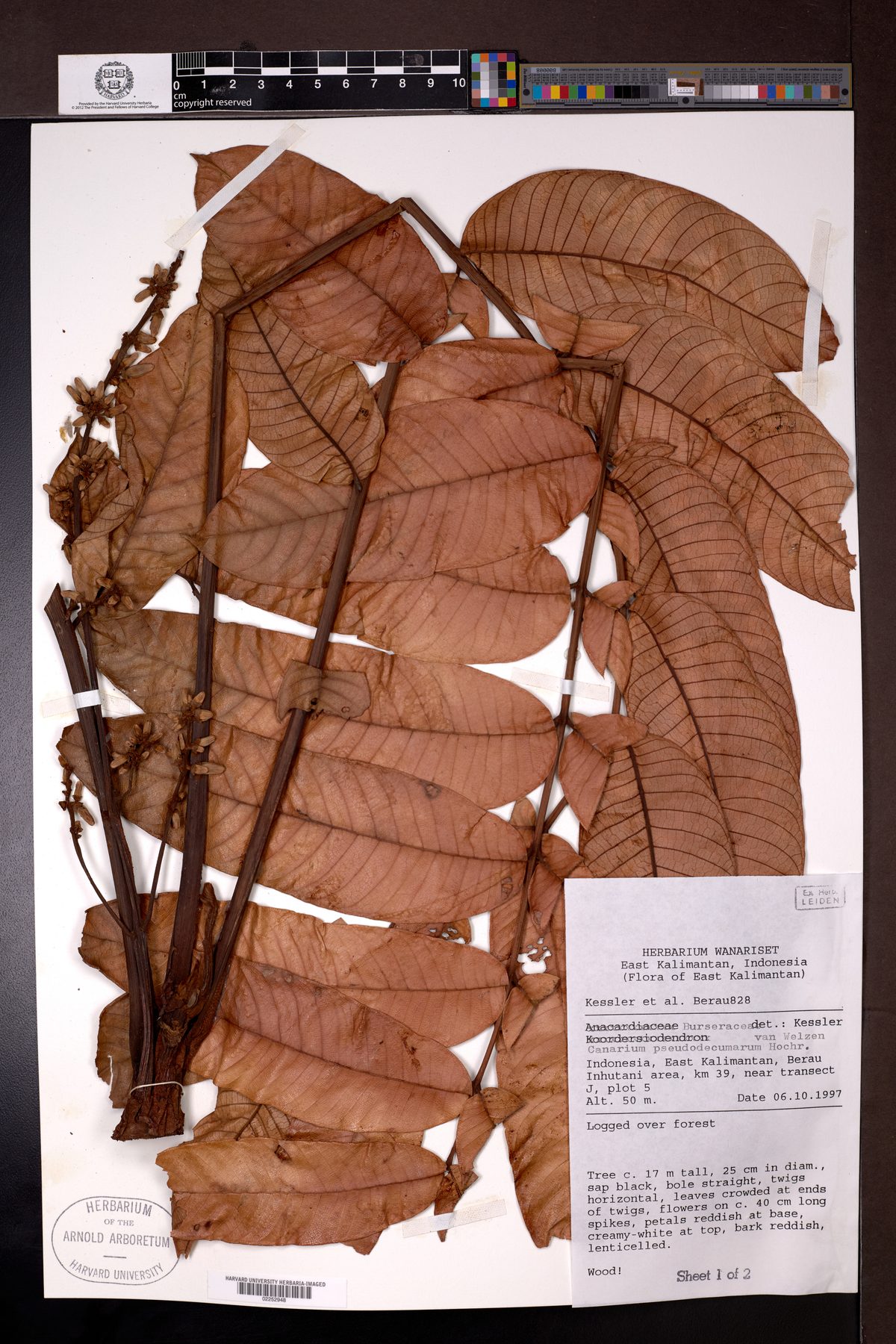
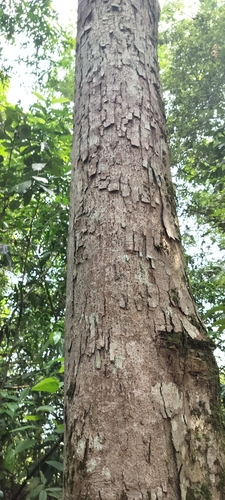
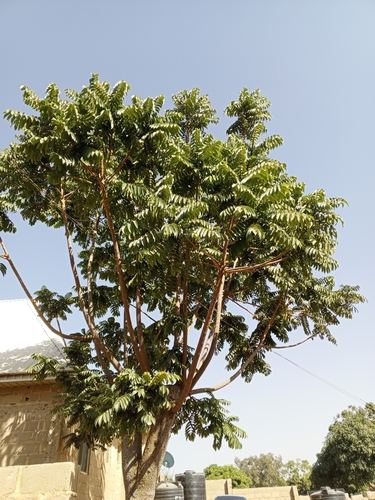
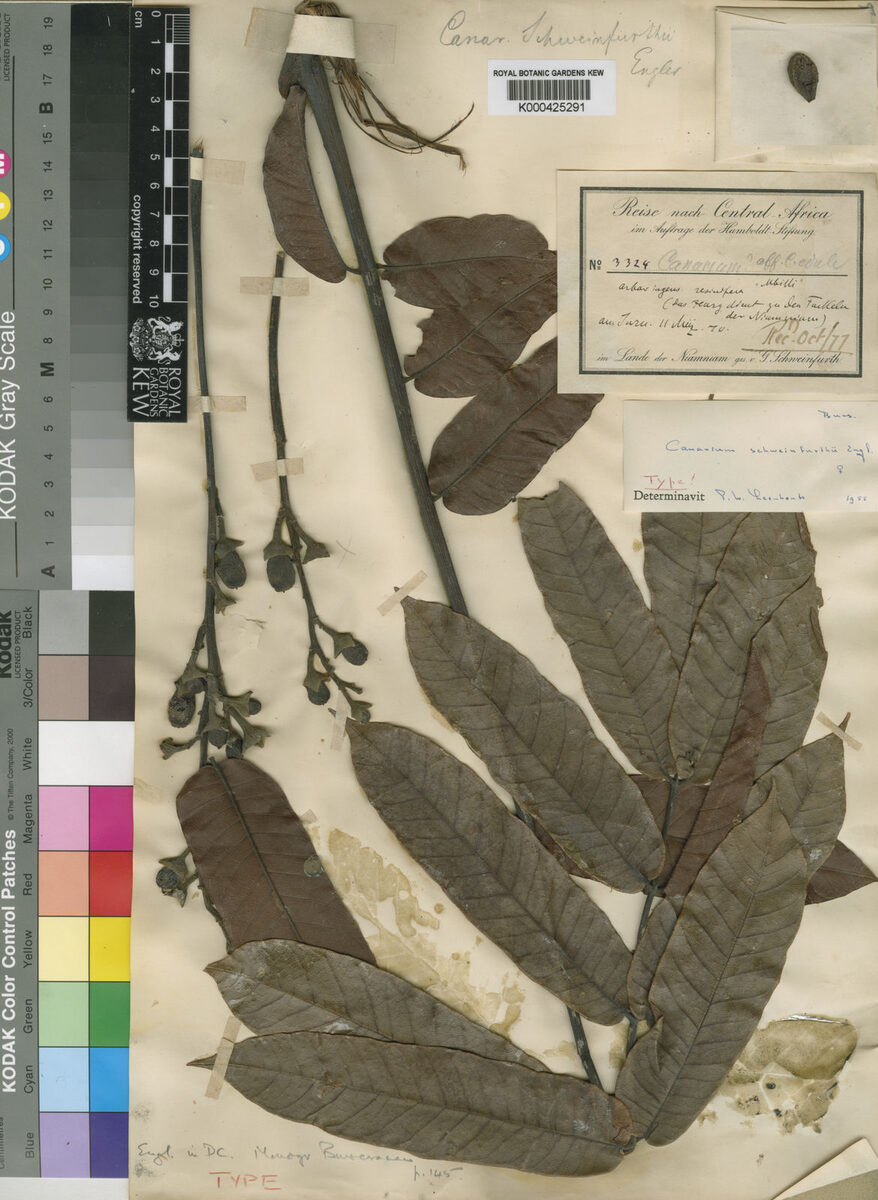
A large tree up to 40 m high and sometimes with buttresses. The small branches are 0.5-1 cm thick. They do not have hairs. The branches have one or two round cylinders of vascular strands when cut cross ways. (Like in a root). The leafy stalk (stipule) at the base of the leaf is oval and 1-3 cm long by 0.5-2 cm wide. The edges of this are deeply toothed and can be almost like a fringe. The leaf can have 3-5 or 6 leaflets. They do not have hairs. The leaflets are oval and 8-12 cm long by 3.5-7 cm wide. They can be papery or slightly leathery. The base of the leaflet is slightly slanting. The leaflets do not have teeth around the edge. The top of the leaf ends fairly abruptly. There are 9-15 pairs of side veins. These are slightly curved and at an angle. The flowers are near the ends of the branches. The flower clusters can be 30 cm long. They are densely covered with fine hairs. There are 5-6 fruit on a stalk. Individual fruit have very short stalks. Fruit are 5-6 cm long and 3-4 cm across. They are triangular in cross section. Normally there is only one seed inside with the other cells empty.
Edible Uses
The oily seeds are eaten as a minor wild edible nut in Papua New Guinea.
Traditional Uses
The oily seeds are eaten.
This uses section is brief — help expand it
Distribution
A tropical plant. It occurs mostly on the mainland and only in PNG. Plants are mostly between 1,000 and 2,000 m altitude.
Where It Grows
Pacific, Papua New Guinea, PNG,
Cultivation
Plants normally are self sown from seed.
Propagation
Seed - we have no specific information for this species but seeds of this genus generally have a hard seed coat and germinate erratically. Filing away some of the seed coat to allow moisture to enter more readily, without damaging the seed, will encourage a faster and more even germination.
Other Uses
The wood of most species in the genus Canarium is usually soft to moderately hard and probably not very durable in exposed positions. It is not, therefore of any great commercial value and is only used locally or not at all.
Production
The fruit/nut production is seasonal. Flowering is in December and fruiting from January to March.
Other Information
A minor wild edible nut in Papua New Guinea.
Notes
There are 80-95 Canarium species.
Synonyms
References (6)
- French, B.R., 1986, Food Plants of Papua New Guinea, A Compendium. Asia Pacific Science Foundation p 164
- Leenhouts, P.W., 1955, Burseraceae in Flora Malesiana 5(1) p 269
- Plants of Papua New Guinea LAE herbarium record (As var. globigerum)
- Walter, A. & Sam C., 2002, Fruits of Oceania. ACIAR Monograph No. 85. Canberra. p 131, 278
- World Checklist of Useful Plant Species 2020. Royal Botanic Gardens, Kew
Show all 6 references Hide references
- www.pngplants.org