Canarium bengalense
Roxburgh
Bengal canarium, Square canarium
wikimedia· cc0
Wikimedia Commons - Daderot
Description
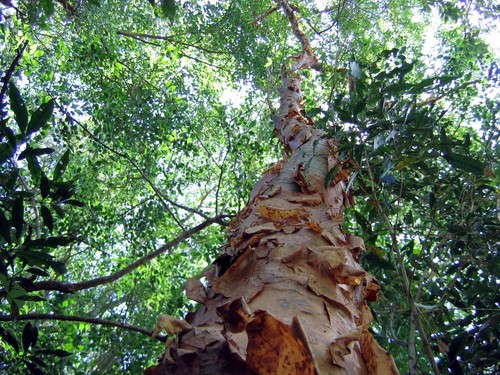
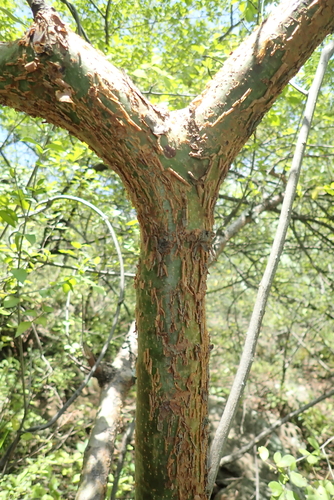
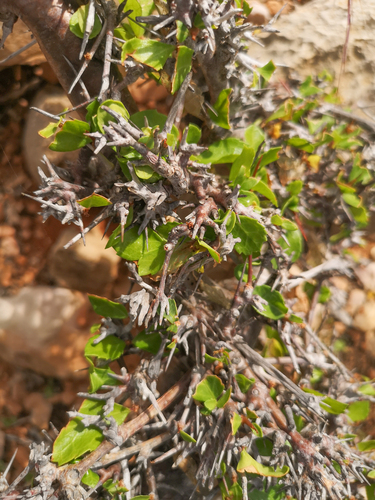
A large tree which loses its leaves during the year. It grows 10-20 m high and has a trunk 45-55 cm across. The trunk is straight and branches after 10 m height. The bark is grey and not cracked but can split. The young branches are green and wrinkled along their length. The leaves are made up of 8 or 9 pairs of leaflets with one at the end. The leaves are 25-37 cm long and the leaflets are 7-9 cm long by 3-3.5 cm wide. They are dark green on the upper surface and paler underneath. The base of the leaflets is rounded while the tip is pointed. There are 10-11 pairs of veins. The flower clusters occur near the ends of branches. These are 15-17 cm long. The fruit is 3 cm long by 1.5 cm across and triangular in cross section. It is green with the middle layer 2.5-3 mm thick. The seed is hard.
Edible Uses
The fruits can be eaten fresh or dried. The seeds yield an edible oil.
Traditional Uses
The fruit can be eaten. They can be dried.
This uses section is brief — help expand it
Medicinal Uses
Traditional uses include consuming the fruit.
Distribution
A tropical plant. It grows on humus rich soils. It occurs below 300 m altitude in Vietnam. It needs plenty of sunlight. It is native of the eastern Himalayan region. In Sikkim it grows below 500 m above sea level. In southern China it grows between 400-1,300 m above sea level. In Yunnan.
Where It Grows
Asia, Bangladesh, China, Himalayas, India, Indochina, Laos, Myanmar, Northeastern India, SE Asia, Sikkim, Thailand, Vietnam,
Cultivation
A dioecious species, both male and female forms need to be grown if fruit and seed are required.
Propagation
Seed - we have no specific information for this species but seeds of this genus generally have a hard seed coat and germinate erratically. Filing away some of the seed coat to allow moisture to enter more readily, without damaging the seed, will encourage a faster and more even germination.
Other Uses
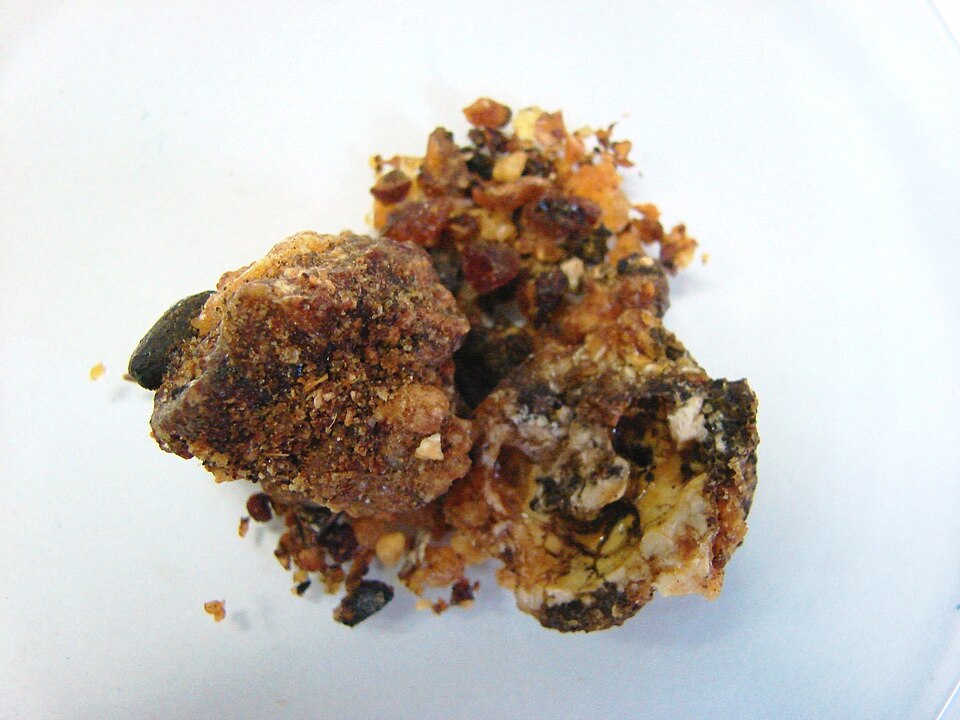
A clear, brittle, amber-coloured resin is obtained from the stem. Known as East Indian Copal, it has been recommended as a hard drying varnish for enamel painting. The heartwood is reddish-brown, the sapwood soft and yellowish-white. It does not warp and looks suitable for planking, tea boxes etc.
Production
Trees grow quickly. Plants flower in June and fruit in July to December. In Sikkim fruit are available in January.
Notes
There are 80-95 Canarium species.
Also Known As
Chakronthi, Dhuna, Dhuna rata, Gogul-dhup, Marockpa, Narockpa, Nerebi, Tram ba canh
References (10)
- Ambasta S.P. (Ed.), 2000, The Useful Plants of India. CSIR India. p 100
- Fl. ind. ed. 1832, 3:136. 1832 (As Canarium bengalense Roxb.)
- Forest Inventory and Planning Institute, 1996, Vietnam Forest Trees. Agriculture Publishing House p 81
- Hu, Shiu-ying, 2005, Food Plants of China. The Chinese University Press. p 505
- Mozhui, R., et al, 2011, Wild edible fruits used by the tribals of Dimapur district of Nagaland, India. Pleione 5(1): 56 - 64.
Show all 10 references Hide references
- Pasha, M. K. & Uddin, S. B., 2019, Minor Edible Fruits of Bangladesh. Bangladesh J. Plant Taxon. 26(2): 299–313
- Sundriyal, M., et al, 1998, Wild edibles and other useful plants from the Sikkim Himalaya, India. Oecologia Montana 7:43-54
- Sundriyal, M., et al, 2004, Dietary Use of Wild Plant Resources in the Sikkim Himalaya, India. Economic Botany 58(4) pp 626-638
- Wild edible plants of Himachal Pradesh
- World Checklist of Useful Plant Species 2020. Royal Botanic Gardens, Kew