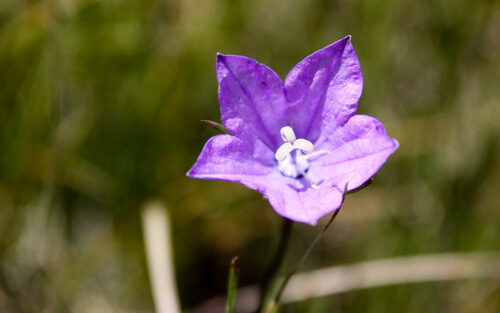
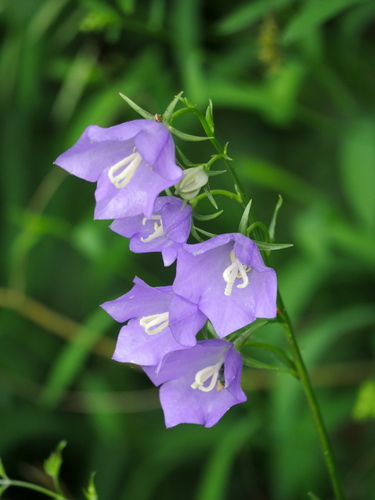
Campanula versicolor
Andrews
Harebell, Bluebell, Variously coloured bellflower
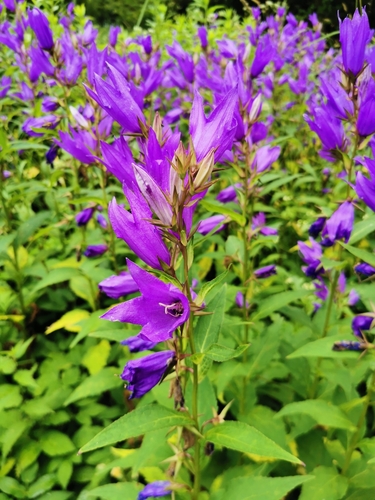
iNaturalist· cc-by-nc
(c) Nicolas Lagière, some rights reserved (CC BY-NC), uploaded by Nicolas Lagière
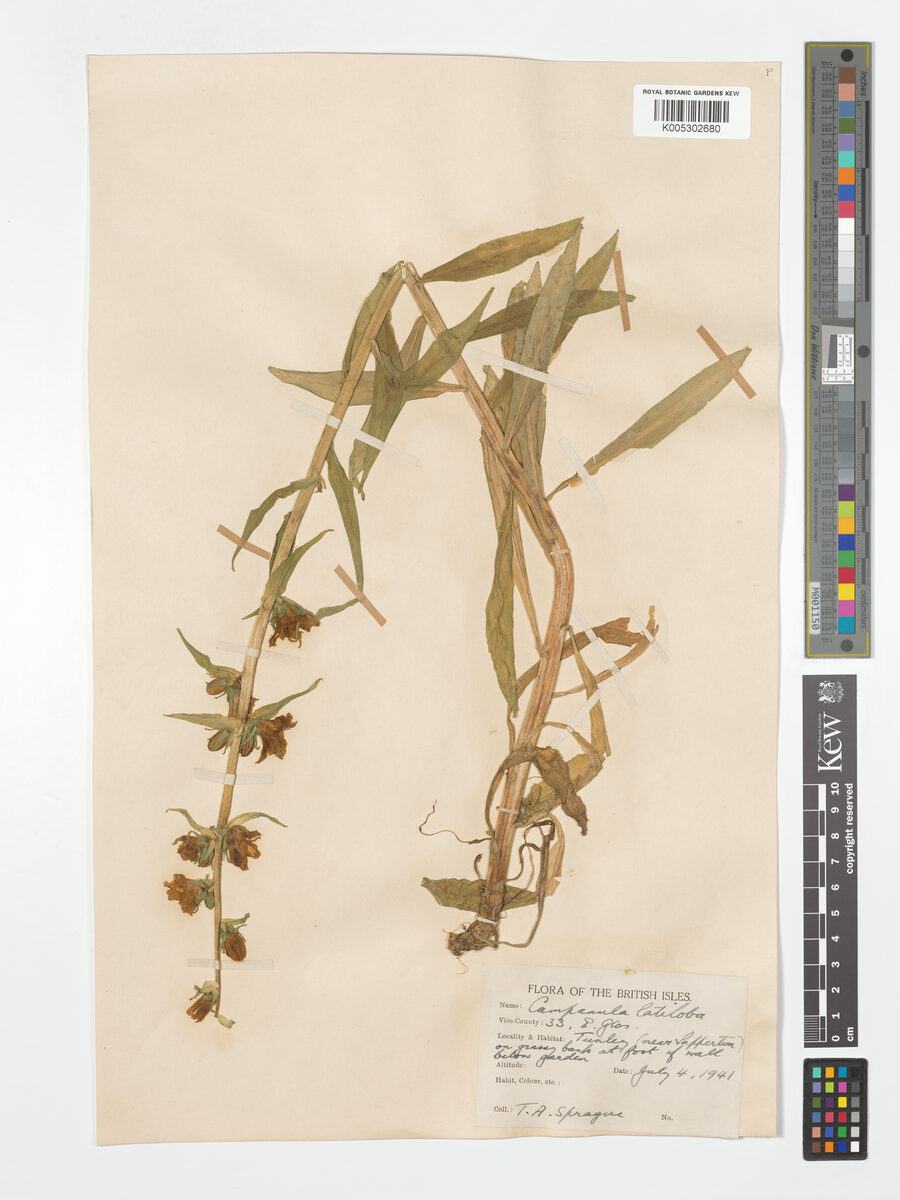
iNaturalist· cc-by-nc
(c) voyageurs_lyonnais, some rights reserved (CC BY-NC)
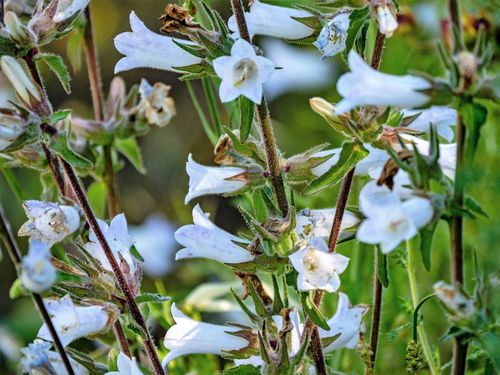
iNaturalist· cc-by-nc
(c) Thomas Shahan, some rights reserved (CC BY-NC), uploaded by Thomas Shahan
Summary
Source: WikipediaCampanula versicolor, the various-colored bellflower is a species of plant in the family Campanulaceae. It occurs from southeastern Italy to the Balkans.
Description
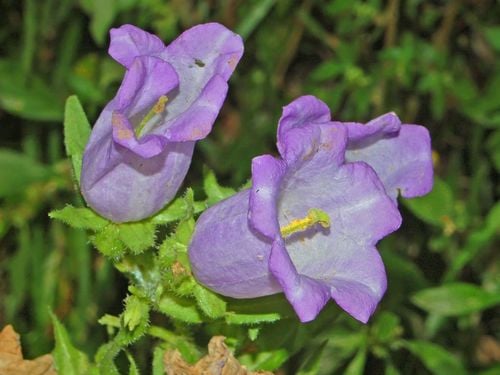
It is an evergreen perennial herb. It does not have hairs. The stems are stout and erect or curving upwards. They branch at the top. The leaves are leathery. The leaves at the base are oval and often with a heart-shaped base. They have stalks. The upper leaves do not have stalks and are narrow at the base. It has blue harebell flowers. They have a deeper violet centre. The flowers are 15-25 mm long and 25-30 mm wide. They are borne in clusters along the spike like branches.
Edible Uses
The leaves are rich in vitamin C and can be eaten raw or cooked. They have a delicious mild flavour with a slight sweetness reminiscent of freshly picked garden peas, and can be added in quantity to salads; they are generally available through winter and are enjoyed by most people who try them. The flowers are edible raw, offering a pleasant mild sweetness that makes them both a tasty and decorative addition to salads.
Traditional Uses
The young leaves are used in salads. They are also eaten cooked. The flowers are also eaten.
This uses section is brief — help expand it
Medicinal Uses
The leaves are rich in vitamin C.
Known Hazards
None known.
Distribution
It is a Mediterranean climate plant. It grows in rocky places and often near cliffs.
Where It Grows
Europe, Greece, Italy, Mediterranean, Spain, Turkey, Türkiye,
Cultivation
Succeeds in most fertile, well-drained soils, though it prefers a sunny position in a moist but well-drained, rich sandy loam and a neutral or alkaline soil. Strongly resents winter wet. This species is not hardy in the colder areas of the country, it tolerates temperatures down to between -5 and -10°c. Plants may require protection in severe winters, though they have proved reliable in Cornwall. This species provides some of the nicest salad leaves that we have tried to date, it has excellent potential as an edible ornamental in the garden, though it is not suitable for commercial cultivation. The plants have a basal rosette in winter and continue to grow slowly in all but the coldest weather, providing edible leaves most winters. The species in this genus do not often hybridize, so seed can generally be relied upon to come true. The plants are self-fertile. A very ornamental plant. It is closely related to C. pyramidalis, but is more reliably perennial. Members of this genus are rarely if ever, troubled by browsing deer. Bellflower is a moderate grower, establishing itself within a couple of seasons. It can take about 2 to 3 years to reach its full size and flowering potential. The flowers can be harvested from late spring to early summer when they are in full bloom. Campanula versicolor typically flowers in late spring to early summer
Propagation
Surface sow seed in a cold frame in spring; germination typically occurs within 2–4 weeks at 18°C. Prick seedlings into individual pots when large enough to handle and plant out into permanent positions in summer. Basal cuttings can be taken in spring once plants are a few years old and have produced multiple rosettes. Harvest shoots when they are around 10–15cm long with plenty of underground stem, pot individually, and keep in light shade in a cold frame or greenhouse until well rooted before planting out in summer. Root cuttings are also said to work. The plant has a thick, fleshy root with several crowns that can technically be divided with great care, though this is not generally recommended as the divisions are slow to establish.
Other Uses
While primarily ornamental, the plant can be used in mixed borders or wildflower gardens to support pollinators. The flowers are rich in nectar and pollen and attractive to pollinators. The flowers and seeds can also benefit local wildlife. The plant does not create significant leaf litter or ground cover for invertebrate shelter, and its scent is not known to confuse pests.
Notes
There are about 300 Campanula species.
Also Known As
Casa caseddhi
References (7)
- Bircher, A. G. & Bircher, W. H., 2000, Encyclopedia of Fruit Trees and Edible Flowering Plants in Egypt and the Subtropics. AUC Press. p 76
- Biscotti, N. et al, 2018, The traditional food use of wild vegetables in Apulia (Italy) in the light of Italian ethnobotanical literature. Italian Botanist 5:1-24
- Blamey, M and Grey-Wilson, C., 2005, Wild flowers of the Mediterranean. A & C Black London. p 429
- Bot. Repos. 6: t. 396. 1804
- Kiple, K.F. & Ornelas, K.C., (eds), 2000, The Cambridge World History of Food. CUP p 1743
Show all 7 references Hide references
- Plants for a Future database, The Field, Penpol, Lostwithiel, Cornwall, PL22 0NG, UK. http://www.scs.leeds.ac.uk/pfaf/
- Uphof,