Calytrix tetragona
Labill.
Common Fringe myrtle
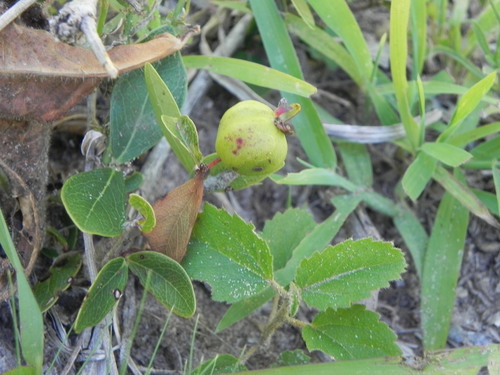
iNaturalist· cc0
no rights reserved, uploaded by Connor Margetts
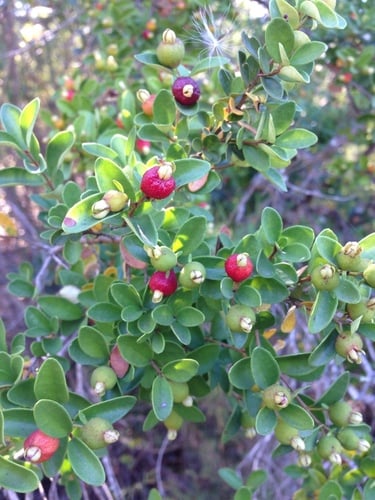
iNaturalist· cc-by-nc
(c) andreafound, some rights reserved (CC BY-NC)
iNaturalist· cc-by-nc
(c) andreafound, some rights reserved (CC BY-NC)
Summary
Source: WikipediaCalytrix tetragona, commonly known as common fringe-myrtle is a species of flowering plant in the myrtle family Myrtaceae and is endemic to all states of Australia. It is an erect or spreading shrub with linear to narrowly egg-shaped leaves and dense clusters of white or pink flowers with about 23 to 45 stamens.
Description
A shrub. It grows about 1-2 m tall. It can spread 0.8-2 m wide. It has a smell. It has many stems from the base. The branches are slender and often arch over. The leaves are narrow and about 1 cm long by 1 mm wide. They often have finely fringed edges. The flowers are white or pink and star-like. They are 1.5 cm across. They occur in dense clusters. These are in the axils of upper leaves. The fruit is bristly and deep purple-brown. The plant turns purplish-red after petals drop.
Edible Uses
The fruit is edible.
Distribution
It grows in heathlands near the coast. It is a temperate plant. They require well drained, light textured soil. Soils of low nutrient content are best. It can grow in semiarid places. It suits hardiness zones 8-10. Arboretum Tasmania.
Where It Grows
Australia*, Tasmania*,
Notes
There are about 70-75 Calytrix species.
References (24)
- Bodkin, F., 1991, Encyclopedia Botanica. Cornstalk publishing, p 206
- Cameron, M., (Ed.) 1981, A Guide to Flowers & Plants of Tasmania. Reed p 104
- Cherikoff V. & Isaacs, J., The Bush Food Handbook. How to gather, grow, process and cook Australian Wild Foods. Ti Tree Press, Australia p 194
- Collier, P., 1993, Woodland Wild flowers of Tasmania. Plant Identikit. Society for growing Australian Plants Tasmania Region. Hobart.
- Cronin, L., 1989, The Concise Australian Flora. Reed. p 83
Show all 24 references Hide references
- Curtis, W.M., 1956, The Students Flora of Tasmania Vol 1 p 194
- Dashorst, G.R.M., and Jessop, J.P., 1998, Plants of the Adelaide Plains & Hills. Botanic Gardens of Adelaide and State Herbarium. p 106
- Elliot, W.R., & Jones, D.L., 1982, Encyclopedia of Australian Plants suitable for cultivation. Vol 2. Lothian. p 453
- Etherington, K., & Imwold, D., (Eds), 2001, Botanica's Trees & Shrubs. The illustrated A-Z of over 8500 trees and shrubs. Random House, Australia. p 166
- Greig, D., 1996, Flowering Natives for Home Gardens. Angus & Robertson. p 106
- Grieg, D., 2002, A photographic guide to Wildflowers of South-eastern Australia. New Holland. p 80
- Hibbert, M., 2002, The Aussie Plant Finder 2002, Florilegium. p 51
- Holliday, I., 1979, A Field Guide to Australian Native Shrubs. Rigby. p 52
- Hunter, J. T. & Sheringham, P., 2006, Vegetation and Floristics of Melville Range Nature Reserve. A Report to the New South Wales Parks and Wildlife Service. p 165
- Lord, E.E., & Willis, J.H., 1999, Shrubs and Trees for Australian gardens. Lothian. p 153
- Minchin, R.F., Tasmanian Wildflowers. A Field Guide. Volume one. Regal Publications, Launceston p 112
- Molyneux, B & Forrester, S., 1997, The Austraflora A-Z of Australian Plants. Reed. p 59
- Nov. Holl. pl. 2:8, t. 146. 1806
- Paczkowska, G . & Chapman, A.R., 2000, The Western Australian Flora. A Descriptive Catalogue. Western Australian Herbarium. p 355
- Tasmanian Herbarium Vascular Plants list p 40
- Whiting, J. et al, 2004, Tasmania's Natural Flora. Tasmania's Natural Flora Editorial Committee PO Box 194, Ulverstone, Tasmania, Australia 7315 p 222
- Williams, K.A.W., 1999, Native Plants of Queensland Volume 4. Keith A.W. Williams North Ipswich, Australia. p 92
- Woolmore, E et al, 2002, King Island Flora: A Field Guide. p 60
- Young, J., (Ed.), 2001, Botanica's Pocket Trees and Shrubs. Random House. p 176