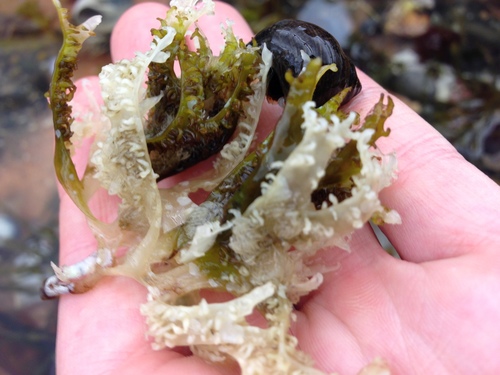
Gigartina skottsbergii
Setchell & N. L. Gardner
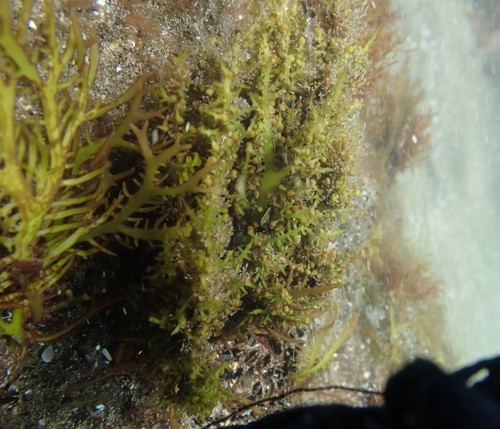
iNaturalist· cc-by-nc
(c) Cecilia Paula Alonso, some rights reserved (CC BY-NC)
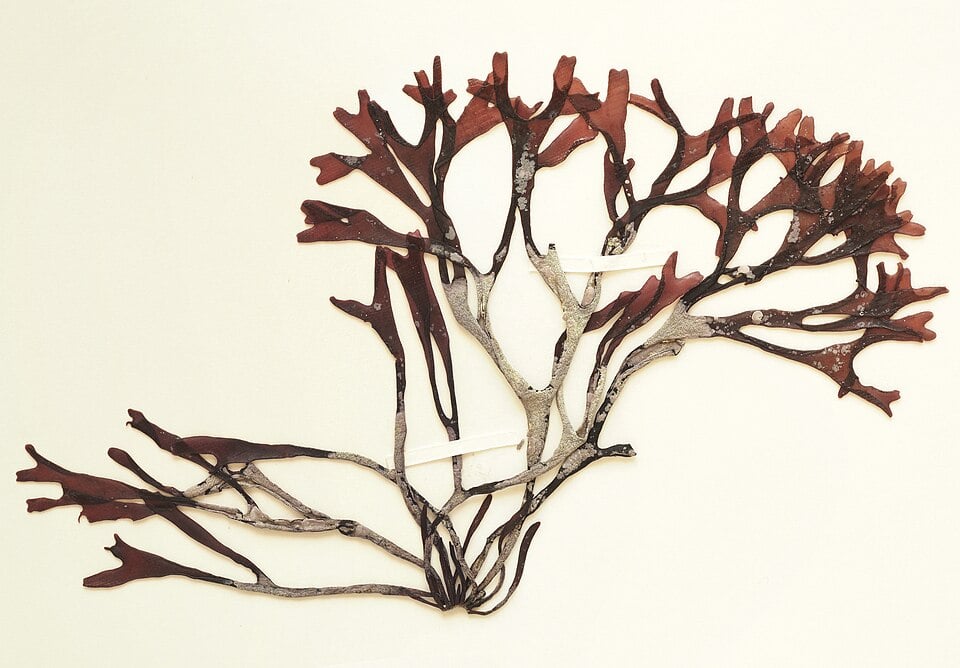
iNaturalist· cc-by-nc
(c) Cecilia Paula Alonso, some rights reserved (CC BY-NC)
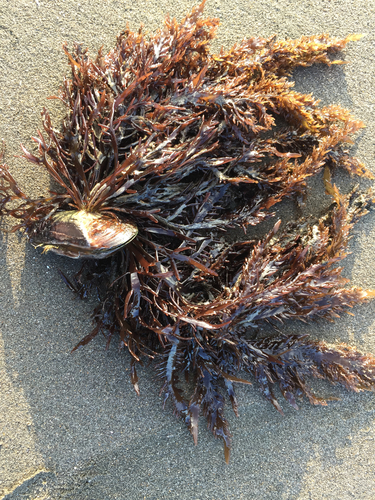
iNaturalist· cc-by-nc
(c) María Bagur, some rights reserved (CC BY-NC)
Description
A temperate seaweed belonging to the family Gigartinaceae, valued for carrageenan production.
This description is brief — help expand it
Edible Uses
The seaweed is used as a source of carrageenan for culinary and commercial applications.
Traditional Uses
It is used for carrageenan.
This uses section is brief — help expand it
Known Hazards
Following inhalation, chloromethane is rapidly absorbed into the bloodstream and distributed throughout the body's tissues. It is primarily metabolized through conjugation with glutathione by the GST enzyme. This process depletes cellular glutathione levels and transforms the chloromethane into toxic intermediates, including formaldehyde and formate. These products are eventually integrated into the "one-carbon pool" for biosynthesis or exhaled as carbon dioxide. A secondary, less dominant metabolic pathway involves oxidation by cytochrome P450. Methyl chloride is considered to act as a significant central nervous system (CNS) depressant. Acute inhalation produces effects similar to alcohol intoxication, including respiratory depression, dizziness, blurred vision, lack of coordination, and slurred speech; severe cases can progress to convulsions, coma, and death. Occupational safety standards have established a threshold limit value (TLV) and a maximum allowable concentration (MAC) of 50 ppm as a time-weighted average to mitigate these risks. Prolonged or repeated exposure has been linked to potential mutagenic effects and chronic organ toxicity in animal models. However, the EPA classifies its carcinogenic potential in humans as "cannot be determined" due to species-specific metabolic differences (specifically the activity of the CYP2E1 enzyme in mouse kidneys but not in humans).
Distribution
It is a temperate plant.
Where It Grows
Antarctica, Argentina, Chile, South America,
References (2)
- http://www.seavegetables.com
- Zemke-White, W. L. & Ohno, M., 1999, World seaweed utilisation: An end-of-century summary. Journal of Applied Phycology 11: 369-376