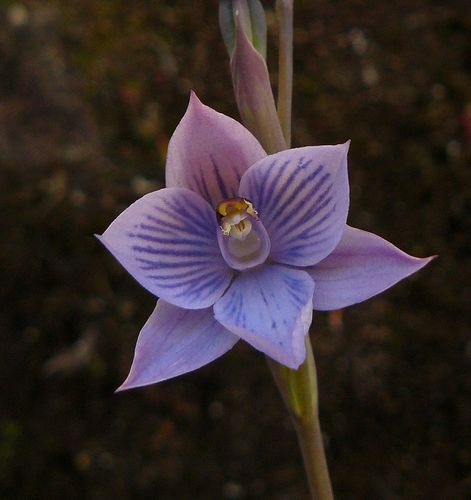
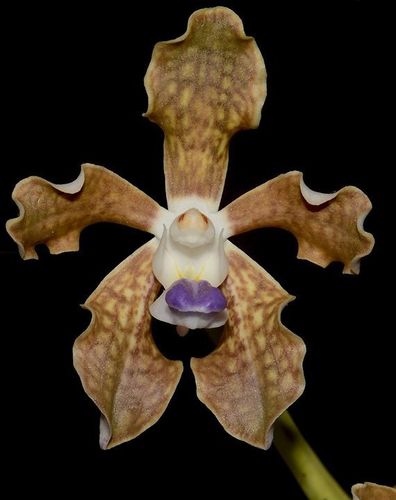
Calypso bulbosa
(L.) Oakes
Fairyslipper, Venus's slipper
iNaturalist· cc-by-sa
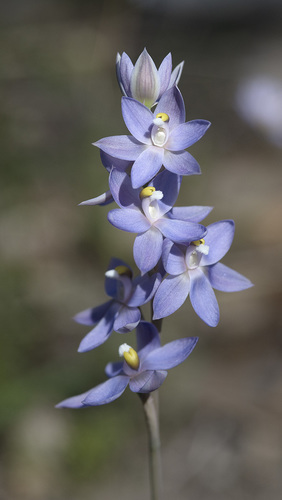
(c) J Brew, some rights reserved (CC BY-SA), uploaded by J Brew
iNaturalist· cc-by-sa
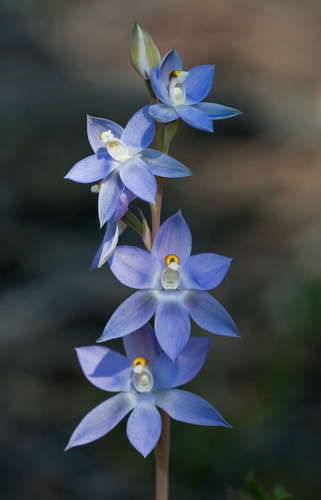
(c) J Brew, some rights reserved (CC BY-SA)
iNaturalist· cc-by-sa
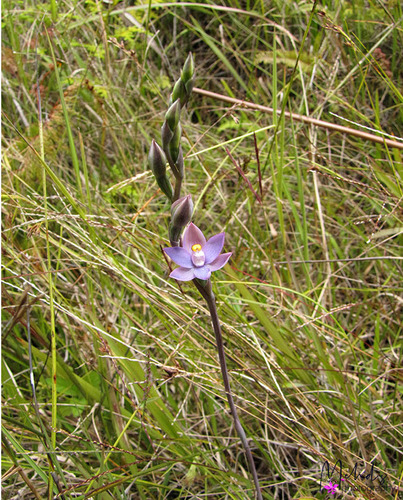
(c) Douglas Goldman, some rights reserved (CC BY-SA), uploaded by Douglas Goldman
Summary
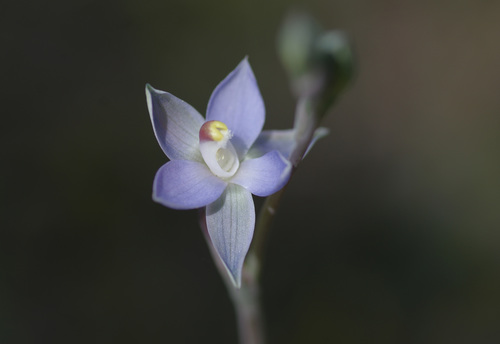
Source: WikipediaCalypso is a genus of orchids containing one species, Calypso bulbosa, known as the calypso orchid, fairy slipper or Venus's slipper. It is a perennial member of the orchid family found in undisturbed northern and montane forests. It has a small pink, purple, pinkish-purple, or red flower accented with a white lip, darker purple spottings, and yellow beard. The genus Calypso takes its name from the Greek signifying concealment, as they tend to favor sheltered areas on conifer forest floors. The specific epithet, bulbosa, refers to the bulb-like corms.
Description
A small orchid. It is about 20 cm high. It has a single leaf. This can be 3-6 cm long by 2-5 cm wide. It is oval in shape and has a wavy edge. The leaf lies close to the ground. There is an underground storage corm. It is about 1-2 cm across. The flower is single and nodding. It is about 3-4 cm long.
Edible Uses
Edible Parts: Root Edible Uses: Bulb - raw or cooked. Rather small. The corms have a rich, butter-like quality. They were usually boiled by the North American Indians before being eaten, though young maidens would eat them raw as they were believed to increase the size of the bust.
Traditional Uses
The corms are boiled and eaten.
This uses section is brief — help expand it
Medicinal Uses
Antispasmodic Epilepsy The bulbs have been chewed or the flowers sucked in the treatment of mild epilepsy.
Distribution
It is a cold temperate plant. It forms dense colonies in damp areas in coniferous forests. They are frost tolerant. It requires cool conditions. It grows in Arctic regions and in the Rocky Mountains. In Canada it grows from sea level to 1,400 m altitude. In Sichuan and Yunnan.
Where It Grows
Asia, Canada, China, Europe, Japan, Korea, Mongolia, North America, Tibet, USA,
Cultivation
It can be grown in a mixture of leaf mould and coarse sand. It should be watered during its growing stages.
Propagation
Seed - we have no information on this species but, like all members of the orchid family, the seed of this species is extremely simple, it has a minute embryo surrounded by a single layer of protective cells. It contains very little food reserves and depends upon a symbiotic relationship with a species of soil-dwelling fungus. The fungal hyphae invade the seed and enter the cells of the embryo. The orchid soon begins to digest the fungal tissue and this acts as a food supply for the plant until it is able to obtain nutrients from decaying material in the soil. Surface sow the seed, preferably as soon as it is ripe, in the greenhouse and do not allow the compost to dry out. It is best to use some of the soil that is growing around established plants in order to introduce the fungus, or to sow the seed around a plant of the same species and allow the seedlings to grow on until they are large enough to move. Division in autumn. Make sure that you keep plenty of soil with each plant. It is also said to be possible to transplant orchids after they have flowered but whilst they are still in leaf. Grow on for at least the first year before potting up and do not plant out until the plants are 2 - 4 years old. Division of the tubers as the flowers fade. This species produces a new tuber towards the end of its growing season. If this is removed from the plant as its flowers are fading, the shock to the plant can stimulate new tubers to be formed. The tuber should be treated as being dormant, whilst the remaining plant should be encouraged to continue in growth in order to give it time to produce new tubers. Division can also be carried out when the plant has a fully developed rosette of leaves but before it comes into flower. The entire new growth is removed from the old tuber from which it has arisen and is potted up, the cut being made towards the bottom of the stem but leaving one or two roots still attached to the old tuber. This can often be done without digging up the plant. The old tuber should develop one or two new growths, whilst the new rosette should continue in growth and flower normally.
Other Uses
None known Special Uses
Notes
There is only one Capypso species.
Synonyms
Also Known As
Calypso orchid
References (8)
- Bircher, A. G. & Bircher, W. H., 2000, Encyclopedia of Fruit Trees and Edible Flowering Plants in Egypt and the Subtropics. AUC Press. p 75 (As Calypso borealis)
- Cormack, R. G. H., 1967, Wild Flowers of Alberta. Commercial Printers Edmonton, Canada. p 54
- Holliman, J., (Ed.), 2002, Orchids. Botanica's Pocket. Random House, Australia. p 119
- Kermath, B. M., et al, 2014, Food Plants in the Americas: A survey of the domesticated, cultivated and wild plants used for Human food in North, Central and South America and the Caribbean. On line draft. p 167
- Plants for a Future database, The Field, Penpol, Lostwithiel, Cornwall, PL22 0NG, UK. http://www.scs.leeds.ac.uk/pfaf/
Show all 8 references Hide references
- Porsild, A.E., 1974, Rocky Mountain Wild Flowers. Natural History Series No. 2 National Museums of Canada. p 110
- Turner, N., 1995, Food Plants of Coastal First Peoples. Royal BC Museum Handbook p 46
- Urgamal, M., et al, 2014, Conspectus of the Vascular Plants of Mongolia. Mongolia Academy of Sciences Institute of Botany and National University of Mongolia Department of Biology. p 42