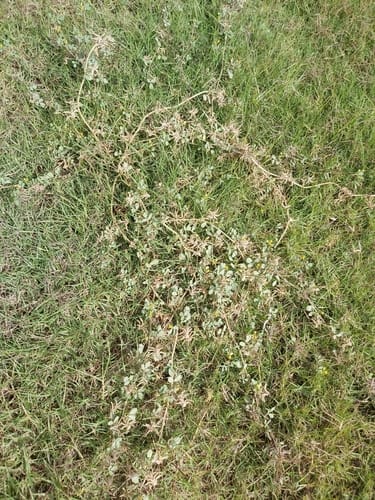
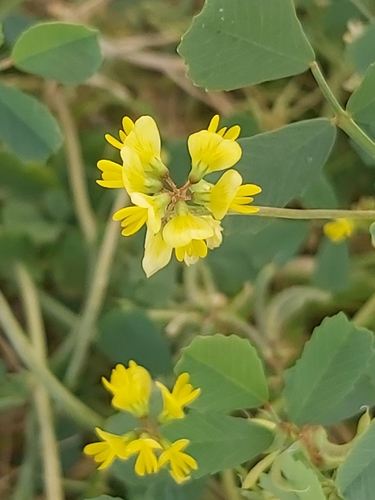
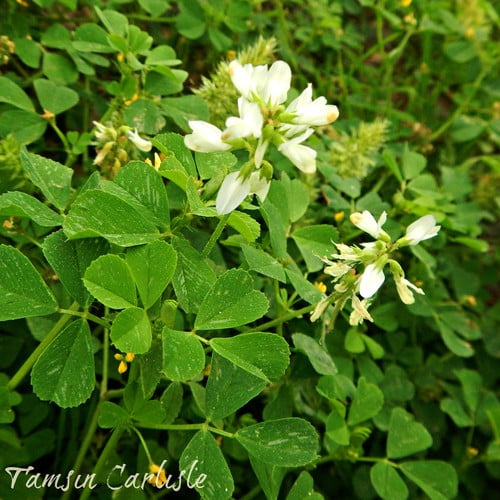
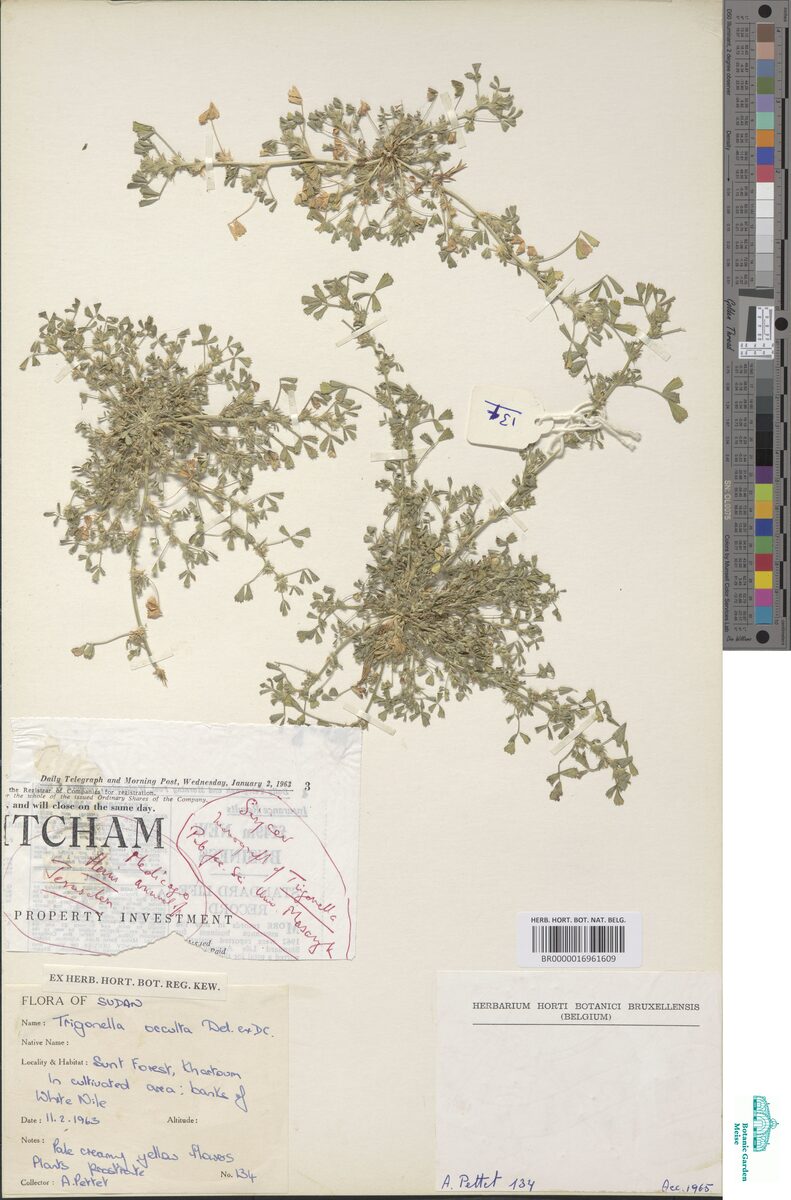
Crotalaria brevidens
Benth.
Slenderleaf rattlepod
iNaturalist· cc-by-nc
(c) Kurt Miller, some rights reserved (CC BY-NC), uploaded by Kurt Miller
gbif· cc-by-sa
Abinala Shonga
iNaturalist· cc-by-nc
(c) Kurt Miller, some rights reserved (CC BY-NC)
Description
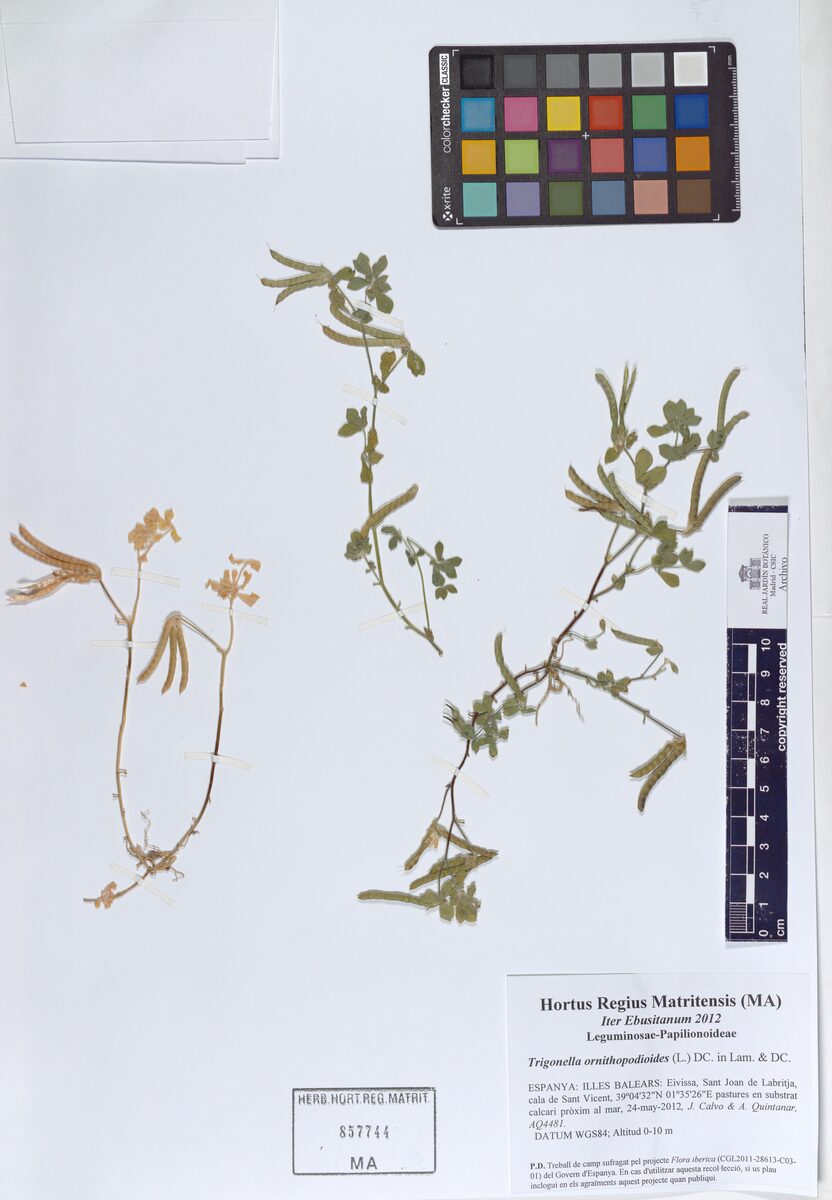
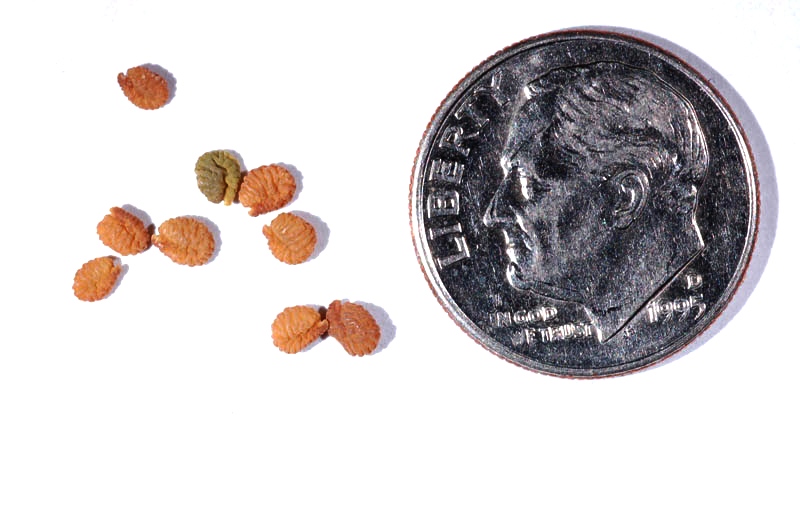
A much branched herb. It lives for one or sometimes more years. It grows 2 m tall. The branches curve upwards and have soft hairs. The leaves are alternate. They have 3 leaflets. The leaf stalks are 2-6 cm long. The leaflets are narrow and 4-10 cm long by 1-2 cm wide. They are hairy underneath. The flowers are in a group at the top of the plant. These can be 50 cm long. There are many narrow flowers. They are yellow with red veins. The fruit is a narrow pod 4-5 cm long and 1 cm wide. It is slightly curved at the ends. There are many seeds that are 3 mm long and yellow to orange.
Edible Uses
The tender leaves are cooked as a vegetable, often with potash and peanuts to improve flavor, and can be dried for storage. Flowers are also listed as edible.
Traditional Uses
Caution: It is bitter due to Pyrrolizidine alkaloids. If eaten with corchorus or with milk it is less bitter. The tender leaves are cooked and eaten as a vegetable. They are cooked with potash and have peanuts added to improve the flavour. Leaves can be dried and stored for later use. The seeds are poisonous.
Medicinal Uses
A number of medicinal applications have been reported for this plant. The leaves are used to cure stomach-ache, swellings and malaria. The roots are used to treat sore throat and mouth thrush.
Known Hazards
The plant is bitter due to pyrrolizidine alkaloids. The seeds are poisonous and should not be eaten.
Distribution
A tropical plant. It grows between 500-2,700 m above sea level. It can grow in arid places.
Where It Grows
Africa, Burundi, Cameroon, Central Africa, Central African Republic, CAR, Chad, Congo, Dominican Republic, East Africa, Eswatini, Ethiopia, Kenya, Malawi, Nigeria, Rwanda, Southern Africa, South Sudan, Sudan, Swaziland, Tanzania, Uganda, West Africa, West Indies, Zambia, Zimbabwe,
Cultivation
Plants are grown from seed. Seed germinate in 3-4 days. It responds well to natural compost and manures.
Propagation
Seed - sown broadcast or in rows. Pre-soaking the seed for 12 hours in warm water can make germination faster and more uniform. The seed germinates in 3 - 4 days, early growth is slow and it may take about 8 weeks until the first harvest is ready. The plant dies after about 6 months.
Other Uses
A strong fibre is obtained from the bark and stems. It is occasionally used for the fibre obtained from its stem. The seeds contain a gum that is extractable by dry milling. Crotalaria brevidens is used as a cover crop and green manure because its roots nodulate profusely and fix nitrogen. It is an excellent source of organic matter - its fresh foliage usually contains between 0.5 - 1% nitrogen, which when incorporated into the soil improves fertility and nutrient retention, while providing structure to the soil by enriching it of humus and retarding erosion. A recent use for the plant is as an agent to promote the germination of Striga, a parasitic plant that is a major problem for maize and millet growers. In the presence of Crotalaria, Striga germinates and it will subsequently die due to the lack of a suitable host plant. Crotalaria is also known to suppress Meloidogyne nematode populations.
Production
Plants are ready for harvesting after 8 weeks. Harvesting can continue for 4 months.
Other Information
It is a cultivated food plant. It is a popular leafy vegetable in some places.
Notes
There are about 550 Crotalaria species. They are mostly tropical. It suppresses Meloidogyne nematodes in the soil.
Nutrition
| Part | Moisture | kJ | kcal | Protein | Vit A | Vit C | Iron | Zinc |
|---|---|---|---|---|---|---|---|---|
| Leaves | 74.5 | — | — | 8.8 | — | — | 38 | — |
Synonyms
Also Known As
Ethiopian rattlebox, Kamususu, Kimiro, Miro, Mitoo, Mutoo
References (24)
- Abukutsa-Onyango, M.O., 2004. Crotalaria brevidens Benth. [Internet] Record from Protabase. Grubben, G.J.H. & Denton, O.A. (Editors). PROTA (Plant Resources of Tropical Africa), Wageningen, Netherlands. < http://database.prota.org/search.htm>. Accessed 15 October 2009.
- Abukutsa-Onyango, Mary, 2007, The diversity of cultivated African leafy vegetables in three communities in western Kenya. AJFAND, Volume 7, No. 3
- Acipa, A. et al, 2013, Nutritional Profile of some Selected Food Plants of Otwal and Ngai Counties, Oyam District, Northern Uganda. African Journal or Food, Agriculture, Nutrition and Development. 13(2)
- East African Herbarium records, 1981,
- Etkin, N.L. (Ed.), 1994, Eating on the Wild Side, Univ. of Arizona. p 50
Show all 24 references Hide references
- Fowler, D. G., 2007, Zambian Plants: Their Vernacular Names and Uses. Kew. p 80
- Fox, F. W. & Young, M. E. N., 1982, Food from the Veld. Delta Books. p 225 (As var. intermedia)
- Grivetti, L. E., 1980, Agricultural development: present and potential role of edible wild plants. Part 2: Sub-Saharan Africa, Report to the Department of State Agency for International Development. p 42
- Grubben, G. J. H. and Denton, O. A. (eds), 2004, Plant Resources of Tropical Africa 2. Vegetables. PROTA, Wageningen, Netherlands. p 229
- Kew Bull. 22:266. 1968
- Long, C., 2005, Swaziland's Flora - siSwati names and Uses http://www.sntc.org.sz/flora/
- Maundu, P. et al, 1999, Traditional Food Plants of Kenya. National Museum of Kenya. 288p
- Molla, A., Ethiopian Plant Names. http://www.ethiopic.com/aplants.htm (As Crotalaria brevidens)
- Mutie, F. M., et al, 2023, Important Medicinal and Food Taxa (Orders and Families) in Kenya, Based on Three Quantitative Approaches. Plants 2023, 12, 1145
- Ngugi, G., 2000, Case Study from Kenya on Indigenous Wild Vegetables. Paper 4 Workshop in Kenya 1999. p 34
- Oniang’o, R., Grum, M. and Obel-Lawson, E., editors. 2008. Developing African leafy vegetables for improved nutrition. Regional workshop, 6-9 December 2005. Rural Outreach Program, Nairobi, Kenya. p 3
- Peters, C. R., O'Brien, E. M., and Drummond, R.B., 1992, Edible Wild plants of Sub-saharan Africa. Kew. p 131
- Purseglove, J.W., 1968, Tropical Crops Dicotyledons, Longmans. p 250 (As Crotalaria intermedia)
- Royal Botanic Gardens, Kew (1999). Survey of Economic Plants for Arid and Semi-Arid Lands (SEPASAL) database. Published on the Internet; http://www.rbgkew.org.uk/ceb/sepasal/internet [Accessed 28th April 2011]
- Sitzungsber. Kaiserl. Akad. Wiss., Wien, Math.-Naturwiss. Cl., Abt. 1, 50:362. 1865 (As Crotalaria intermedia)
- Smith, F. I. and Eyzaquirre, P., 2007, African leafy vegetables: Their role in the World Health Organization's global Fruit and Vegetables Initiative. AJFAND, Vol. 7 No. 3
- Terra, G.J.A., 1973, Tropical Vegetables. Communication 54e Royal Tropical Institute, Amsterdam, p 41 (As Crotalaria intermedia)
- Weinberger, K., Msuya J., 2004, Indigenous Vegetables in Tanzania. Significance and Prospects. Technical Bulletin No. 31 AVRDC, Taiwan/FAO p 4
- World Checklist of Useful Plant Species 2020. Royal Botanic Gardens, Kew