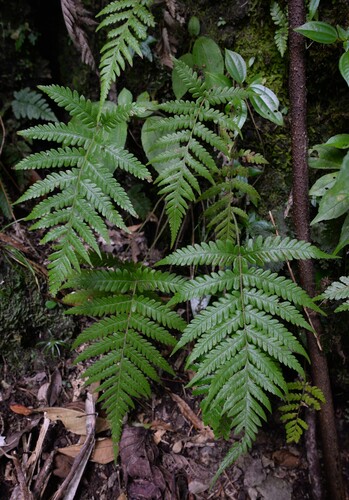
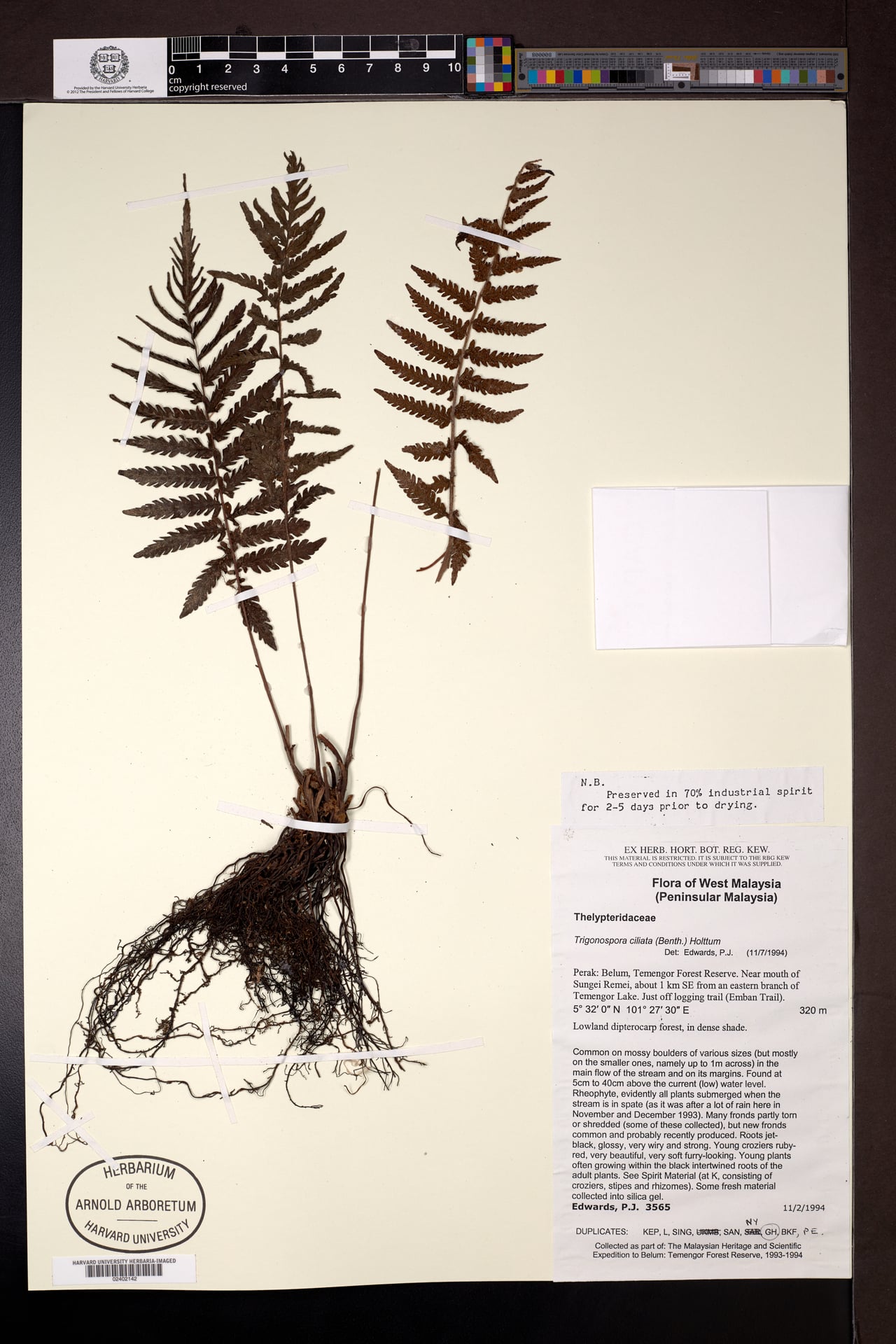
Cyclosorus gongylodes
(Schkuhr) Link.
Limba
iNaturalist· cc-by-nc
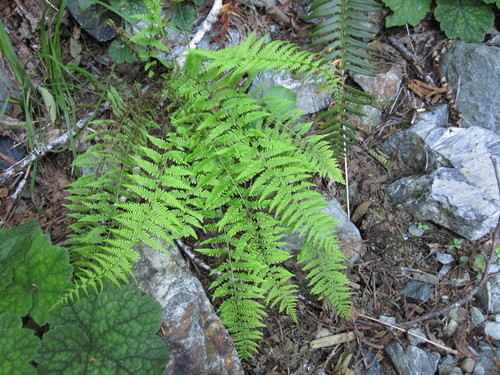
(c) Carrie Tribble, some rights reserved (CC BY-NC)
iNaturalist· cc-by-nc
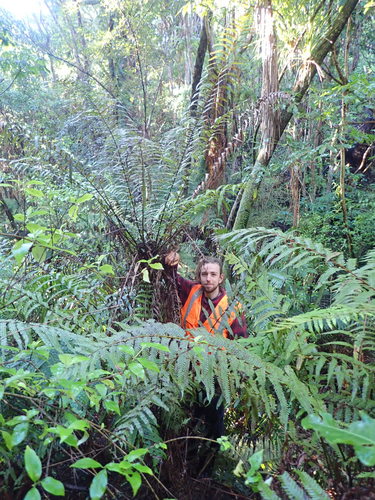
(c) Carrie Tribble, some rights reserved (CC BY-NC)
iNaturalist· cc-by-nc
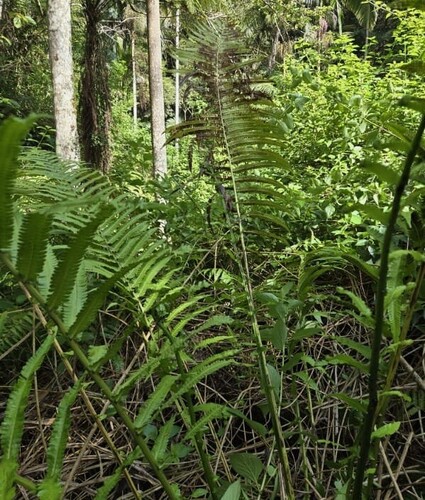
(c) Carrie Tribble, some rights reserved (CC BY-NC)
Description
A fern. It has fronds with leaflets along the stalk. These are twice divided. It grows 1.2 m high and spreads 1 m wide. The rhizome is creeping. The leaflets are oval or triangle shaped.
Edible Uses
The leaves and fronds are eaten as a vegetable. The roots are also edible.
Traditional Uses
The leaves or fronds are eaten as a vegetable.
This uses section is brief — help expand it
Medicinal Uses
C. interruptus is used in herbal medicine for sores, liver diseases, gonorrhea, cough, and malaria.
Distribution
It is a tropical plant. It grows in wasteland in the lowlands of East and West Africa. It grows in swampy, poorly drained soil. It grows in freshwater swamps. It is damaged by frost or drought.
Where It Grows
Africa, Asia, Australia, Central Africa, Chuuk, East Africa, FSM, Gabon, Gambia, Madagascar, Pacific, Senegal, West Africa,
Cultivation
Plants can be grown from spores or by division.
References (7)
- Andrews, S.B., 1990, Ferns of Queensland. A handbook to the ferns and fern allies. Queensland DPI p 359 (Now Cyclorus interruptus)
- Bodkin, F., 1991, Encyclopedia Botanica. Cornstalk publishing, p 312
- Burkill, H. M., 1985, The useful plants of west tropical Africa, Vol. 5. Kew.
- Cribb, A.B. & J.W., 1976, Wild Food in Australia, Fontana. p 160
- Grubben, G. J. H. and Denton, O. A. (eds), 2004, Plant Resources of Tropical Africa 2. Vegetables. PROTA, Wageningen, Netherlands. p 561
Show all 7 references Hide references
- Maroyi, A., 2014, Not just minor wild edible forest products: consumption of pteridophytes in sub-Saharan Africa. Journal of Ethnobiology and Ethnomedicine. 10:78
- Pham-Hoang Ho, 1999, An Illustrated Flora of Vietnam. Nha Xuat Ban Tre. p 131 ?