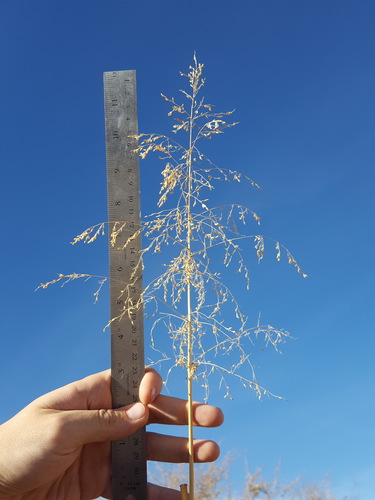
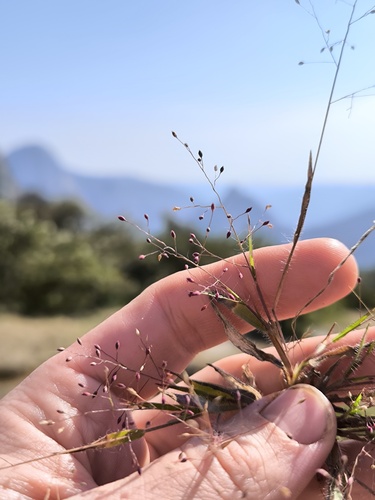
Stipagrostis plumosa
(Linn.) Munro ex T. Anderson
iNaturalist· cc-by-nc
(c) Ron Frumkin, some rights reserved (CC BY-NC), uploaded by Ron Frumkin
iNaturalist· cc-by
(c) Denys Vynokurov, some rights reserved (CC BY)
Description
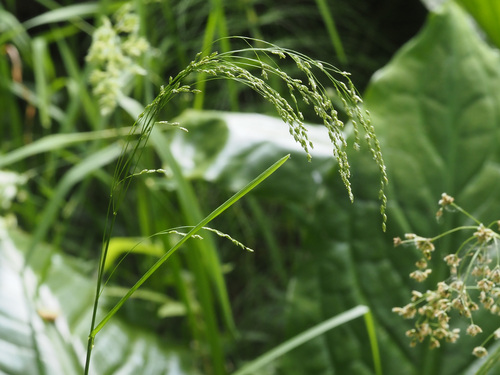
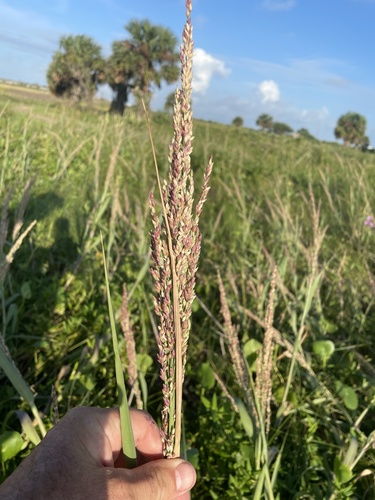
A herb. It is a grass that grows in dense tufts. It keeps growing from year to year except in very dry areas where it is an annual.
This description is brief — help expand it
Edible Uses
The seeds and grain are eaten as a cereal.
Distribution
It is a tropical plant. It grows in the Sahara in West Africa. It grows in areas with an annual rainfall between 50-400 mm. It can grow in arid places.
Where It Grows
Afghanistan, Africa, Algeria, Arabia, Armenia, Azerbaijan, Bahrain, Caucasus, Central Africa, Central Asia, Chad, China, Cyprus, East Africa, Egypt, India, Iran, Iraq, Israel, Jordan, Kuwait, Kyrgyzstan, Libya, Mali, Mauritania, Mediterranean, Middle East, Morocco, Niger, North Africa, Oman, Pakistan, Qatar, Sahara, Saudi Arabia, Senegal, Southern Africa, Sudan, Syria, Tajikistan, Tunisia, Turkey, Türkiye, Turkmenistan, United Arab Emirates, UAE, Uzbekistan, West Africa, Yemen, Zimbabwe,
Synonyms
Also Known As
Mali, Nsil
References (6)
- Burkill, H. M., 1985, The useful plants of west tropical Africa, Vol. 2. Kew.
- Jardin, C., 1970, List of Foods Used In Africa, FAO Nutrition Information Document Series No 2.p 1, 56 (As Aristida plumosa subsp. plumosa)
- JSTOR Global Plants edible
- Martin, F.W. & Ruberte, R.M., 1979, Edible Leaves of the Tropics. Antillian College Press, Mayaguez, Puerto Rico. p 193 (As Aristida plumosa subsp. plumosa)
- Royal Botanic Gardens, Kew (1999). Survey of Economic Plants for Arid and Semi-Arid Lands (SEPASAL) database. Published on the Internet; http://www.rbgkew.org.uk/ceb/sepasal/internet [Accessed 4th June 2011]
Show all 6 references Hide references
- World Checklist of Useful Plant Species 2020. Royal Botanic Gardens, Kew