Acacia spectabilis
A. Cunn. ex Benth.
Glory Wattle, Eumung
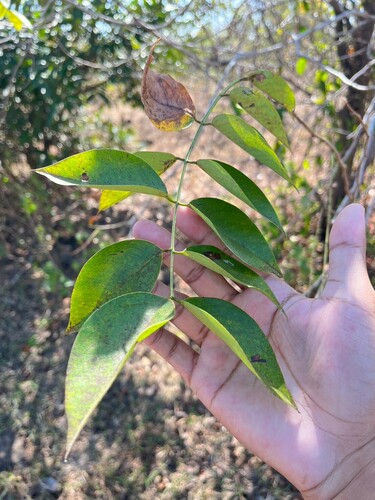
iNaturalist· cc-by-nc
(c) Bruce McLennan, some rights reserved (CC BY-NC), uploaded by Bruce McLennan
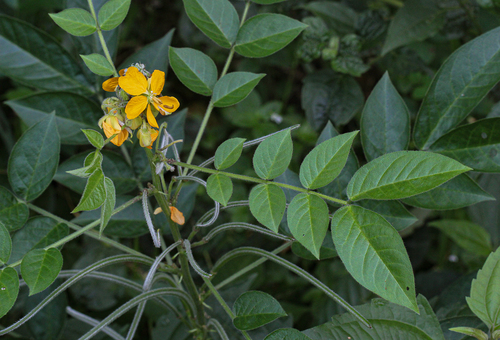
iNaturalist· cc-by-nc
(c) Bruce McLennan, some rights reserved (CC BY-NC), uploaded by Bruce McLennan
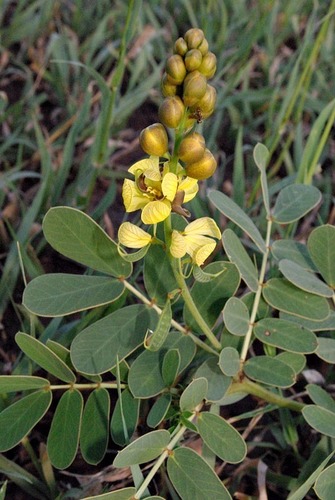
iNaturalist· cc-by-nc
(c) Bruce McLennan, some rights reserved (CC BY-NC), uploaded by Bruce McLennan
Summary
Source: WikipediaAcacia spectabilis, commonly known as Mudgee wattle, is an erect or spreading shrub, endemic to Australia. It grows to between 1.5 and 4 metres high and has pinnate leaves. The bright-yellow globular flowerheads appear in axillary racemes, mostly between July and November in its native range. These are followed by thin leathery pods which are 4–17 cm long and 10–19 mm wide. The species occurs naturally in dry sclerophyll forest and heath in New South Wales and Queensland and is commonly cultivated.
Description
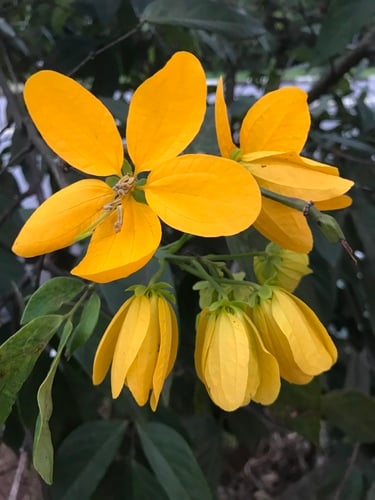
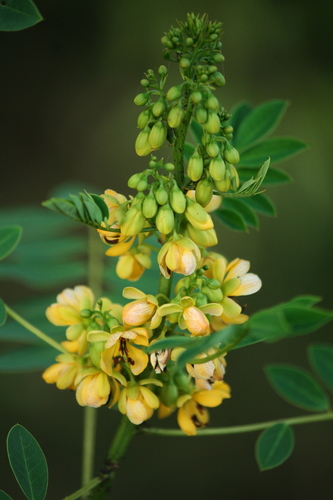
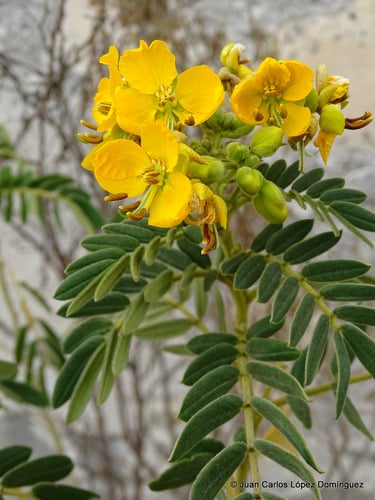
A shrub or small tree. It grows 5 m tall. There are prickles along the stem. The leaves are twice divided and there are 8-18 pairs of pinnae. There are up to 50 pairs of pinnules on each pinnae. The flowers are yellow. They are in large clusters at the ends of branches. The pods are flattened.
Edible Uses
The yellow flowers are stripped from their stems and roasted and eaten, or can be steeped in brandy and sugar, coated with batter, and deep fried.
Traditional Uses
The flowers are stripped from their stems and roasted and eaten. They can be steeped in brandy and sugar, coated with batter and deep fried.
This uses section is brief — help expand it
Distribution
It occurs naturally in New South Wales and Queensland in Australia. (It occurs in the climatic range of 50-75 mm rainfall and the summer hot of 18°C and about 20 frosts in winter.) It prefers medium to heavy soils. It requires an open sunny position. It is drought and frost resistant. It cannot stand poor drainage. It suits hardiness zones 9-11.
Where It Grows
Australia*,
Cultivation
It is grown from seed. The seed need treatment to break the hard seed coat. Normally this is by putting the seeds in very hot water and letting the water cool down overnight then planting the seeds immediately. It can be grown from cuttings but they are fairly difficult to start to grow.
Notes
There are about 1,350 Acacia species. Over 1,000 occur in Australia. Also as Mimosaceae.
Also Known As
Mudgee Wattle, Pilliga wattle
References (12)
- Bodkin, F., 1991, Encyclopedia Botanica. Cornstalk publishing, p 33
- Cribb, A.B. & J.W., 1976, Wild Food in Australia, Fontana. p 162
- Cundall, P., (ed.), 2004, Gardening Australia: flora: the gardener's bible. ABC Books. p 79
- Elliot, W.R., & Jones, D.L., 1982, Encyclopedia of Australian Plants suitable for cultivation. Vol 2. Lothian. p 116
- Etherington, K., & Imwold, D., (Eds), 2001, Botanica's Trees & Shrubs. The illustrated A-Z of over 8500 trees and shrubs. Random House, Australia. p 56
Show all 12 references Hide references
- Facciola, S., 1998, Cornucopia 2: a Source Book of Edible Plants. Kampong Publications, p 151
- Greig, D., 1996, Flowering Natives for Home Gardens. Angus & Robertson. p 40
- Hall, N. et al, 1972, The Use of Trees and Shrubs in the Dry Country of Australia, AGPS, Canberra. p 352
- Lazarides, M. & Hince, B., 1993, Handbook of Economic Plants of Australia, CSIRO. p 6
- London J. Bot. 1:383. 1842
- Lord, E.E., & Willis, J.H., 1999, Shrubs and Trees for Australian gardens. Lothian. p 42
- Steenbeeke, Greg as part of the Plants Directory project. List of plant species from northern NSW that may be used as food plants p 1