Aframomum subsericeum
(Oliv. & D. Hanb.) K. Schum.
Alligator pepper
gbif· cc-by
GBIF
gbif· cc-by-nc-nd
Olivier Lachenaud
gbif· cc-by-nc-sa
MBG
Summary
Source: WikipediaAframomum subsericeum is a species of plant in the ginger family, Zingiberaceae. It was first described by Daniel Oliver and Daniel Hanbury and renamed by Karl Moritz Schumann. The species is divided into the following subspecies: A. s. Glaucophyllum A. s. Subsericeum
Description
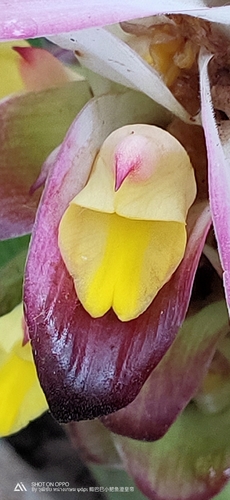
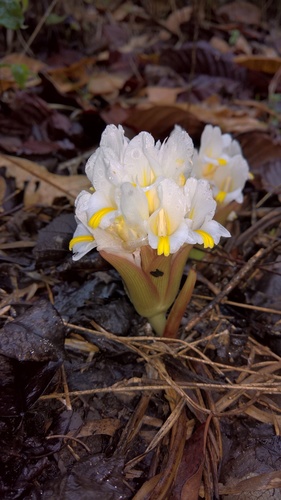
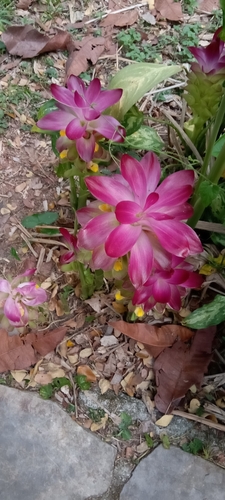
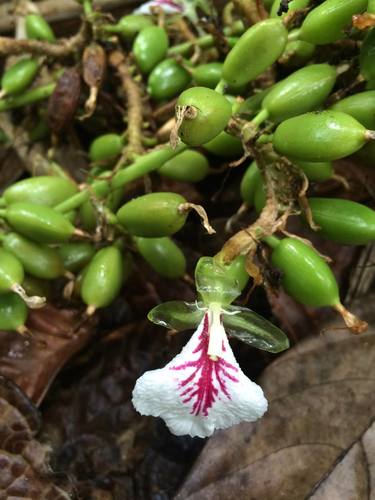
A ginger family herb. It has a creeping rhizome or underground stem. It grows 3 m tall. The leaves are bluish-white underneath. The flowers can be in a cluster at the base of the stem. The fruit are narrow and pear shaped and 8 cm long.
Edible Uses
The fruit including seeds are eaten raw as a fruit, and the seeds are used as a flavouring.
Traditional Uses
The fruit including seeds are eaten raw as a fruit. The seeds are used as a flavouring.
This uses section is brief — help expand it
Distribution
It is a tropical plant.
Where It Grows
Africa, Angola, Cameroon, Central Africa, Central African Republic, CAR, Congo R, Congo DR, Côte d'Ivoire, East Africa, Gabon, Kenya, Ivory Coast, Nigeria, West Africa,
Production
In Central African Republic flowers have been observed from May to July and fruit in November.
Notes
There are about 50 Aframomum species.
Synonyms
Also Known As
Lidulu, Nadeye
References (6)
- Burkill, H. M., 1985, The useful plants of west tropical Africa, Vol. 5. Kew.
- e-monocot.org/taxon/urn:kew.org:wcs:taxon:218418
- Gallois, S., et al, 2020, Methodological priorities in assessing wild edible plant knowledge and use – a case study among the Baka in Cameroon.
- Seidemann J., 2005, World Spice Plants. Economic Usage, Botany, Taxonomy. Springer. p 11
- Termote, C., et al, 2011, Eating from the wild: Turumbu, Mbole and Bali traditional knowledge of non-cultivated edible plants, District Tshopo, DRCongo, Gen Resourc Crop Evol. 58:585-618
Show all 6 references Hide references
- von Katja Rembold, 2011, Conservation status of the vascular plants in East African rain forests. Dissertation Universitat Koblenz-Landau