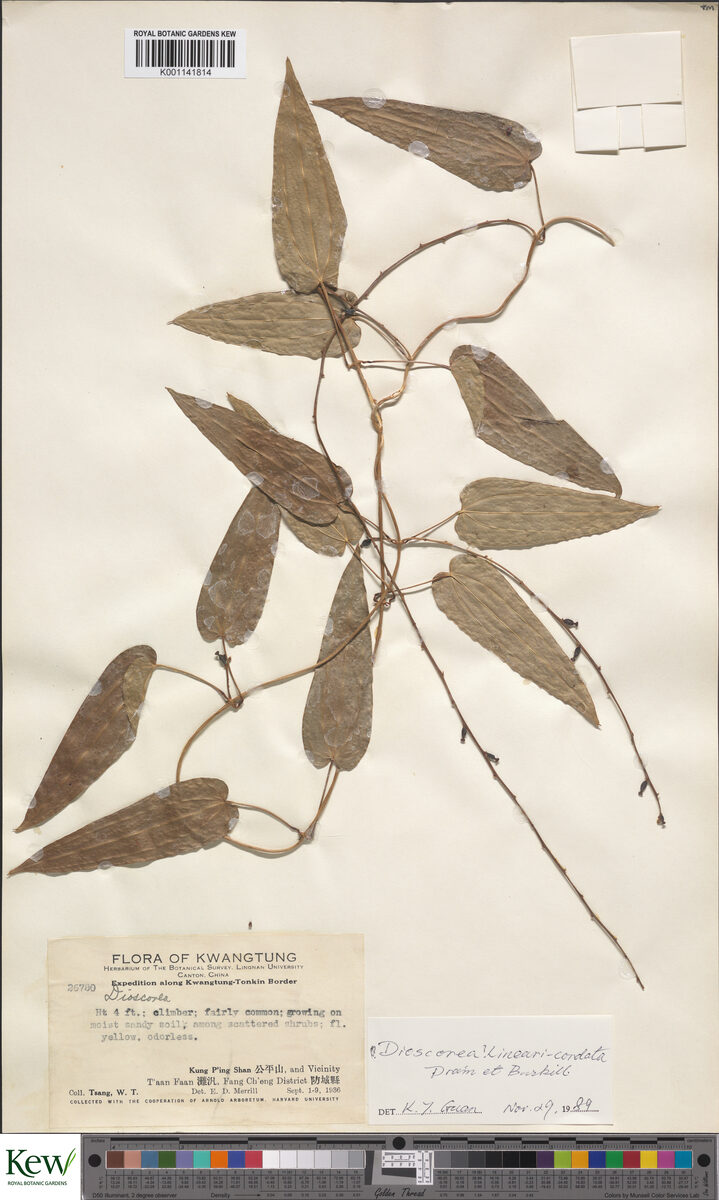
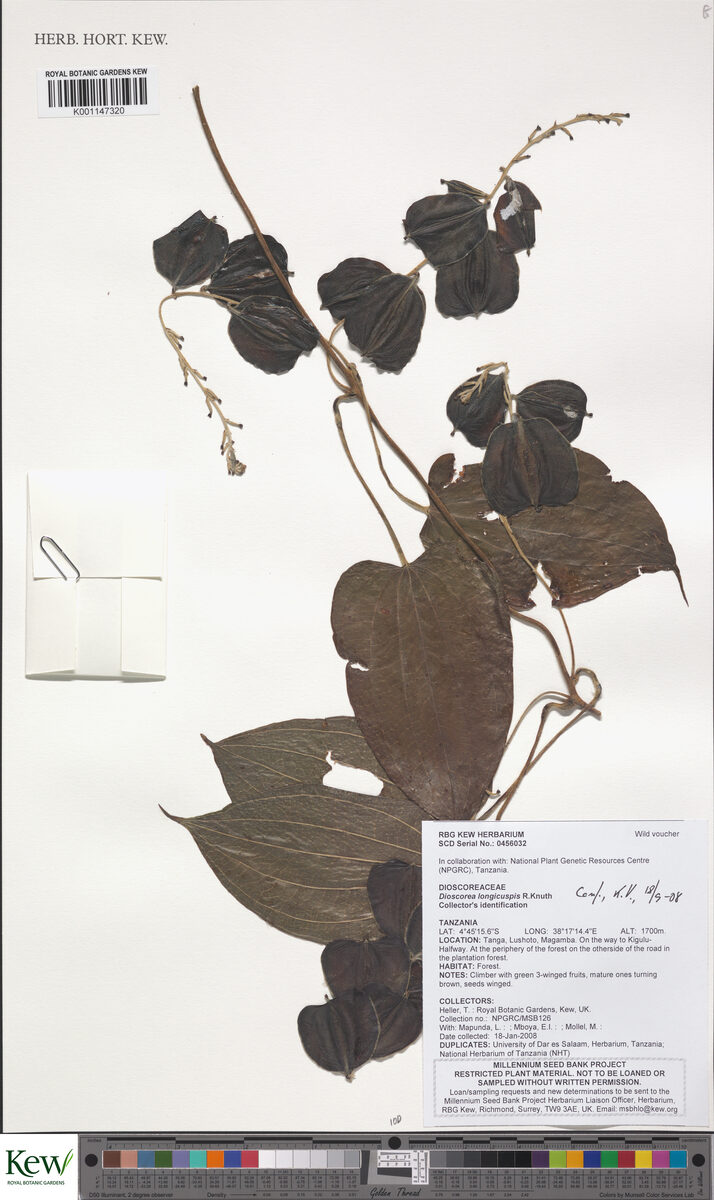
Dioscorea tomentosa
Koenig ex Spreng.
Doyala yam
wikimedia· cc-by-sa
Wikimedia Commons - Roger Culos
wikimedia· cc-by-sa
Wikimedia Commons - Yercaud-elango
Description
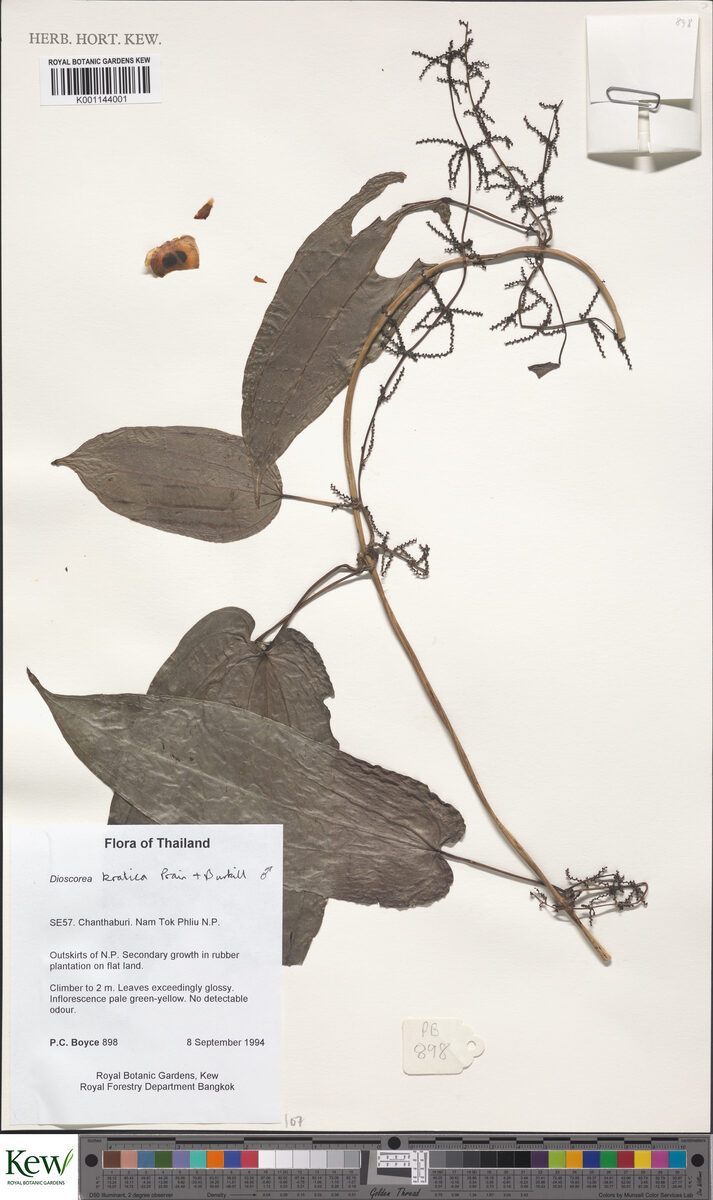
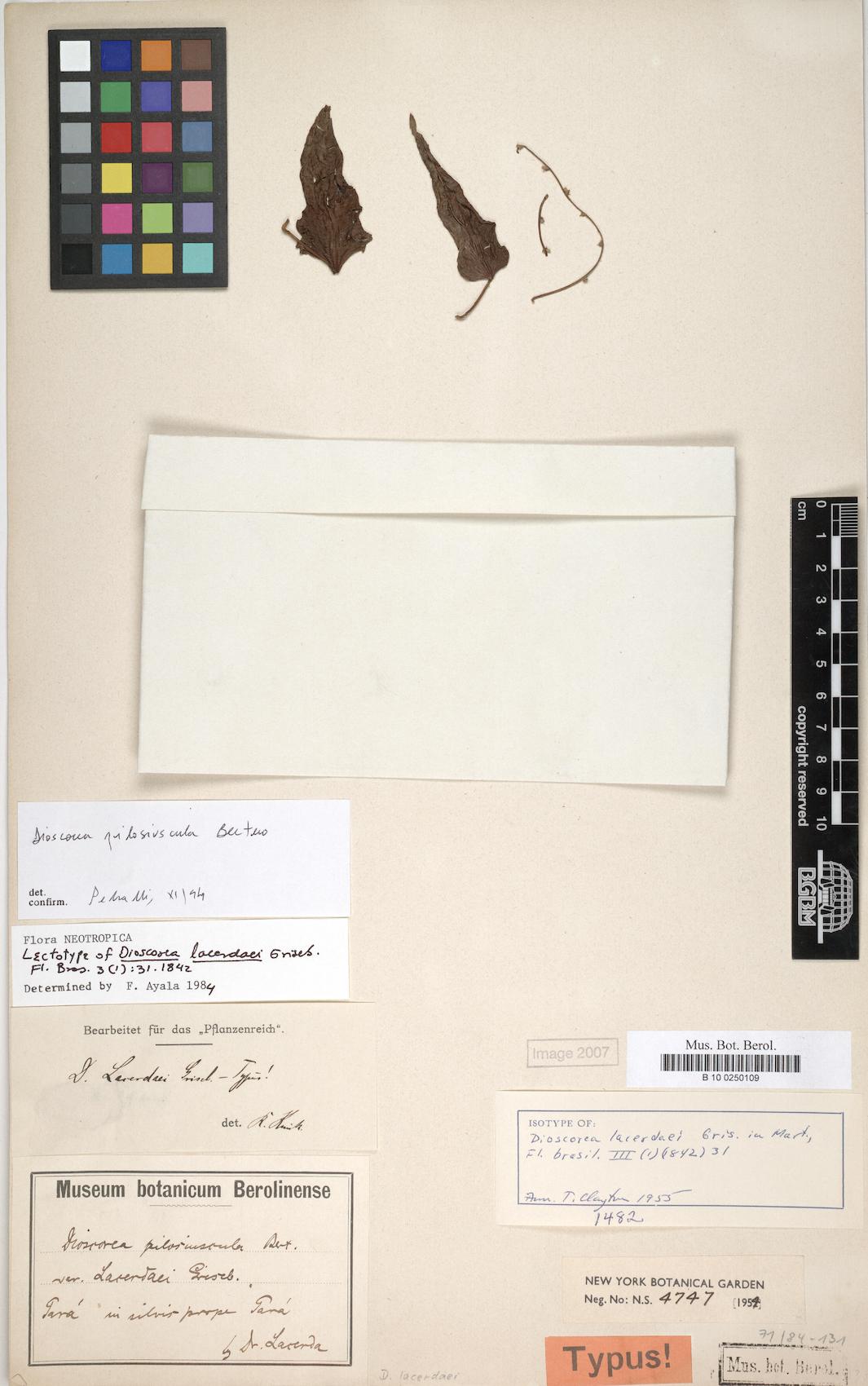
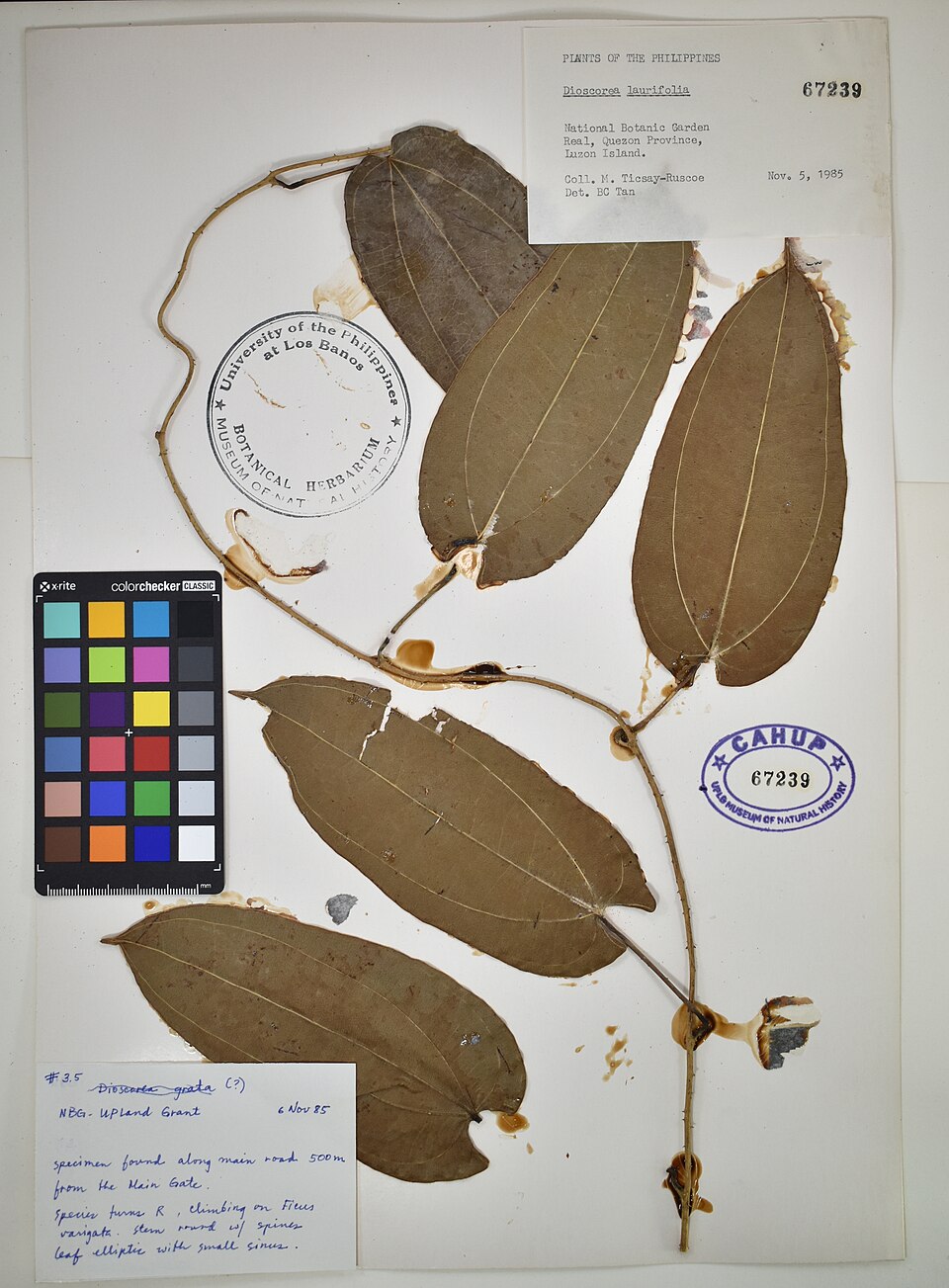
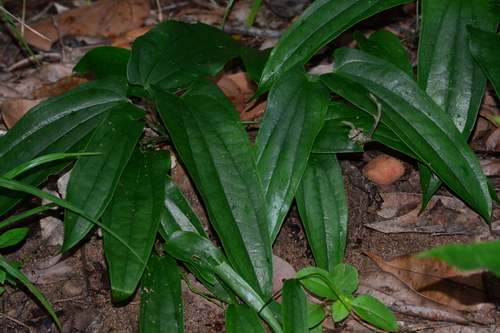
A yam. The vine twines to the left. The leaves have a grey covering. The leaves are alternate. The upper leaves have 3 leaflets and the lower leaves often 5-6 leaflets. The flowers are purple and in spikes in the axils of leaves. The fruit are winged capsules. They have 3 seeds.
Edible Uses
The tuber is cut into pieces, washed in running water for 3 days, then boiled and eaten. It can also be steamed, roasted, or used in curries.
Traditional Uses
The tuber is cut in pieces, then washed in running water for 3 days then boiled and eaten. It is steamed or roasted. They are also used in curries. Caution:
Known Hazards
Caution advised; specific hazard details should be consulted before consumption.
Distribution
It is a tropical plant. It grows on the edge of the forests in the Nilgiri hills. It can be up to 1,400 m above sea level.
Where It Grows
Asia, India, Myanmar, SE Asia, Sri Lanka,
Notes
There are about 650 species of Dioscorea.
Nutrition
| Part | Moisture | kJ | kcal | Protein | Vit A | Vit C | Iron | Zinc |
|---|---|---|---|---|---|---|---|---|
| Tubers | 71.9 | 1714 | — | 8.5 | — | — | 23.7 | 1.1 |
Synonyms
Also Known As
Adavi kiska, Duri sanga, Kyway-pin, Nalaveli kizhangu, Noolvalli, Noorai, Nurai, Rebayan sanga
References (9)
- Arinathan, V., et al, 2007, Wild edibles used by Palliyars of the western Ghats, Tamil Nadu. Indian Journal of Traditional Knowledge. 6(1) pp 163-168
- Arinathan, V., et al, 2009, Nutritional and Anti-nutritional attributes of some under-utilized tubers. Tropical and Subtropical Agroecosystems 10: 273-278
- Hedrick, U.P., 1919, (Ed.), Sturtevant's edible plants of the world. p 276
- Misra, R. C., et al, 2013, Genetic resources of wild tuberous food plants traditionally used in Similipal Biosphere Reserve, Odisha, India. Genetic Resources and Crop Evolution. Vol. 60 No. 2. Springer
- Mohan, V. R. & Kalidass, C., 2010, Nutritional and Antinutritional Evaluation of some Unconventional Wild Edible Plants. Tropical and Subtropical Agroecosystems, 12 (2010): 495- 506
Show all 9 references Hide references
- Rasingam, L., 2012, Ethnobotanical studies on the wild edible plants of Irula tribes of Pillur Valley, Coimbatore district, Tamil Nadu, India. Asian Pacific Journal of Tropical Biomedicine. (2012) S1493-S1497
- Reddy, K. N. et al, 2007, Traditional knowledge on wild food plants in Andhra Pradesh. Indian Journal of Traditional Knowledge. Vol. 6(1): 223-229
- Samydurai, P., et al, 2012, Wild habits of Kolli Hills being staple food of inhabitant tribes of eastern Ghats, Tamil Nadu, India. Indian Journal of Natural Products and Resources. 3(3) September 2012 pp 432-437
- Singh, H.B., Arora R.K.,1978, Wild edible Plants of India. Indian Council of Agricultural Research, New Delhi. p 25