Asparagus cooperi
Baker
Wild asparagus
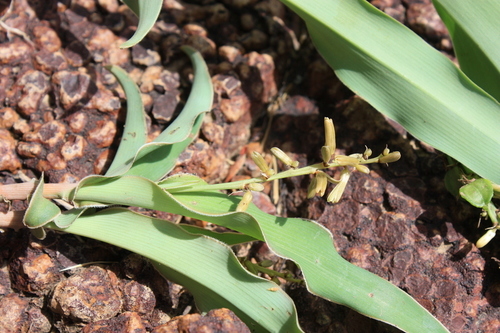
iNaturalist· cc-by
(c) Wynand Uys, some rights reserved (CC BY), uploaded by Wynand Uys
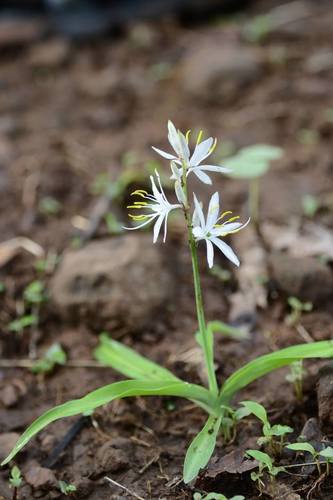
iNaturalist· cc-by-sa
(c) Andrew Hankey, some rights reserved (CC BY-SA), uploaded by Andrew Hankey
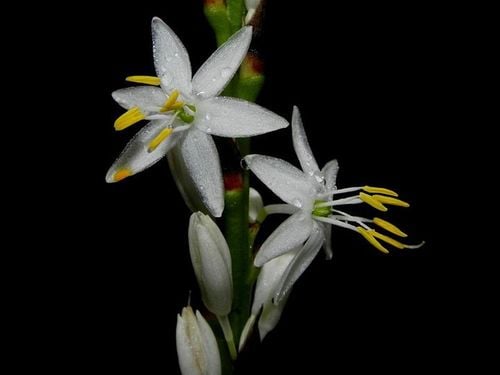
iNaturalist· cc-by-nc
(c) Mpendulo, some rights reserved (CC BY-NC), uploaded by Mpendulo
Description
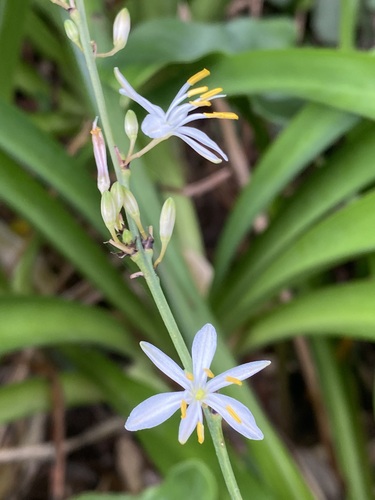
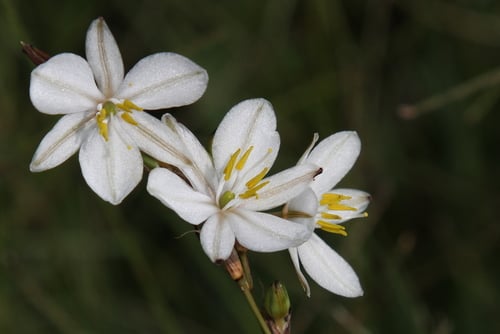
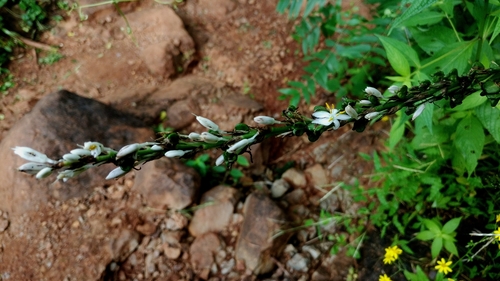
A small shrub or climber. It keeps growing from year to year. The stems are loosely branched and have side shoots. The leaves are spiny. It grows 2 m high. The flowers are white and in groups. The fruit is a berry 5 mm across. It is red.
Edible Uses
The young shoots are eaten as a vegetable, and the roots are eaten as a snack.
Traditional Uses
The young shoots are eaten as a vegetable. The roots are eaten as a snack.
This uses section is brief — help expand it
Distribution
It is a subtropical plant. It grows in well-drained sandy or stony soil. It grows in regions with a summer rainfall. It can grow in arid places.
Where It Grows
Africa, Botswana, East Africa, Eswatini, Mozambique, Lesotho, South Africa, Southern Africa, Swaziland,
Synonyms
Also Known As
Gaobeb, Katdoring, Lubane, Okalila konghadi
References (4)
- Long, C., 2005, Swaziland's Flora - siSwati names and Uses http://www.sntc.org.sz/flora/
- Royal Botanic Gardens, Kew (1999). Survey of Economic Plants for Arid and Semi-Arid Lands (SEPASAL) database. Published on the Internet; http://www.rbgkew.org.uk/ceb/sepasal/internet [Accessed 4th April 2011]
- Ruiters-Welcome, A. K., 2019, Food plants of southern Africa. Ph.D. thesis. Univ. of Johannesburg p 30
- Welcome, A. K. & Van Wyk, B.-E., 2019, An inventory and analysis of the food plants of southern Africa. South African Journal of Botany 122 (2019) 136–179