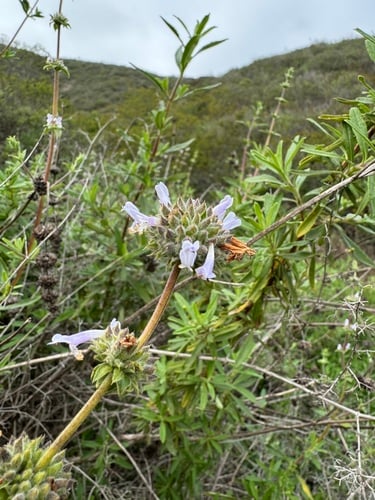
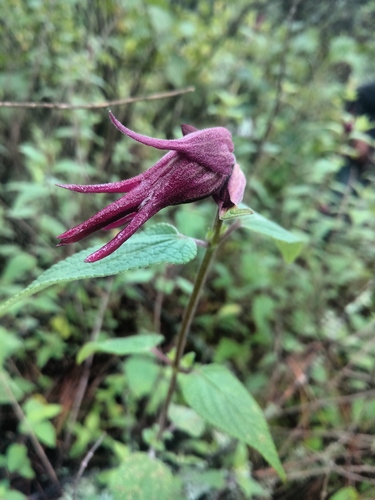
Callicarpa americana
L.
American beautyberry
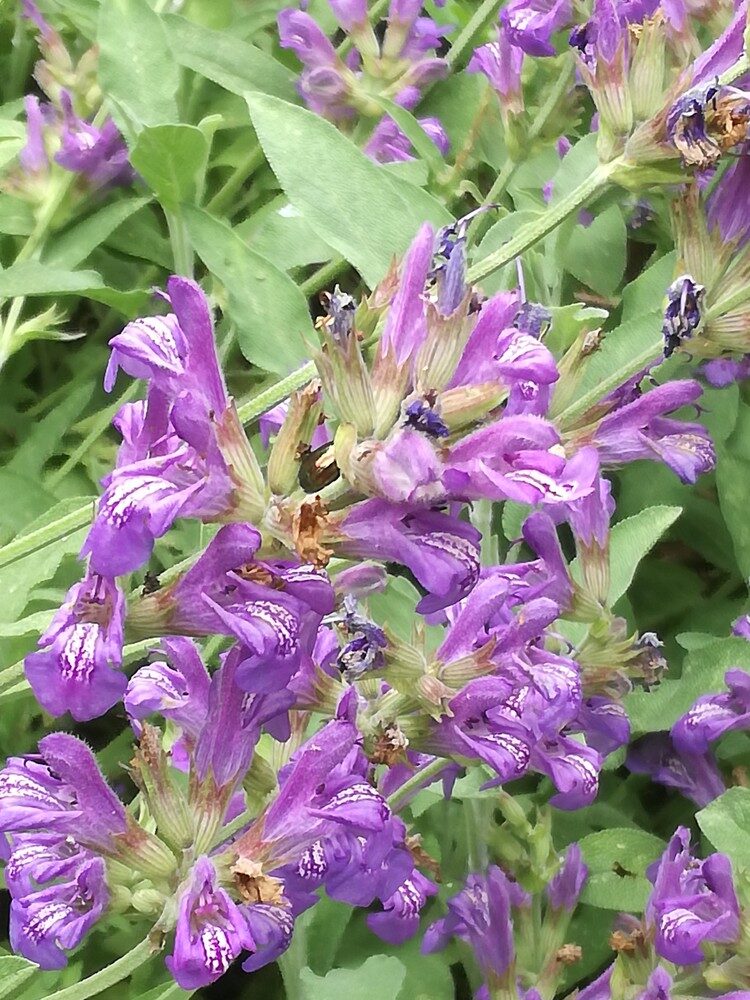
iNaturalist· cc-by
(c) Alex Abair, some rights reserved (CC BY), uploaded by Alex Abair
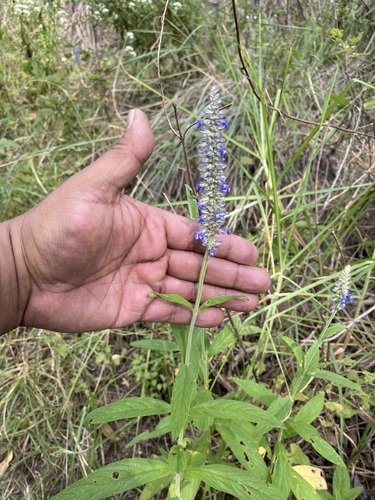
iNaturalist· cc-by
(c) Alex Abair, some rights reserved (CC BY), uploaded by Alex Abair
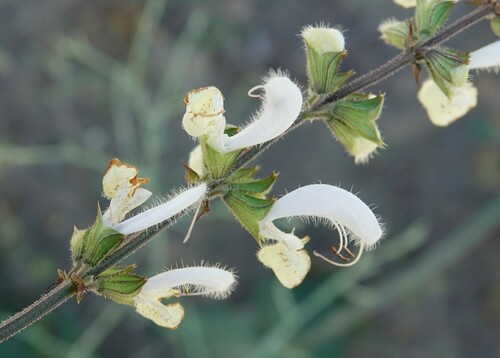
iNaturalist· cc-by-nc
(c) sschuh, some rights reserved (CC BY-NC)
Summary
Source: WikipediaCallicarpa americana, commonly called the American beautyberry, is an open-habitat, native shrub of the Southern United States which is often grown as an ornamental in gardens and yards. American beautyberries produce large clusters of purple berries, which birds and deer eat, thus distributing the seeds.
Description
A shrub. It loses its leaves during the year. It grows 1-3 m tall. It has several branches. The leaves are broad and have strong veins. The leaves are downy on the underside. The leaves are 20 cm long and have teeth. The leaves turn golden colour in autumn. The flowers are in the axils of leaves. The flowers are pink to purple and small. The fruit are brilliant mauve. They occur in tight clusters like bunches of grapes. The berries are 5 mm across.
Edible Uses
Edible Parts: Fruit Edible Uses: Fruit - raw. Juicy, sweet, fleshy, slightly aromatic. The fruit is about 6mm in diameter.
Medicinal Uses
Diuretic Dysentery Malaria A decoction of the root bark has been used as a diuretic. The leaves are a cure for dropsy. A tea made from the roots is used in the treatment of dysentery and stomach aches. A tea made from the roots and berries is used in the treatment of colic. Some native North American Indian tribes used the leaves and roots in sweat baths for the treatment of malaria, rheumatism and fevers.
Distribution
It is a temperate plant. It will grow in most soils and conditions. It is frost resistant but sensitive to drought. It suits hardiness zones 6-10.
Where It Grows
Australia, Britain, Central America, Europe, Hawaii, North America, Pacific, Tasmania, USA*, West Indies,
Cultivation
Requires a sunny position or light dappled shade. Prefers a highly fertile well-drained loamy soil. This species is hardy to about -18°c according to one report whilst another says that it is only really hardy in the milder parts of Britain, though some forms should prove to be hardier. Requires cross-pollination for good fruit production. Plants in this genus are notably resistant to honey fungus.
Propagation
Seed - sow February in a greenhouse. Only just cover the seed. Germination usually takes place within 1 - 3 months at 18°c. When large enough to handle, prick the seedlings out into individual pots and grow them on in the greenhouse for at least their first winter, planting them out into their permanent positions in late spring or early summer, after the last expected frosts. Cuttings of half-ripe wood 10cm long, July/August in a frame. High percentage. Cuttings of mature wood of the current season's growth with a heel taken in early spring.
Other Uses
None known Special Uses
Notes
There are about 140-150 Callicarpa species. Previously in the Verbenaceae family.
Also Known As
French mulberry
References (12)
- Bodkin, F., 1991, Encyclopedia Botanica. Cornstalk publishing, p 194
- Cundall, P., (ed.), 2004, Gardening Australia: flora: the gardener's bible. ABC Books. p 282
- Etherington, K., & Imwold, D., (Eds), 2001, Botanica's Trees & Shrubs. The illustrated A-Z of over 8500 trees and shrubs. Random House, Australia. p 156
- Hibbert, M., 2002, The Aussie Plant Finder 2002, Florilegium. p 49
- Kermath, B. M., et al, 2014, Food Plants in the Americas: A survey of the domesticated, cultivated and wild plants used for Human food in North, Central and South America and the Caribbean. On line draft. p 162
Show all 12 references Hide references
- Lord, E.E., & Willis, J.H., 1999, Shrubs and Trees for Australian gardens. Lothian. p 209
- Loughmiller, C & L., 1985, Texas Wildflowers. A Field Guide. University of Texas, Austin. p 234
- Plants for a Future database, The Field, Penpol, Lostwithiel, Cornwall, PL22 0NG, UK. http://www.scs.leeds.ac.uk/pfaf/
- Ritchie, F., 1999, Edible Landscape Plants and Trees. Book Three. The Incredible Edible Series. p 32
- Sp. pl. 1:111. 1753
- Staples, G.W. and Herbst, D.R., 2005, A tropical Garden Flora. Bishop Museum Press, Honolulu, Hawaii. p 556
- Young, J., (Ed.), 2001, Botanica's Pocket Trees and Shrubs. Random House. p 164